

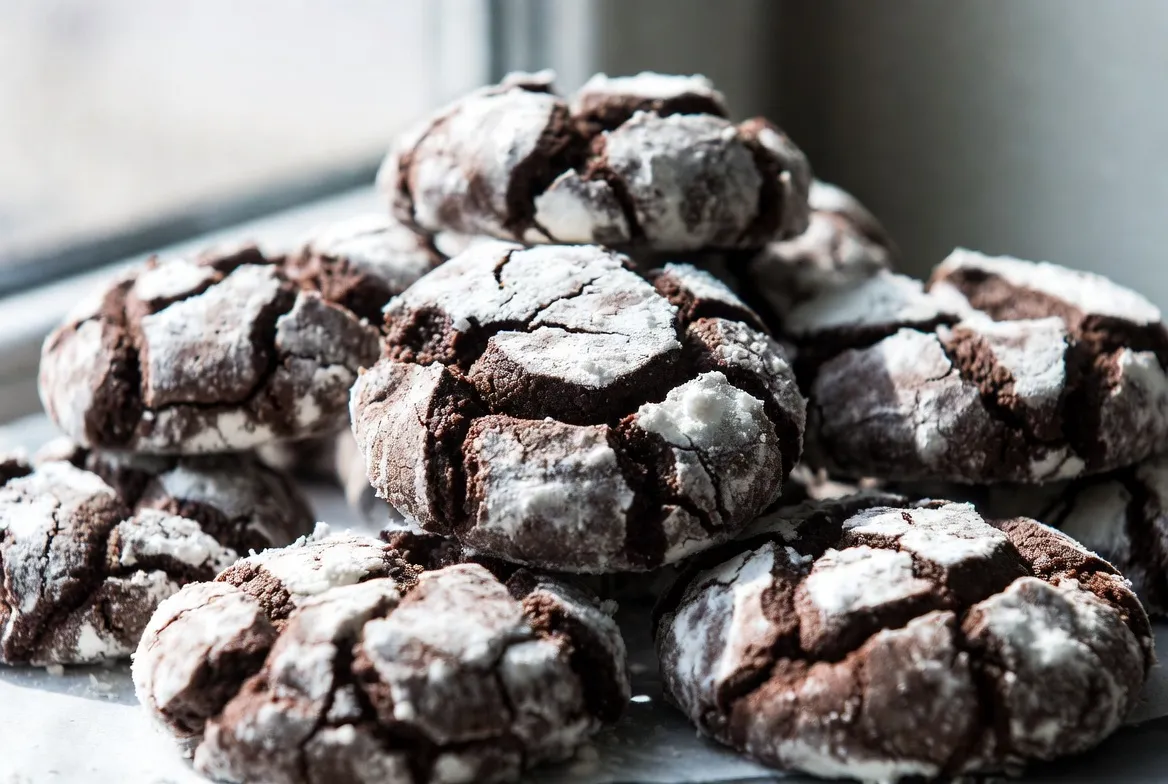
I still laugh when I think about the first time I made chocolate crinkle cookies. My sister had dropped her two kids off for the afternoon and casually said, “They love those crackly chocolate ones.” I nodded like I knew exactly what she meant. Twenty minutes later I was standing in a cloud of powdered sugar that somehow coated every surface, including the dog. The cookies that came out of the oven looked like little black-and-white moons, soft in the middle and shatteringly crisp on the edges. The kids ate six each before I even got the cooling rack to the table.
That batch taught me everything. The dough has to rest. The sugar has to be thick. And you cannot walk away from the oven for even a minute once they start spreading. I’ve made these cookies so many times since then that the recipe lives in my head, but I still write it down every December because the smell alone feels like a holiday.
These are the soft, crackly chocolate crinkle cookies that disappear faster than anything else on the cookie tray. They look fancy, taste deeply chocolatey, and somehow stay chewy for days if you hide them well enough.
Why You’ll Love This Recipe
- The centers stay soft and fudgy while the tops crack into that classic powdered-sugar pattern.
- You only need one bowl and a handful of pantry staples.
- The dough can hang out in the fridge for up to three days, so you can bake them whenever the craving hits.
- They freeze beautifully—both the dough balls and the finished cookies.
- Kids (and grown-ups who still act like kids) go wild for the dramatic white cracks.

Ingredients List
For the cookie dough
- 1 cup (100 g) unsweetened cocoa powder (I use the regular grocery-store kind, not Dutch-process)
- 2 cups (400 g) granulated sugar
- ½ cup (120 ml) vegetable oil or mild olive oil
- 4 large eggs, at room temperature
- 2 teaspoons pure vanilla extract
- 2 cups (250 g) all-purpose flour
- 2 teaspoons baking powder
- ½ teaspoon fine sea salt
For rolling
- 1 cup (120 g) powdered sugar, plus a little extra if the first coat disappears
You can swap the vegetable oil for melted coconut oil if you want a faint tropical note, or use half butter and half oil for a richer flavor. Just know that all-butter dough spreads a bit more.
Step-by-Step Instructions
- Grab a large mixing bowl. Whisk the cocoa powder and granulated sugar together until they look like chocolate sand. Pour in the oil and stir until every bit of dry cocoa is moistened. It will look thick and glossy.
- Crack in the eggs one at a time, mixing well after each. The mixture will loosen and become shiny. Stir in the vanilla. This whole step takes about three minutes by hand.
- In a smaller bowl, whisk the flour, baking powder, and salt. Dump the dry ingredients into the chocolate mixture and fold with a sturdy spatula until no white streaks remain. The dough will be soft, sticky, and almost like a thick brownie batter. That’s exactly what you want.
- Cover the bowl with plastic wrap and refrigerate for at least 2 hours, or overnight. I usually do it overnight. Cold dough is the secret to those dramatic cracks.
- When you’re ready to bake, preheat the oven to 350°F (175°C). Line two baking sheets with parchment paper. Put the powdered sugar in a shallow bowl.
- Scoop the dough into 1½-tablespoon portions (a cookie scoop makes this painless). Roll each portion into a ball between your palms, then drop it into the powdered sugar and roll until it is completely coated. For extra-thick cracks, roll them a second time. Place the balls two inches apart on the baking sheets.
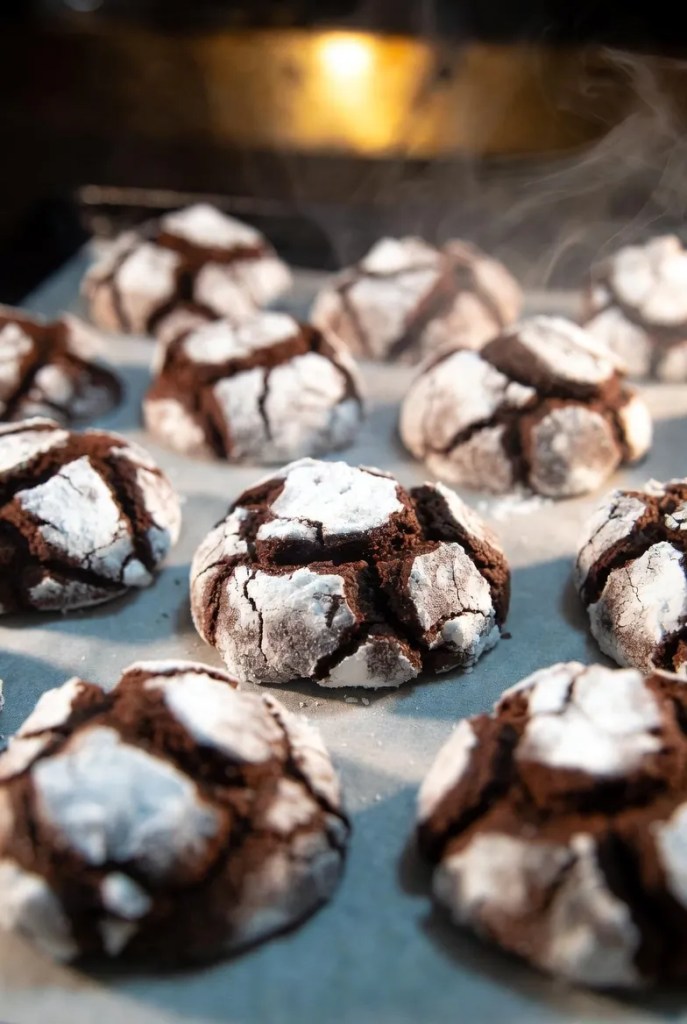
- Bake one sheet at a time for 10–12 minutes. The cookies will spread, the tops will crack, and the edges will look just set. The centers should still look slightly underdone. That’s the soft part talking. Let them cool on the sheet for 5 minutes before moving to a wire rack.

Pro Tips & Tricks
Chilling is non-negotiable. Warm dough spreads flat, and the cracks never form properly. If you’re short on time, 90 minutes in the freezer works in a pinch.
Don’t skimp on the powdered sugar. A thin coat melts into the cookie and disappears. Roll them until they look like little snowballs.
Pull them from the oven when the centers still look a tiny bit wet. They continue to set on the hot pan. Overbaking turns them into regular chocolate cookies with sad, faint cracks.
If the powdered sugar starts clumping from humidity, sift it first. Dry sugar sticks better.
These cookies keep their soft centers for four days in an airtight container at room temperature. After that, they slowly firm up, but a ten-second microwave zap brings the chew right back.
Variations & Substitutions
For a grown-up version, I stir a teaspoon of instant espresso powder into the cocoa. It deepens the chocolate without tasting like coffee.
Around the holidays, I add ½ teaspoon peppermint extract and a handful of crushed candy canes on top right after baking. The kids still call them “Christmas cracks.”
Gluten-free friends get the same recipe with a 1:1 gluten-free flour blend. The texture stays almost identical as long as you chill the dough thoroughly.
I’ve made a dairy-free batch for a neighbor by swapping the eggs for four flax eggs (1 tablespoon ground flax + 3 tablespoons water each) and using coconut oil. They crack a little less dramatically but still taste wonderful.
Serving Suggestions

I set these out on a big wooden board with a few orange slices and dark chocolate squares for contrast. They look elegant enough for a holiday cookie exchange yet casual enough for after-school snacks.
A scoop of vanilla ice cream sandwiched between two slightly warm cookies turns them into the best ice-cream sandwich you’ll ever eat. Do this once, and you’ll never go back to store-bought wafers.
They also travel well in a tin lined with parchment. I’ve mailed them cross-country, and they arrived still soft and crackly.
FAQ’s
Can I freeze the dough?
Yes. Roll the dough into balls, freeze them solid on a tray, then toss them into a freezer bag. When you want cookies, roll the frozen balls in powdered sugar and bake an extra minute or two. No need to thaw.
Why didn’t my cookies crack?
Usually the dough wasn’t cold enough or the powdered sugar coat was too thin. Next time chill longer and double-roll in sugar.
How do I store leftover cookies?
Airtight container at room temperature for up to four days. For longer storage, freeze the baked cookies in a single layer, then bag them. They thaw in about twenty minutes and still taste fresh.
Can I use butter instead of oil?
You can, but the cookies will spread more and the cracks will be wider. Melt the butter and cool it slightly so it doesn’t scramble the eggs.
Do I have to use Dutch-process cocoa?
No. Regular natural cocoa powder works perfectly and gives a classic deep chocolate flavor. Dutch-process makes them a little darker and milder, but either is fine.
Can I make the dough ahead?
Absolutely. It keeps in the fridge for three days or in the freezer for two months. The longer rest actually improves the flavor.
Closing Thoughts
Every time I pull a tray of these out of the oven, I still get that little rush of “they cracked!” The powdered sugar makes a mess, the kitchen smells like a chocolate factory, and somehow the whole house feels warmer. If you try them, I hope you end up with sugar on your counter and a plate that empties way too fast. Snap a photo of your cracks and tell me how they turned out. I’ll be over here baking another batch, because these never last long enough in my house.
Leave a Reply
You must be logged in to post a comment.