

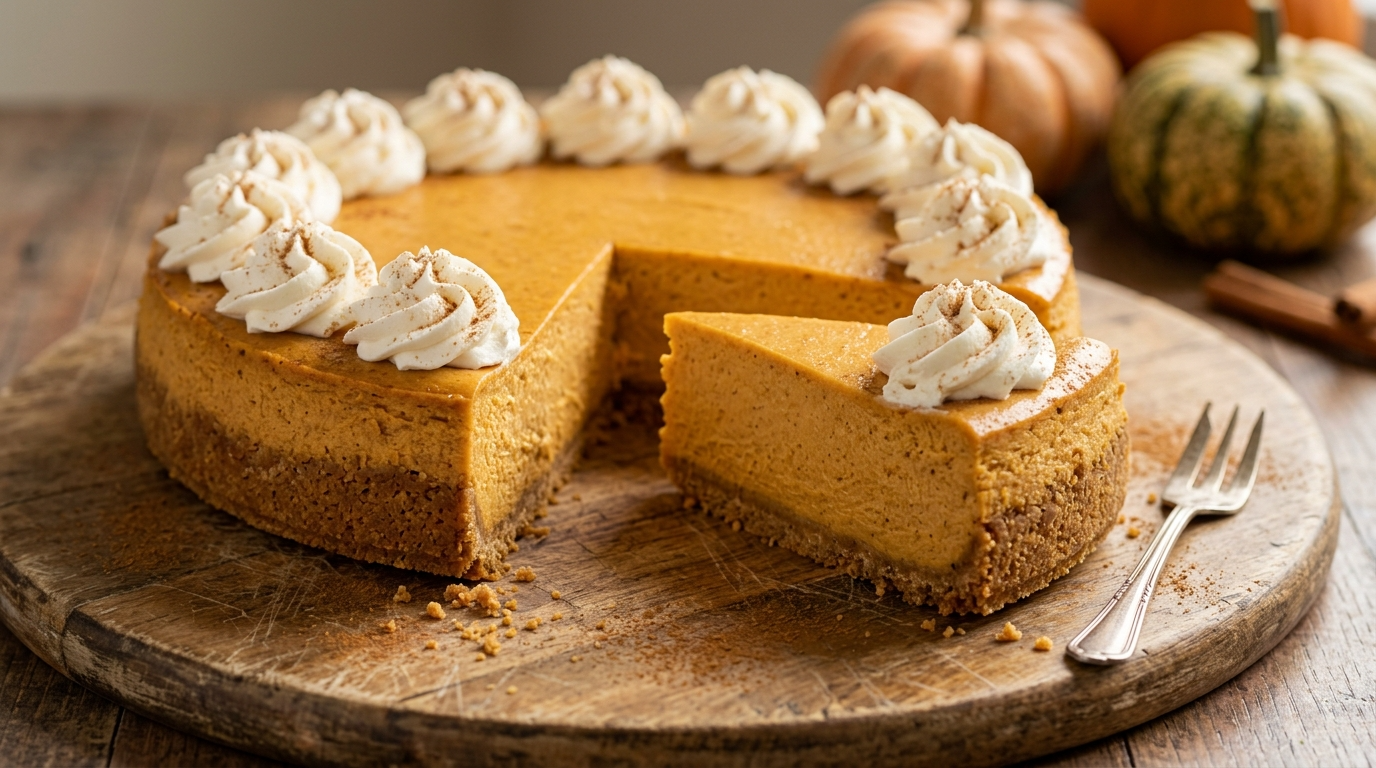
There’s something about the smell of pumpkin, cinnamon, and nutmeg baking in the oven that makes a kitchen feel extra cozy. The first time I made pumpkin cheesecake from scratch, I wanted a dessert that felt a little more special than my usual pumpkin pie. I had cream cheese in the fridge, a can of pumpkin puree in the pantry, and a serious craving for something creamy and full of fall flavor.
My first attempt tasted wonderful, but I pulled it from the oven too early because the center looked softer than I expected. After chilling it overnight, I discovered that cheesecake needs patience. The texture improved beautifully, and every slice had that rich, velvety filling I wanted.
Since then, I’ve learned a few tricks that make homemade pumpkin cheesecake much easier. Room-temperature cream cheese helps create a smooth filling, a little sour cream adds a lovely tang, and a gentle baking temperature helps prevent cracks.
This easy pumpkin cheesecake recipe from scratch combines a buttery graham cracker crust with a creamy pumpkin filling and warm spices. You don’t need fancy decorating skills or complicated ingredients. Give yourself enough time to chill the cheesecake, and you’ll have a gorgeous dessert for Thanksgiving, Halloween parties, or any chilly afternoon when you want something sweet.
Why You’ll Love This Easy Pumpkin Cheesecake Recipe

- Rich and creamy texture: Cream cheese, sour cream, and pumpkin puree create a smooth filling that feels indulgent without becoming overly heavy.
- Classic fall flavor: Cinnamon, ginger, nutmeg, and cloves bring out the pumpkin’s natural sweetness.
- A simple homemade crust: Graham crackers, melted butter, and brown sugar create a crisp, buttery base without requiring pastry-making skills.
- Perfect for special occasions: This cheesecake looks beautiful on a holiday dessert table, but you can make it for an ordinary weekend, too.
- Make-ahead friendly: Prepare it a day before serving so the cheesecake has plenty of time to chill and develop its flavor.
The best part? You can prepare the cheesecake with a hand mixer or stand mixer and a few basic kitchen tools. You don’t need to master complicated baking techniques to get a delicious result.
Ingredients for Pumpkin Cheesecake From Scratch
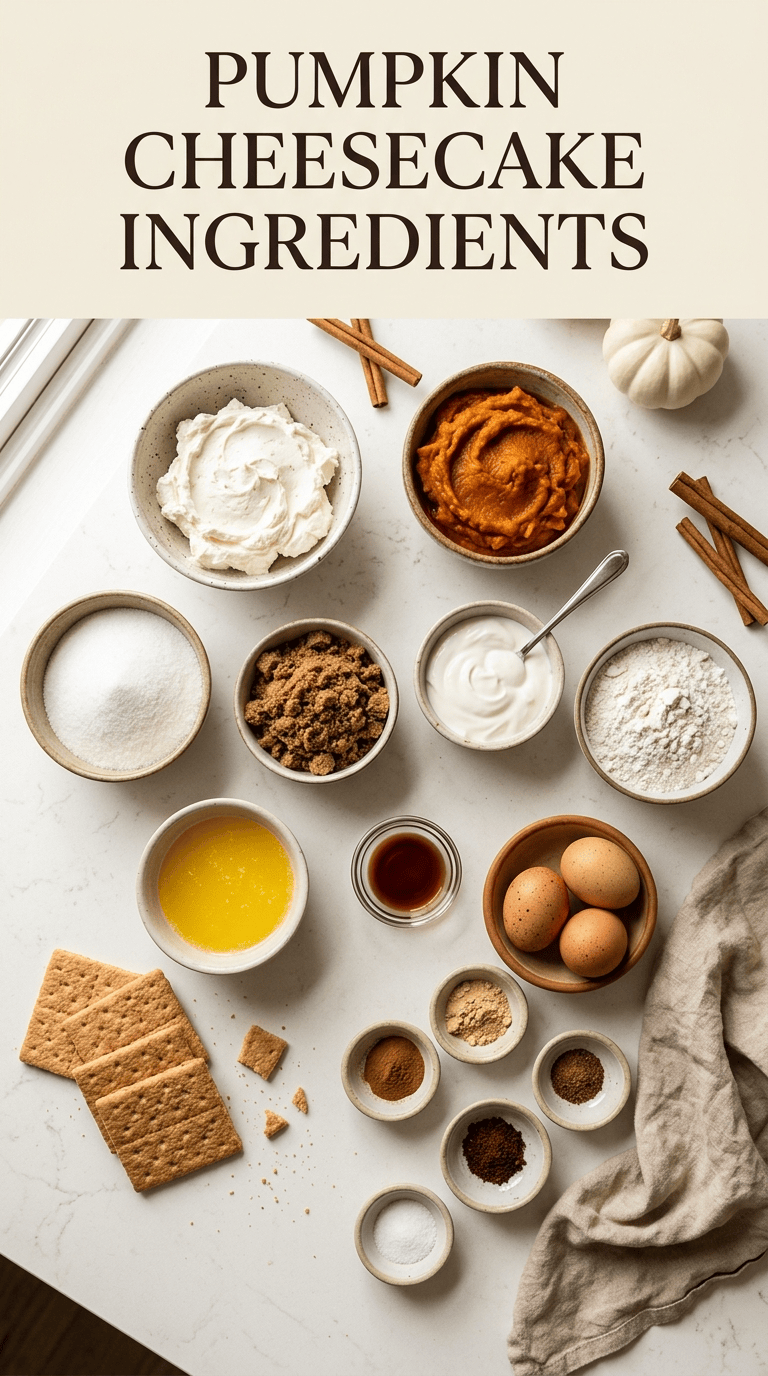
This recipe makes one 9-inch cheesecake, serving approximately 10–12 people. Use a 9-inch springform pan for easy removal and neat slices.
For the Graham Cracker Crust
- 2 cups (about 200 g) graham cracker crumbs
- 6 tablespoons (85 g) unsalted butter, melted
- 2 tablespoons (25 g) packed brown sugar
- ¼ teaspoon ground cinnamon
- A small pinch of salt
Ingredient tip: Crush whole graham crackers in a food processor, or place them in a sturdy zip-top bag and crush them with a rolling pin. Aim for fine, even crumbs so the crust holds together when sliced.
If graham crackers aren’t available, use digestive biscuits. They work especially well, although you may want to adjust the sugar slightly depending on how sweet your biscuits taste.
For the Pumpkin Cheesecake Filling
- 24 ounces (680 g) full-fat cream cheese, softened to room temperature
- 1 cup (240 g) pumpkin puree, preferably plain canned pumpkin
- ¾ cup (150 g) granulated sugar
- ¼ cup (50 g) packed brown sugar
- 3 large eggs, at room temperature
- ½ cup (120 g) sour cream, at room temperature
- 2 tablespoons (16 g) all-purpose flour
- 1 teaspoon vanilla extract
- 1½ teaspoons ground cinnamon
- ½ teaspoon ground ginger
- ¼ teaspoon ground nutmeg
- ⅛ teaspoon ground cloves
- ¼ teaspoon salt
Choose the right pumpkin: Use plain pumpkin puree, not pumpkin pie filling. Pumpkin pie filling often contains added sugar and spices, which can throw off the flavor and sweetness of your cheesecake.
You can make homemade pumpkin puree if you prefer. However, homemade puree sometimes contains more water than canned pumpkin, so drain it or cook off excess moisture before measuring.
Why sour cream? Sour cream adds a gentle tang that balances the sweetness and gives the filling a softer, creamier texture. Full-fat Greek yogurt can work as a substitute, although it may produce a slightly different texture.
Why add flour? A small amount helps stabilize the filling and makes the cheesecake easier to slice. It doesn’t turn the dessert into a cake; the cream cheese still provides its signature richness.
Optional Toppings
- 1 cup (240 ml) heavy whipping cream
- 2 tablespoons powdered sugar
- ½ teaspoon vanilla extract
- A light dusting of ground cinnamon
- Caramel sauce, if desired
You can skip the toppings if you prefer a simple cheesecake. The pumpkin filling has plenty of flavor on its own.
Step-by-Step Instructions for Homemade Pumpkin Cheesecake
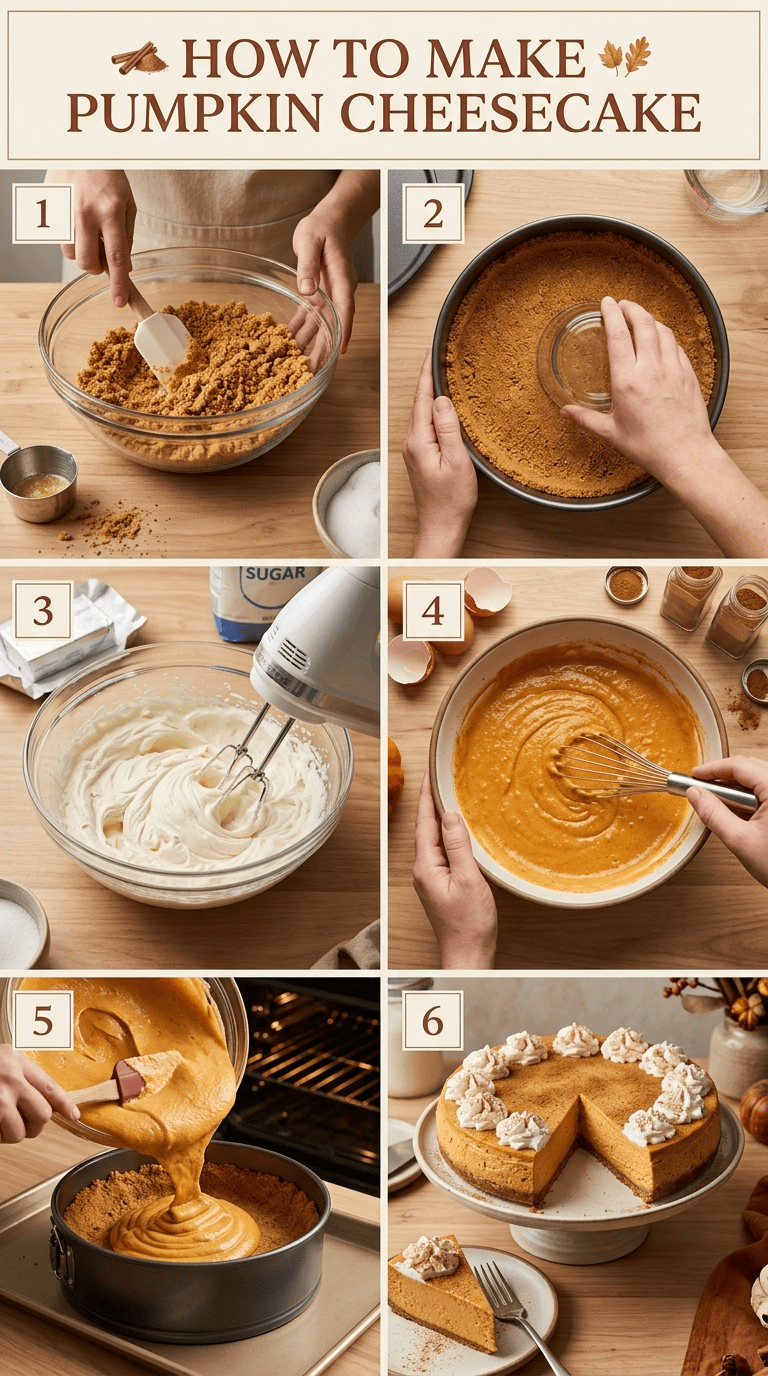
Step 1: Prepare the Oven and Pan (10 Minutes)
Preheat your oven to 325°F (163°C). Position a rack in the center of the oven.
Lightly grease the sides of a 9-inch springform pan. You can also line the bottom with a circle of parchment paper to make serving easier.
Set out your cream cheese, eggs, and sour cream ahead of time if they’re still cold. Room-temperature ingredients blend more easily and help prevent lumps.
My tip: Don’t rush the cream cheese. If it feels firm when you press it with a spoon, give it more time to soften. Cold cream cheese is one of the easiest ways to end up with tiny lumps throughout your filling.
Step 2: Make the Graham Cracker Crust (10 Minutes)
Combine the graham cracker crumbs, melted butter, brown sugar, cinnamon, and salt in a medium bowl.
Stir until the mixture resembles damp sand. When you squeeze a handful, it should hold its shape instead of falling apart.
Transfer the crumbs to your springform pan. Press them firmly across the bottom and slightly up the sides if you like a deeper crust edge.
Use the flat bottom of a measuring cup to compact the crumbs evenly. Pay special attention to the edges, where loose crumbs can cause the crust to break when you slice the cheesecake.
Bake the crust for 8–10 minutes, then remove it from the oven. Let it cool while you prepare the filling.
Visual cue: The crust should smell buttery and feel slightly firmer than it did before baking. It doesn’t need to become deeply browned.
Step 3: Mix the Cream Cheese Until Smooth (3–4 Minutes)
Place the softened cream cheese in a large mixing bowl. Beat it with a hand mixer or stand mixer fitted with the paddle attachment on medium-low speed until smooth.
Scrape down the sides and bottom of the bowl with a silicone spatula. This small step helps you catch any stubborn lumps hiding near the edges.
Add the granulated sugar and brown sugar. Mix until the sugars blend into the cream cheese and the mixture looks creamy.
Avoid whipping the mixture at high speed. Too much incorporated air can make the cheesecake puff up during baking and sink as it cools.
Step 4: Add the Pumpkin and Spices (2 Minutes)
Add the pumpkin puree, sour cream, vanilla extract, cinnamon, ginger, nutmeg, cloves, flour, and salt.
Mix on low speed until the ingredients combine evenly. Scrape the bowl once more, especially around the bottom, where thicker cream cheese can hide.
Taste a tiny amount of the filling before adding the eggs. Adjust the spices slightly if you prefer a stronger cinnamon flavor.
The mixture should look smooth, thick, and evenly orange. It shouldn’t contain watery streaks or visible pockets of cream cheese.
Step 5: Add the Eggs Carefully (1–2 Minutes)
Add the eggs one at a time, mixing on low speed after each addition. Stop as soon as each egg disappears into the filling.
Don’t beat the mixture for several extra minutes after adding the eggs. You want a uniform filling, not a fluffy mousse.
Scrape the bowl gently with a spatula and give the mixture a final hand stir if needed.
Beginner tip: If you accidentally mix in a few small bubbles, don’t panic. Tap the bowl lightly on the counter a couple of times to release some trapped air before pouring the filling into the crust.
Step 6: Fill the Crust (2 Minutes)
Pour the pumpkin cheesecake filling over the cooled graham cracker crust.
Smooth the top with a spatula so the filling reaches the edges evenly. Tap the pan gently on the counter to release larger air bubbles.
Place the springform pan on a baking sheet to catch any stray butter or crumbs and make it easier to move the cheesecake.
Step 7: Bake Until the Center Is Just Set (55–70 Minutes)
Place the cheesecake in the preheated oven and bake for approximately 55–70 minutes.
Start checking around the 55-minute mark. The outer edges should look set, while the center should still have a slight wobble when you gently move the pan.
The center shouldn’t look liquid, and the surface shouldn’t ripple like uncooked batter. A small, gentle jiggle is exactly what you want.
Avoid opening the oven door repeatedly because sudden temperature changes can affect the cheesecake’s texture.
If you use an instant-read thermometer, the center should generally reach about 150°F (66°C) for a creamy cheesecake, although the exact baking time and temperature can vary by oven and recipe conditions. Don’t rely on the clock alone; look for the visual cues as well.
What about a water bath? You can bake this cheesecake in a water bath for extra gentle, even heating. Wrap the outside of the springform pan securely in heavy-duty foil, place it in a larger roasting pan, and add hot water to the roasting pan. Keep the water below the foil’s top edge. Check for leaks before filling the roasting pan, and remember that a water bath is optional for this recipe.
Step 8: Cool the Cheesecake Slowly (1–2 Hours)
Turn off the oven when the cheesecake reaches the right consistency. Crack the oven door open and let the cheesecake rest inside for about 30 minutes.
Remove the pan and place it on a heat-safe surface. Let it cool at room temperature for another 30–60 minutes, or until it no longer feels hot.
Don’t run a knife around the cheesecake while it’s extremely hot. If you notice the edges sticking as it cools, gently loosen them with a thin knife once the cheesecake has cooled enough to handle.
Slow cooling helps reduce the temperature shock that can cause cracks.
Step 9: Refrigerate Until Firm (At Least 6 Hours)
Once the cheesecake has cooled, cover the pan and refrigerate it for at least 6 hours. Overnight chilling usually gives you the best texture and cleanest slices.
Don’t leave the cheesecake at room temperature for more than two hours in total. Refrigerate it promptly once it has cooled sufficiently.
The filling will become firmer as it chills, and the pumpkin and spices will develop a more rounded flavor.
I know it’s tempting to cut a slice early, especially when the kitchen smells incredible, but this is the one stage where patience really pays off.
Step 10: Add the Topping and Serve (5–10 Minutes)
When you’re ready to serve, carefully release the springform pan.
For optional whipped cream, beat the heavy whipping cream, powdered sugar, and vanilla extract in a chilled bowl until medium peaks form. The cream should hold its shape but still look soft and smooth.
Pipe or spoon the whipped cream around the edge of the cheesecake, or add a dollop to each slice. Finish with a light sprinkle of cinnamon or a drizzle of caramel sauce.
For clean slices, dip a sharp knife into hot water, wipe it dry, and cut through the cheesecake. Repeat between slices.
Serve chilled and enjoy every creamy, spiced bite.
Pro Tips & Tricks for the Best Pumpkin Cheesecake
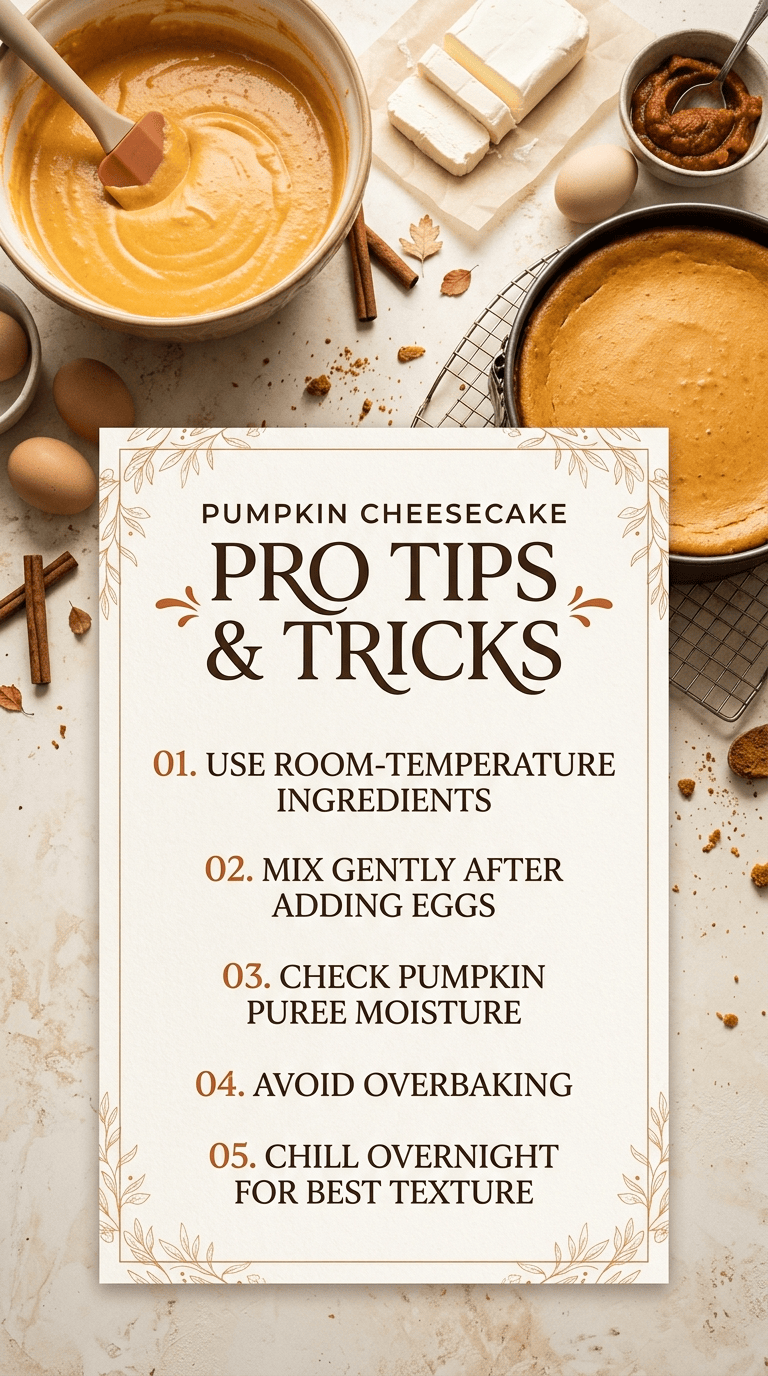
Bring Your Ingredients to Room Temperature
Cold cream cheese doesn’t blend as smoothly as softened cream cheese. Let the cream cheese, eggs, and sour cream sit out for around 30–60 minutes before mixing, depending on your kitchen temperature.
Don’t leave dairy or eggs at room temperature for extended periods. If your kitchen is particularly warm, shorten the resting time and work efficiently.
Don’t Overmix the Filling
Once you add the eggs, mix only until they blend into the batter. Overmixing incorporates extra air, which can make the cheesecake rise too much and develop cracks as it cools.
Low speed and a flexible spatula are your friends here.
Check Your Pumpkin Puree
Pumpkin puree varies in moisture content. If yours looks unusually watery, drain it through a fine-mesh strainer lined with cheesecloth before measuring.
Too much moisture can make the filling softer than expected and may increase the time it needs to set.
Avoid Overbaking
A cheesecake continues to firm up as it cools and chills. If you wait until the entire center looks completely rigid in the oven, you may end up with a dry or grainy texture.
Look for set edges and a small, gentle wobble in the center.
Chill It Overnight Whenever Possible
An overnight rest makes a noticeable difference in both texture and flavor. It also makes serving much easier because the filling has enough time to firm up.
If you’re preparing dessert for Thanksgiving or a dinner party, bake the cheesecake the day before and decorate it shortly before serving.
Prevent Cracks Without Stressing Over Them
A water bath and slow cooling can help reduce cracking, but no method guarantees a perfectly smooth surface every time.
If a crack appears, cover it with whipped cream, caramel, or a little extra cinnamon. The cheesecake will still taste wonderful, and nobody needs to know that the top had other plans.
Variations & Substitutions
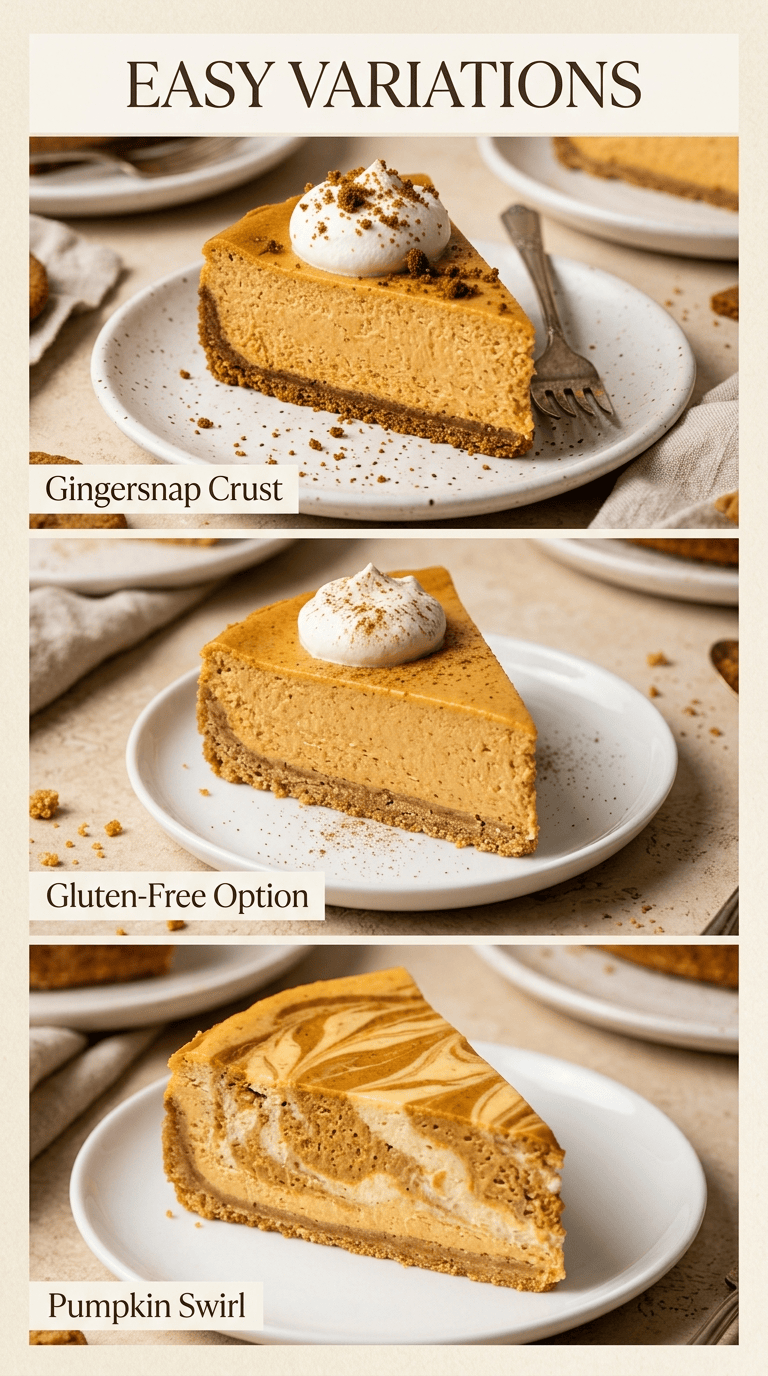
Make It With a Gingersnap Crust
For a stronger fall flavor, replace the graham cracker crumbs with 2 cups of finely crushed gingersnap cookies.
Reduce or omit the added cinnamon in the crust if your cookies already contain plenty of spice. The result has a slightly darker, more pronounced ginger flavor that pairs beautifully with pumpkin.
You can also use digestive biscuits for a milder crust. Their buttery flavor works well with the tangy cream cheese filling.
Try a Gluten-Free Pumpkin Cheesecake
Use certified gluten-free graham-style crackers or gluten-free ginger cookies for the crust. Check the labels on your other ingredients, including any packaged toppings, if you need to avoid gluten carefully.
Replace the all-purpose flour in the filling with an equal amount of a suitable gluten-free baking flour blend. The texture may vary slightly depending on the blend, but this is a straightforward way to adapt the recipe.
Make a Pumpkin Swirl Cheesecake
For a decorative variation, reserve about ½ cup of the pumpkin filling before pouring the remaining mixture into the crust.
Prepare a small amount of plain cheesecake batter by mixing 4 ounces of softened cream cheese with 2 tablespoons of sugar and 1 egg yolk until smooth. Spoon small dollops of the plain mixture over the pumpkin filling, then add the reserved pumpkin filling between them.
Gently swirl the two mixtures with a toothpick or thin knife. Avoid overmixing, or you’ll lose the contrast between the colors.
Bake using the same general method, checking for the same set edges and gently wobbly center.
Add a Little Extra Spice
If you enjoy bold pumpkin spice, increase the cinnamon slightly or add a small pinch of allspice. Start with a modest amount because the flavors become more noticeable after chilling.
You can also add a tablespoon of maple syrup, but remember that extra liquid and sugar can change the filling’s consistency. For the most reliable results, keep the original quantities the first time you make the recipe.
Serving Suggestions for Pumpkin Cheesecake

Pumpkin cheesecake tastes wonderful on its own, but a few simple additions can make it feel like a special occasion dessert.
Top It With Whipped Cream
A generous spoonful of lightly sweetened whipped cream balances the rich filling without overpowering the pumpkin spices. You can pipe a decorative border for holidays or serve the cream separately so everyone can add their own.
Drizzle With Caramel Sauce
Caramel brings a buttery sweetness that works beautifully with the cinnamon and nutmeg. Use a light drizzle rather than soaking the top, which can make the slices messy.
For extra texture, add a few finely chopped toasted pecans just before serving.
Serve It With Coffee or Tea
A slice of chilled pumpkin cheesecake pairs especially well with freshly brewed coffee, a latte, black tea, or chai. The slight bitterness of coffee balances the dessert’s sweetness, while chai echoes its warm spices.
Make It the Star of Your Holiday Table
Serve this cheesecake after a Thanksgiving dinner, at a fall birthday celebration, or alongside other autumn desserts. Because it’s rich, modest slices usually satisfy everyone.
If you’re preparing a dessert table, pair it with lighter options such as fresh fruit or small sugar cookies. You’ll have a nice mix of textures and flavors without overwhelming your guests.
For a pretty presentation, place each slice on a chilled dessert plate and add a small swirl of whipped cream. A little cinnamon on top gives it a finished look without requiring complicated decoration.
Related Recipes :
- Super Moist Pumpkin Bars With Cream Cheese Frosting
- Old Fashioned Pumpkin Bars With Cream Cheese Frosting
- Easy Sheet Pan Pumpkin Bars With Cream Cheese Frosting
FAQ’s
Can I Make Pumpkin Cheesecake Ahead of Time?
Yes! Pumpkin cheesecake is an excellent make-ahead dessert. Bake it one day before serving, let it cool, and refrigerate it for at least 6 hours or overnight.
Keep it covered in the refrigerator and add whipped cream or other toppings shortly before serving. This approach saves time on busy holidays and gives the cheesecake a chance to firm up properly.
How Should I Store Leftover Pumpkin Cheesecake?
Store leftover cheesecake in an airtight container or cover the springform pan securely. Keep it refrigerated at 40°F (4°C) or below and enjoy it within 3–4 days.
Avoid leaving cheesecake out for more than two hours in total, or one hour when temperatures exceed 90°F (32°C). If it has sat out longer, discard it rather than risking foodborne illness.
Can I Freeze Pumpkin Cheesecake?
Yes. For the best results, freeze the cheesecake without whipped cream or other delicate toppings.
Chill it completely, then freeze the whole cheesecake or individual slices until firm. Wrap each portion tightly in plastic wrap and place it in a freezer-safe container or bag.
For the best quality, use frozen cheesecake within about 1–2 months. Thaw it overnight in the refrigerator before serving. Avoid thawing it on the kitchen counter.
Why Did My Pumpkin Cheesecake Crack?
Several things can cause cracks, including overmixing, overbaking, rapid cooling, or edges that stick to the pan as the cheesecake shrinks.
Mix gently after adding the eggs, remove the cheesecake while the center still has a slight wobble, and let it cool gradually. A water bath can also help.
If it cracks anyway, don’t worry. A little whipped cream or caramel hides small cracks easily, and the flavor matters much more than a perfectly smooth top.
Can I Use Fresh Pumpkin Instead of Canned Pumpkin Puree?
Yes, provided you prepare it properly. Roast pumpkin until tender, scoop out the flesh, and puree it until smooth.
Fresh pumpkin puree often contains more water than canned puree. Drain it in a fine-mesh strainer or cook it gently to remove excess moisture, then let it cool before measuring. The final cheesecake may still vary slightly depending on the pumpkin you use.
Can I Make Pumpkin Cheesecake Without a Springform Pan?
A springform pan makes removing cheesecake easier, but you can use a deep 9-inch cake pan lined with parchment paper if necessary.
Make sure the parchment extends up the sides so you can lift the chilled cheesecake carefully. Because a regular cake pan makes removal more difficult, chill the cheesecake thoroughly and use extra care when transferring it.
How Do I Know When Pumpkin Cheesecake Is Done?
The edges should look set, while the center should move slightly when you gently shake the pan. It should not look liquid or ripple across the surface.
Start checking near the beginning of the suggested baking window because ovens vary. The cheesecake will continue to set as it cools and chills, so avoid baking it until the center becomes completely firm.
Can I Use Pumpkin Pie Filling Instead of Pumpkin Puree?
Plain pumpkin puree is the better choice. Pumpkin pie filling usually contains sugar and spices, which can make the cheesecake too sweet or alter its flavor.
If pumpkin pie filling is your only option, you would need to adjust the sugar and spices, and the results may be less predictable. For your first attempt, stick with plain pumpkin puree.
A Sweet Little Ending
If you love pumpkin desserts but want something a little more special than the usual pie, this easy pumpkin cheesecake recipe from scratch deserves a place in your fall baking plans.
The buttery crust, creamy pumpkin filling, and warm spices come together in a dessert that feels comforting and festive without requiring complicated techniques. Take your time with the mixing, watch for that gentle wobble in the center, and give the cheesecake a full night in the refrigerator if you can.
And remember, your first homemade cheesecake doesn’t need to look like it came from a fancy bakery. A small crack or a slightly uneven edge won’t spoil a single bite.
Make it for your next family gathering, share a slice with a friend, or save a piece for a quiet evening with a cup of coffee. If you try this recipe, I’d love to hear how it turned out and which toppings you chose. Happy baking!
Leave a Reply
You must be logged in to post a comment.