

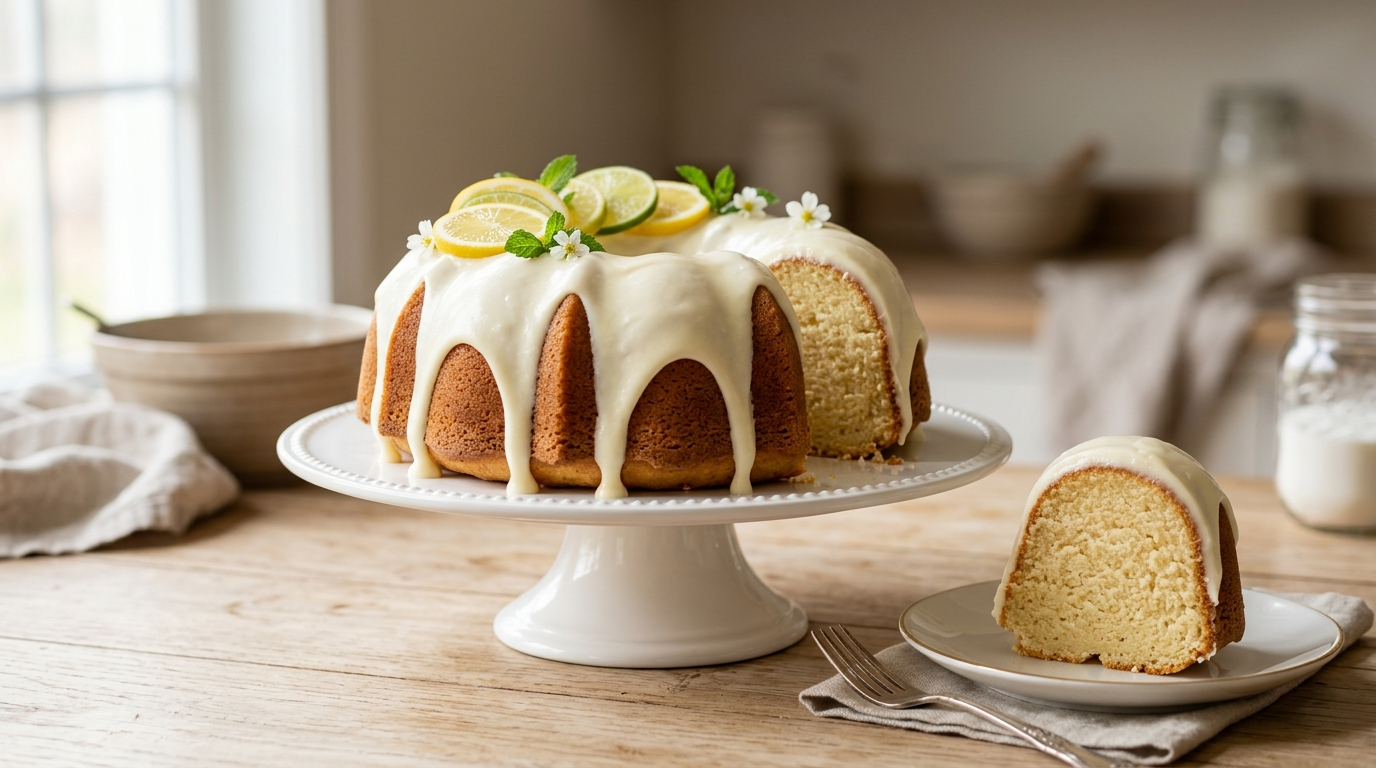
Some cakes feel like a whole weekend project. This one feels like the kind of dessert you can pull together on a regular afternoon and still get plenty of compliments at the end.
I first made this 7UP Cake on a day when I wanted something lemony and buttery but didn’t want to fuss with a complicated recipe. I had a bottle of 7UP in the fridge, a few basic baking ingredients on the counter, and a serious craving for cake.
The first version came out delicious, although I learned one important lesson: don’t rush the cooling process. I once tried frosting the cake while it was still slightly warm, and let’s just say the cream cheese frosting turned into a very enthusiastic glaze.
These days, I let the cake cool completely before I even think about frosting it. The result is a soft, moist cake with a delicate lemon-lime flavor and a creamy, tangy frosting that makes every bite feel a little more special.
The 7UP adds moisture and a subtle citrusy sweetness without making the cake taste like soda. The cream cheese frosting brings just enough tang to balance the sweetness.
And honestly, that’s why this cake disappears so quickly in my house.
Why You’ll Love This Recipe

- Soft and moist: The cake stays tender instead of turning dry and crumbly.
- Simple ingredients: Most of what you need probably already sits in your pantry.
- Bright citrus flavor: Lemon and lime notes keep the cake from tasting overly heavy.
- Creamy frosting: The cream cheese frosting adds a tangy finish that works beautifully with the cake.
- Great for sharing: It works for birthdays, potlucks, Sunday dinners, afternoon coffee, or just because you felt like baking.
Ingredients
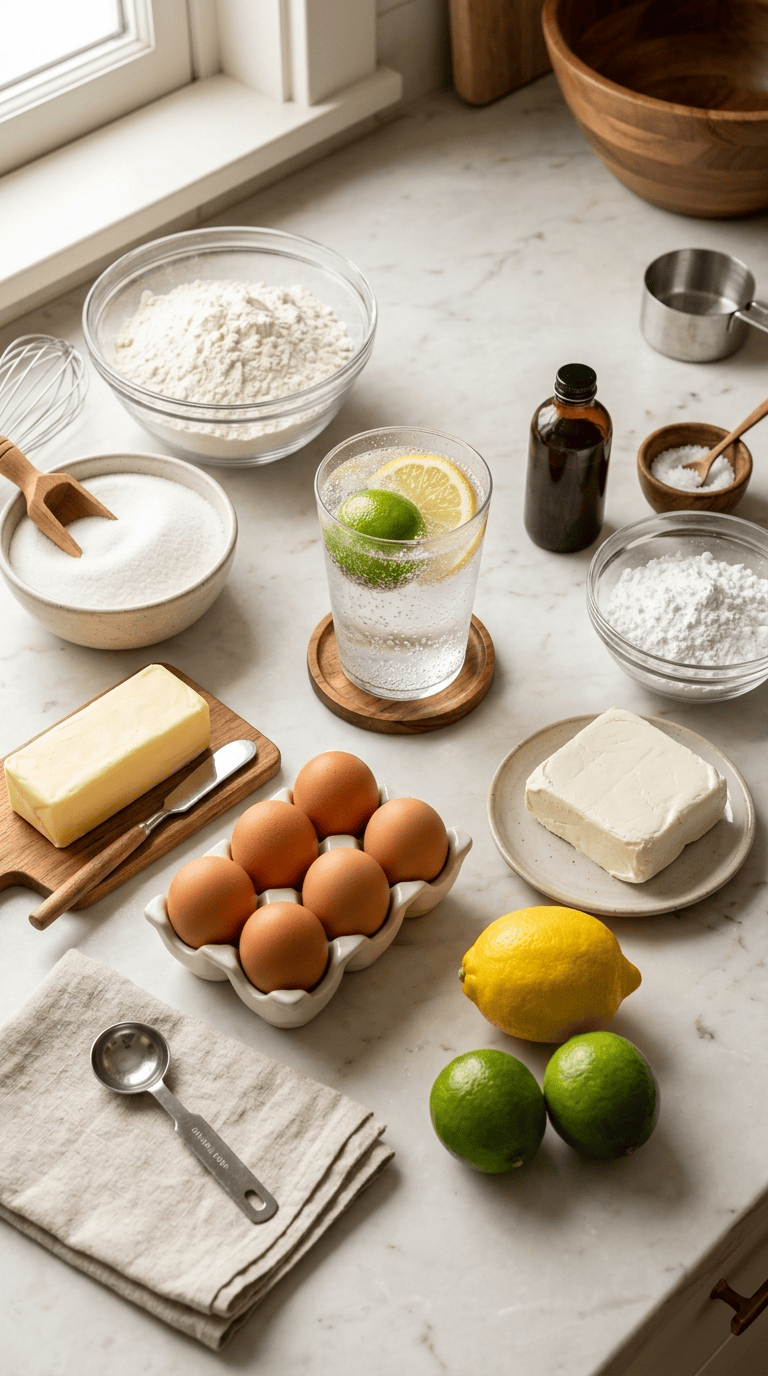
For the 7UP Cake
- 1 cup unsalted butter, softened to room temperature
- 2 1/2 cups granulated sugar
- 5 large eggs, room temperature
- 3 cups all-purpose flour
- 1/2 teaspoon salt
- 1 teaspoon vanilla extract
- 1 tablespoon fresh lemon juice
- 1 tablespoon fresh lime juice
- 3/4 cup 7UP, Sprite, or another lemon-lime soda
- 1 tablespoon finely grated lemon zest
- 1 tablespoon finely grated lime zest
You can use salted butter if that’s what you have. Just reduce the added salt slightly.
For the soda, 7UP gives the classic flavor, but Sprite works well too. Use regular soda rather than a flat or diet version for the best texture.
For the Cream Cheese Frosting
- 8 ounces full-fat cream cheese, softened
- 1/2 cup unsalted butter, softened
- 3 1/2 cups powdered sugar
- 1 teaspoon vanilla extract
- 1 tablespoon fresh lemon juice
- 1–2 tablespoons heavy cream or milk, as needed
- Pinch of salt
Optional Garnish
- Thin lemon slices
- Lime zest
- Lemon zest
- A light dusting of powdered sugar
I usually keep the garnish simple. A little fresh citrus zest makes the finished cake look homemade in the best possible way.
Step-by-Step Instructions
1. Bring the Ingredients to Room Temperature
Take the butter, eggs, and cream cheese out of the refrigerator before you start.
Let the butter and cream cheese soften for about 30–60 minutes. Let the eggs sit at room temperature for about 20–30 minutes.
Soft butter blends much more easily, and room-temperature eggs help create a smoother batter.
This little bit of preparation saves you from fighting with cold butter later.
2. Prepare the Pan
Preheat your oven to 325°F (165°C).
Grease a 10-inch Bundt pan thoroughly with butter or baking spray. Pay special attention to the grooves because Bundt cakes love finding tiny places to stick.
I like to dust the greased pan lightly with flour after spraying it. Tap out the excess.
If you don’t have a Bundt pan, you can use a tube pan, but keep an eye on the baking time because pan sizes can change how quickly the cake cooks.
3. Cream the Butter and Sugar
Add the softened butter and granulated sugar to a large mixing bowl.
Using a stand mixer or hand mixer, beat them on medium speed for about 4–5 minutes.
Don’t skip this step.
The mixture should look noticeably lighter, fluffy, and creamy. Properly creamed butter gives the cake a lighter texture.
I used to stop after a couple of minutes because the mixture already looked combined. Once I started giving it the full few minutes, I noticed a much better texture.
4. Add the Eggs
Add the eggs one at a time.
Beat well after each addition before adding the next egg.
If the mixture looks slightly curdled at any point, don’t panic. A spoonful of flour can help bring everything back together.
Scrape down the sides of the bowl with a rubber spatula so everything mixes evenly.
5. Add the Flavor
Add the vanilla extract, lemon juice, lime juice, lemon zest, and lime zest.
Mix briefly until everything combines.
At this point, the batter should smell wonderfully citrusy.
Fresh zest makes a noticeable difference here. Bottled citrus juice works in a pinch, but fresh zest gives the cake a much brighter aroma.
6. Combine the Dry Ingredients
In a separate bowl, whisk together the flour and salt.
You don’t need to overthink this step. A quick whisk distributes the salt evenly and breaks up any flour lumps.
7. Add the Flour and 7UP
Add about one-third of the flour mixture to the butter mixture.
Mix on low speed just until it starts to disappear.
Add about half of the 7UP and mix gently.
Repeat with another third of the flour, followed by the remaining 7UP, then finish with the remaining flour.
Mix only until the batter looks smooth.
Don’t keep beating the batter after the flour disappears. Overmixing can make the cake heavier than you want.
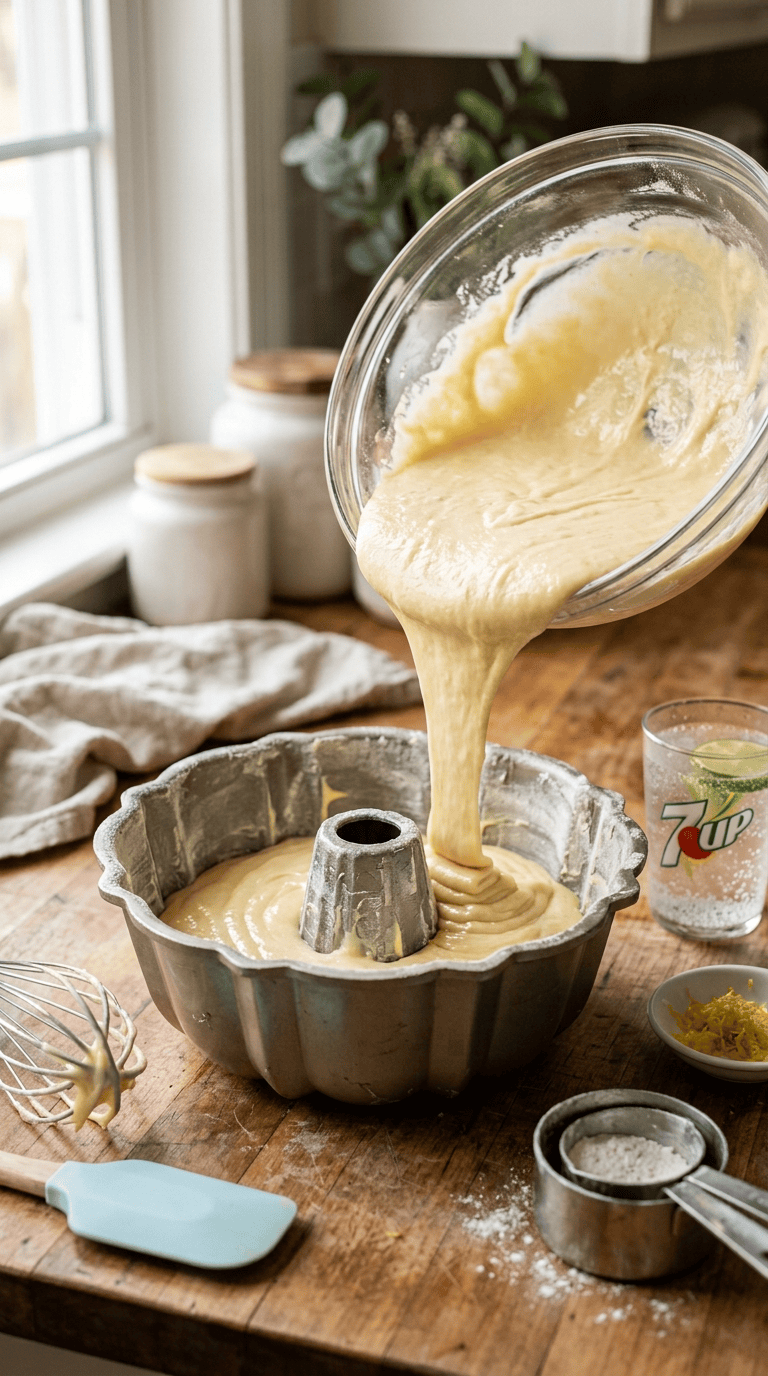
8. Pour the Batter Into the Pan
Pour the batter into your prepared Bundt pan.
Smooth the top gently with a spatula.
Give the pan one or two gentle taps against the counter to remove large air pockets.
Don’t bang it hard. We’re making cake, not renovating the kitchen.
9. Bake the Cake
Place the pan in the preheated oven and bake for approximately 65–75 minutes.
Start checking around the 60-minute mark because ovens vary.
Insert a long wooden skewer or cake tester into the thickest part of the cake. It should come out clean or with a few moist crumbs attached.
The top should look golden, and the cake should spring back lightly when you touch it.
If the top browns too quickly, loosely cover it with foil during the final part of baking.
10. Cool the Cake
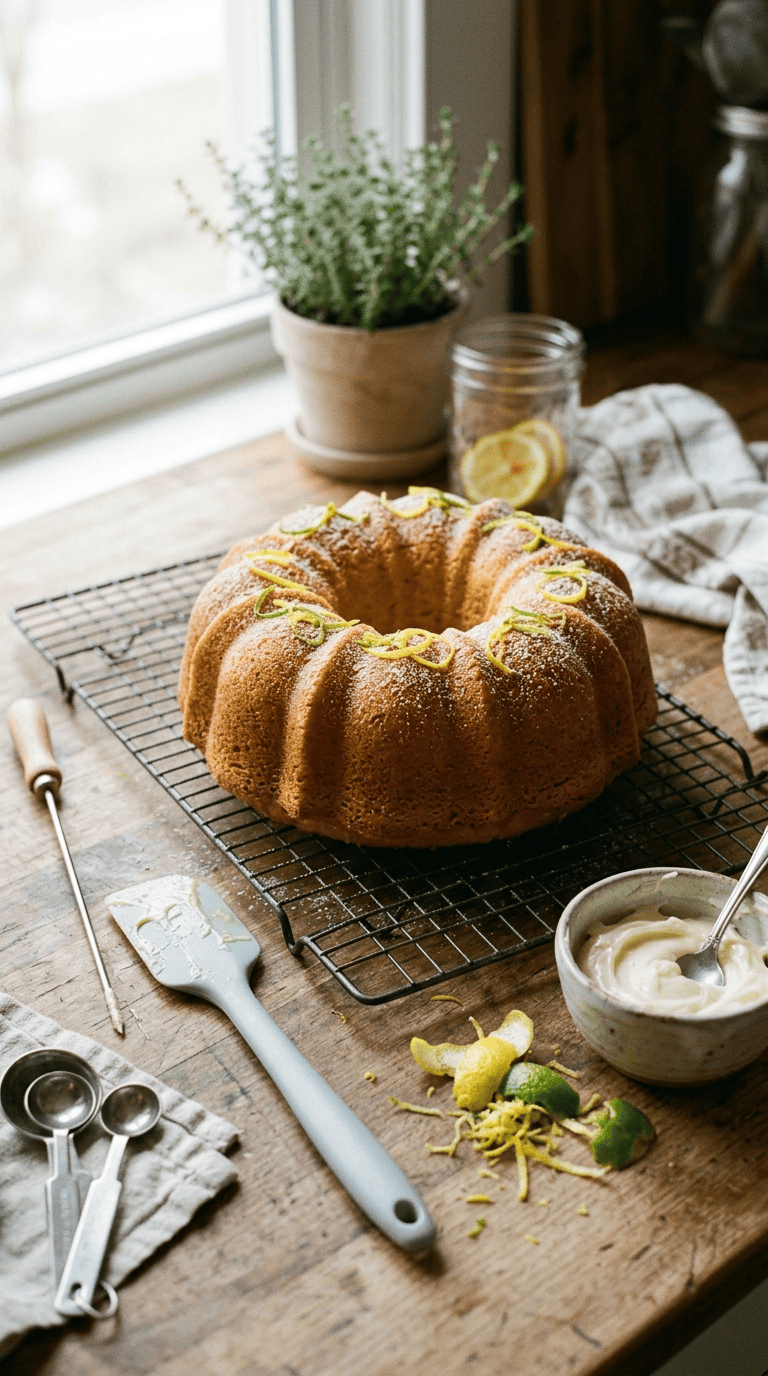
Remove the cake from the oven and place the pan on a wire rack.
Let it cool in the pan for about 15–20 minutes.
Then carefully turn the cake onto the rack and let it cool completely.
This is the part where patience actually matters.
Don’t frost a warm cake. Even slightly warm cake can soften the cream cheese frosting too much and make it slide down the sides.
11. Make the Cream Cheese Frosting
While the cake cools, make the frosting.
Beat the softened cream cheese and butter together for about 2–3 minutes, until smooth and creamy.
Add the powdered sugar gradually.
Mix on low speed at first so you don’t create a powdered-sugar cloud in your kitchen.
Add the vanilla, lemon juice, and a pinch of salt.
Beat until smooth.
If the frosting feels too thick, add heavy cream or milk one teaspoon at a time until it reaches a spreadable consistency.
If it becomes too soft, add a little more powdered sugar.
12. Frost the Cake
Once the cake has cooled completely, spread the cream cheese frosting over the top.
Let some frosting naturally drip down the sides.
You don’t need perfect piping here. In fact, I prefer the slightly rustic look.
Finish with a little lemon or lime zest if you want extra color and citrus aroma.
Then slice and serve.
Pro Tips & Tricks
Use Room-Temperature Ingredients
Cold butter won’t cream properly with the sugar, and cold cream cheese can leave lumps in the frosting.
Give your ingredients time to soften naturally before you begin.
Don’t Overmix the Batter
Once you add the flour, mix gently and stop as soon as everything comes together.
Overmixing can create a dense cake.
Measure Flour Correctly
Don’t scoop flour directly from the bag with your measuring cup and pack it down.
Instead, fluff the flour, spoon it into the measuring cup, and level the top with a knife.
Too much flour can make this cake heavier and drier.
Let the Cake Cool Completely
This might be my biggest frosting tip.
A completely cool cake keeps the cream cheese frosting thick and creamy.
If you need to speed things up, place the cake on a wire rack in a cool room rather than trying to frost it while warm.
Don’t Overbake
Start checking the cake before the full baking time ends.
A clean cake tester and lightly springy top give you better clues than the clock alone.
Chill the Frosted Cake If Needed
If your kitchen feels warm, place the frosted cake in the refrigerator for about 20–30 minutes before serving.
The frosting will firm up beautifully.
Make It Ahead
You can bake the cake a day ahead.
Once completely cooled, cover it tightly and keep it at room temperature if you plan to frost it the next day.
You can also prepare the frosting ahead and refrigerate it. Let it soften slightly before spreading.
Variations & Substitutions
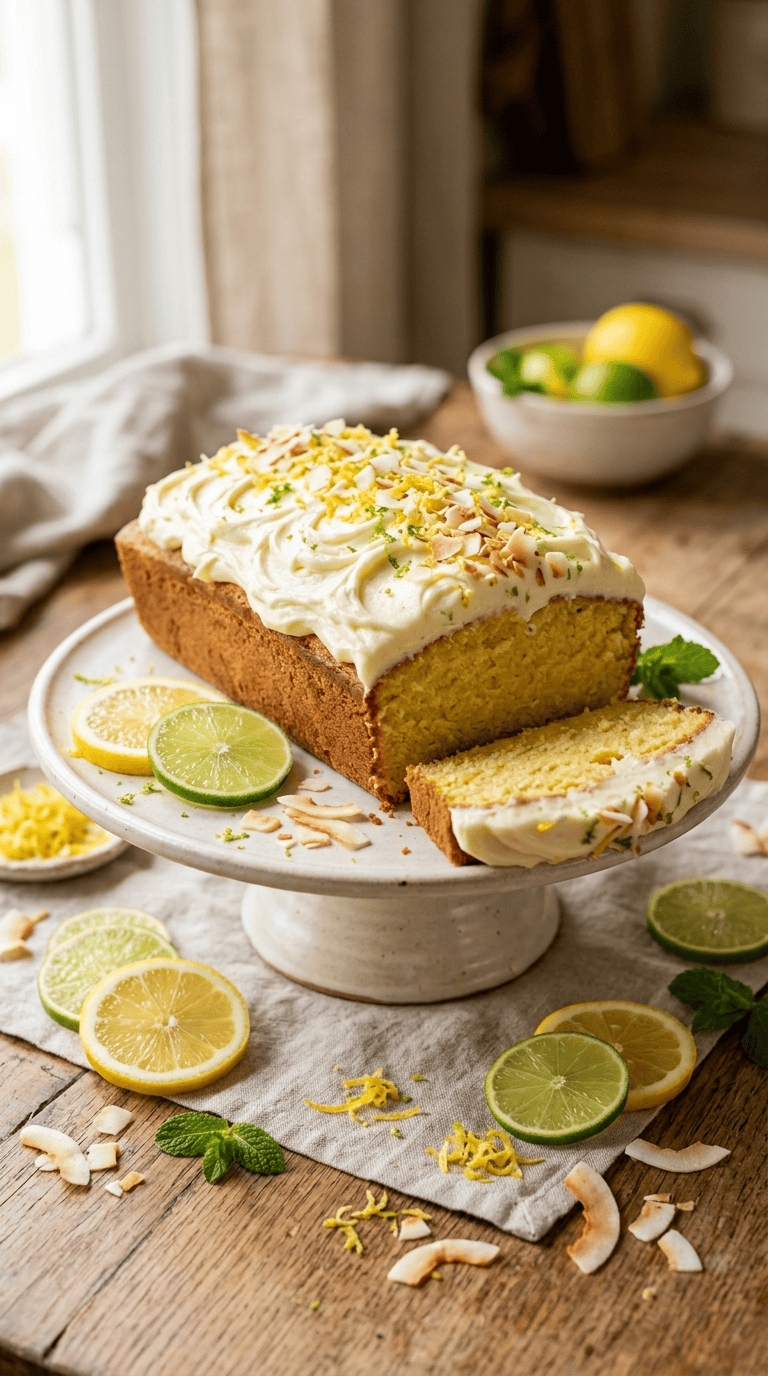
Extra-Lemony 7UP Cake
If you’re a serious lemon lover, increase the lemon zest slightly and add a little extra fresh lemon juice to the frosting.
I wouldn’t add too much juice to the cake batter because it can affect the texture.
Add a Citrus Glaze
If you don’t want a thick layer of cream cheese frosting, make a thinner lemon-lime glaze instead.
Mix powdered sugar with fresh lemon juice and a tiny splash of 7UP until smooth.
Drizzle it over the completely cooled cake.
Add Coconut
For a tropical twist, add about 1/2 cup sweetened shredded coconut to the batter.
You can also sprinkle toasted coconut over the cream cheese frosting.
The combination of citrus and coconut tastes especially good in warmer weather.
Use Sprite
If you don’t have 7UP, regular Sprite works as a simple substitute.
The flavor may vary slightly, but the cake will still have the same basic lemon-lime character.
Try a Different Frosting
Not a cream cheese fan?
A simple vanilla buttercream works well, too. You can also use a lemon glaze if you prefer something lighter.
Serving Suggestions
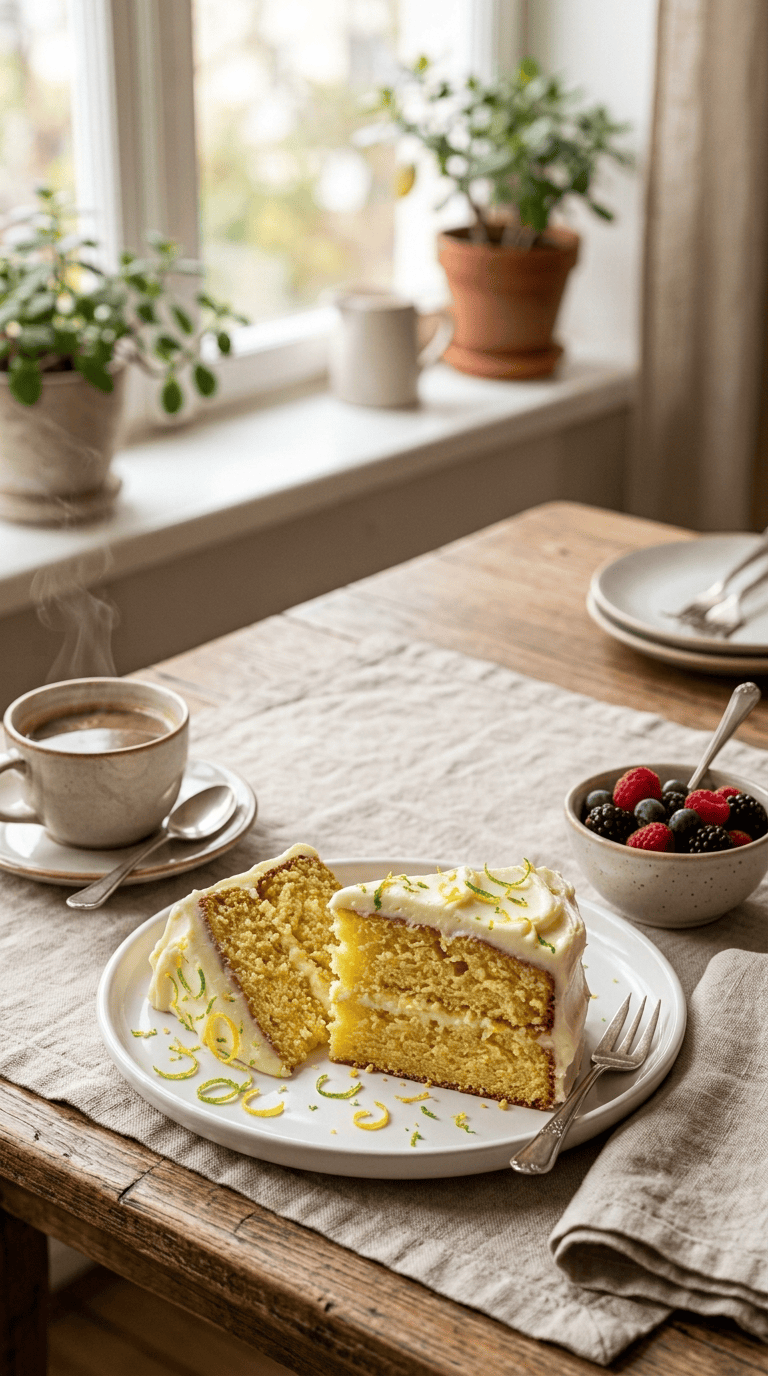
I love serving this cake slightly chilled or at cool room temperature.
The cream cheese frosting firms up in the refrigerator, while the cake stays soft and tender.
For a casual afternoon dessert, serve a slice with hot coffee or tea.
For a family dinner, add fresh berries beside each slice. Strawberries, blueberries, and raspberries all work nicely with the citrus flavor.
For birthdays and celebrations, decorate the top with thin lemon and lime slices.
You can also turn it into a simple brunch dessert by cutting smaller slices and serving them alongside fresh fruit.
This cake fits comfortably on a dessert table because it looks pretty without requiring professional decorating skills.
And that’s exactly the kind of cake I appreciate.
FAQ’s
Can I make 7UP Cake without a Bundt pan?
Yes. You can use a tube pan or another similarly sized cake pan.
Keep in mind that baking time can change depending on the size and shape of the pan. Start checking the cake early and use a cake tester to determine when it’s done.
How should I store 7UP Cake with cream cheese frosting?
Because the frosting contains cream cheese, store the frosted cake in the refrigerator.
Cover it well and enjoy it within about 4–5 days for the best quality.
Let individual slices sit at room temperature for a few minutes before serving if you prefer softer frosting.
Can I freeze this cake?
Yes.
For the best result, freeze the unfrosted cake. Wrap it tightly in plastic wrap and then place it in a freezer-safe bag or container.
Freeze for up to about 2–3 months.
Thaw it overnight in the refrigerator, bring it closer to room temperature, and frost before serving.
You can also freeze individual frosted slices, but the frosting may change slightly in texture after thawing.
Can I make this cake ahead of time?
Absolutely.
Bake the cake one day ahead, cool it completely, and cover it tightly.
Prepare the frosting separately and refrigerate it.
The next day, let the frosting soften enough to spread easily, then frost the cake before serving.
Why did my 7UP Cake turn out dense?
A few things can cause a dense cake.
You may have overmixed the batter after adding the flour, measured too much flour, or used butter that wasn’t properly creamed with the sugar.
Make sure you cream the butter and sugar for several minutes and mix the flour only until incorporated.
Can I use diet 7UP?
I recommend regular 7UP for this recipe.
Regular soda provides the sweetness and liquid balance that the recipe expects. Diet soda can behave differently during baking, so I prefer sticking with regular lemon-lime soda for the most predictable result.
Final Thoughts
There is something wonderfully old-fashioned about a Bundt cake sitting on the kitchen counter, waiting for someone to sneak a slice.
This 7UP Cake has become one of those recipes I reach for when I want something familiar but still a little different. The soft, citrusy cake feels cheerful, while the tangy cream cheese frosting makes it rich enough for a celebration.
And don’t worry if your frosting doesn’t look bakery-perfect. Mine certainly didn’t the first few times.
A generous spoonful of frosting, some fresh citrus zest, and a slightly messy slice still taste fantastic.
So grab your Bundt pan, chill that 7UP, and give this cake a try. If you make it, I’d love to hear how it turned out — especially if you add your own little twist.
Leave a Reply
You must be logged in to post a comment.