

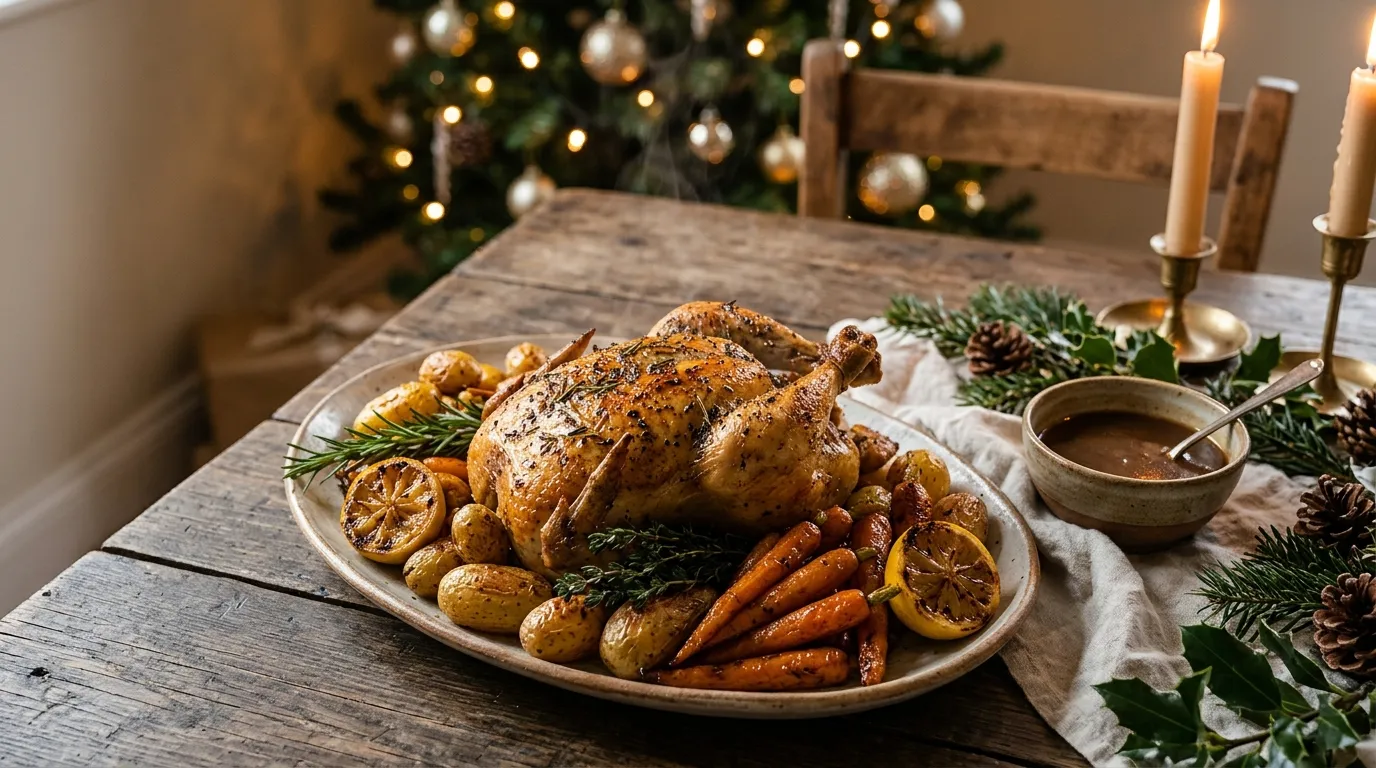
There’s something special about the smell of a Christmas dinner coming together. The oven hums in the background, butter and herbs fill the kitchen with a cozy aroma, and suddenly everyone seems to wander in asking, “Is it ready yet?”
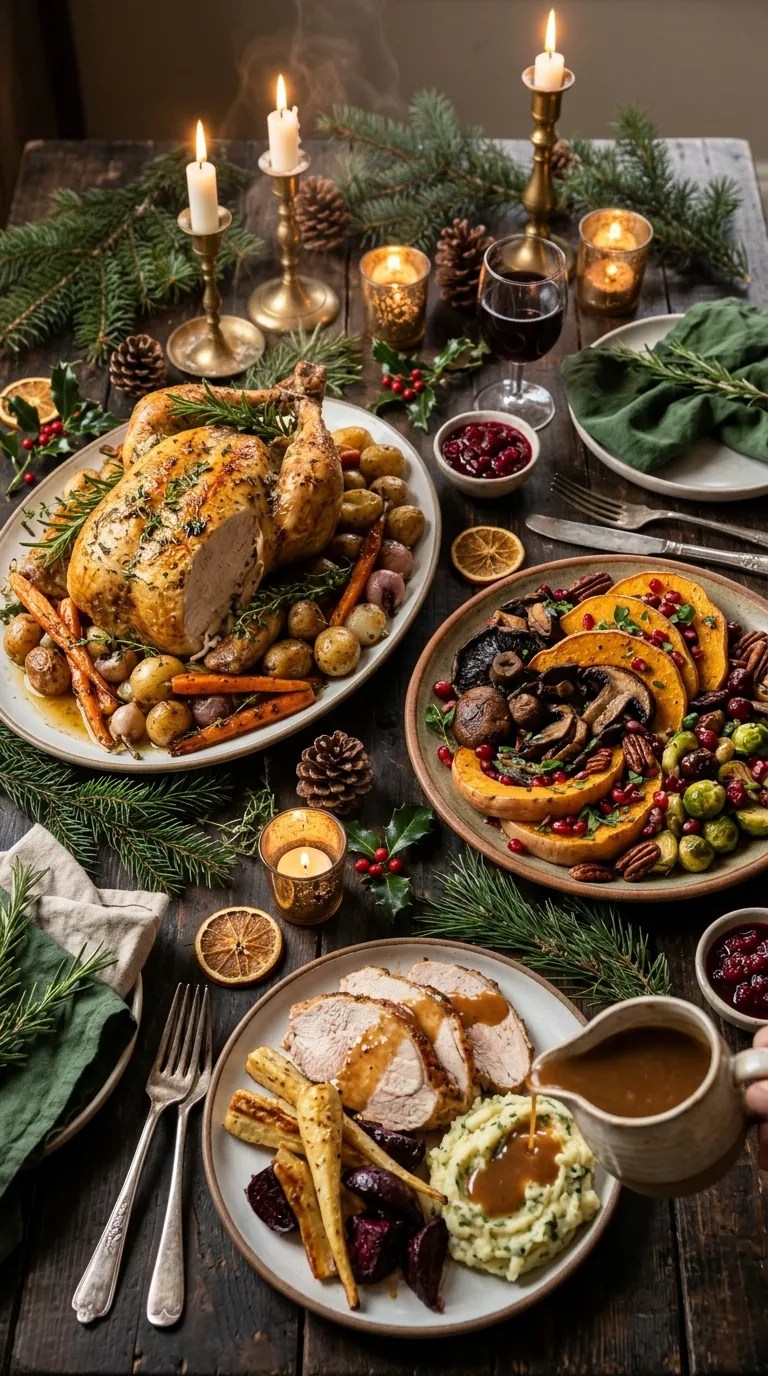
For a holiday meal, I love recipes that feel special without turning the kitchen into a stressful workplace. This Christmas dinner recipe brings together a tender herb-seasoned roast chicken, crispy roasted potatoes, honey-glazed carrots, and a simple pan gravy. It looks impressive on the table, but the individual parts stay straightforward.
You don’t need a complicated list of ingredients or fancy equipment. A sturdy roasting pan, a sharp knife, a cutting board, and a reliable oven thermometer will take you most of the way.
The best part is that you can prepare several pieces ahead of time. That leaves more room for the things that actually make Christmas memorable: setting the table, listening to music, talking with family, and sneaking a taste of the potatoes before dinner.
Why You’ll Love This Christmas Dinner Recipe

- It feels festive without being fussy. The herbs, roasted vegetables, and gravy give you classic holiday flavor without complicated techniques.
- The ingredients stay familiar. You can find everything at an ordinary grocery store.
- You can prep ahead. Chop the vegetables and mix the herb butter earlier in the day.
- It feeds a small holiday gathering. The recipe serves about 6 people, with enough flexibility for generous portions.
- The leftovers actually work. Extra chicken tastes great in sandwiches, wraps, soups, and salads the next day.
Ingredients
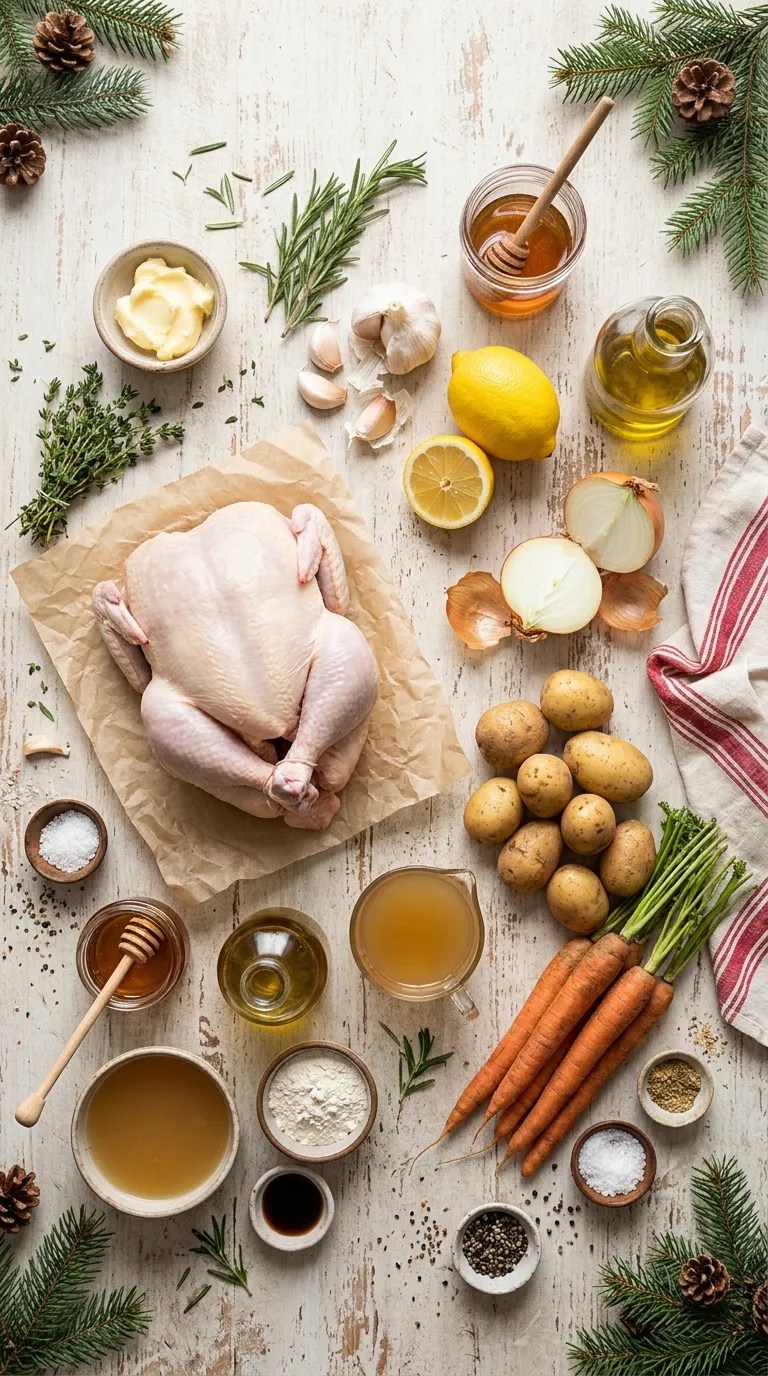
For the Roast Chicken
- 1 whole chicken, about 4½ to 5 pounds
- 4 tablespoons unsalted butter, softened
- 3 garlic cloves, finely minced
- 1 tablespoon fresh rosemary, finely chopped
- 1 tablespoon fresh thyme leaves
- 1 teaspoon kosher salt
- ½ teaspoon black pepper
- 1 lemon, halved
- 1 small onion, quartered
- 1 cup chicken broth
You can use dried herbs if fresh herbs aren’t available. Use about 1 teaspoon each of dried rosemary and thyme.
For the Roasted Potatoes
- 2 pounds baby potatoes, halved
- 2 tablespoons olive oil
- 1 teaspoon kosher salt
- ½ teaspoon black pepper
- 1 teaspoon dried rosemary
- ½ teaspoon garlic powder
Yukon Gold potatoes work especially well because they develop crisp edges while staying creamy inside.
For the Honey-Glazed Carrots
- 1½ pounds carrots, peeled and cut into thick sticks
- 1 tablespoon olive oil
- 2 tablespoons honey
- 1 tablespoon melted butter
- ½ teaspoon salt
- ¼ teaspoon black pepper
- 1 tablespoon chopped fresh parsley
If you prefer a less sweet side dish, reduce the honey to 1 tablespoon.
For the Quick Pan Gravy
- 3 tablespoons butter
- 3 tablespoons all-purpose flour
- 2 cups chicken broth
- ½ teaspoon Worcestershire sauce
- ¼ teaspoon black pepper
- Salt, to taste
If you need a gluten-free gravy, use a gluten-free all-purpose flour blend that works as a 1:1 substitute for regular flour.
Step-by-Step Instructions
1. Bring the Chicken Out of the Refrigerator
Take the chicken out about 30 minutes before roasting.
Pat the skin thoroughly dry with paper towels. This small step matters because dry skin browns much better than wet skin.
While the chicken sits, heat the oven to 425°F (220°C).
2. Make the Herb Butter
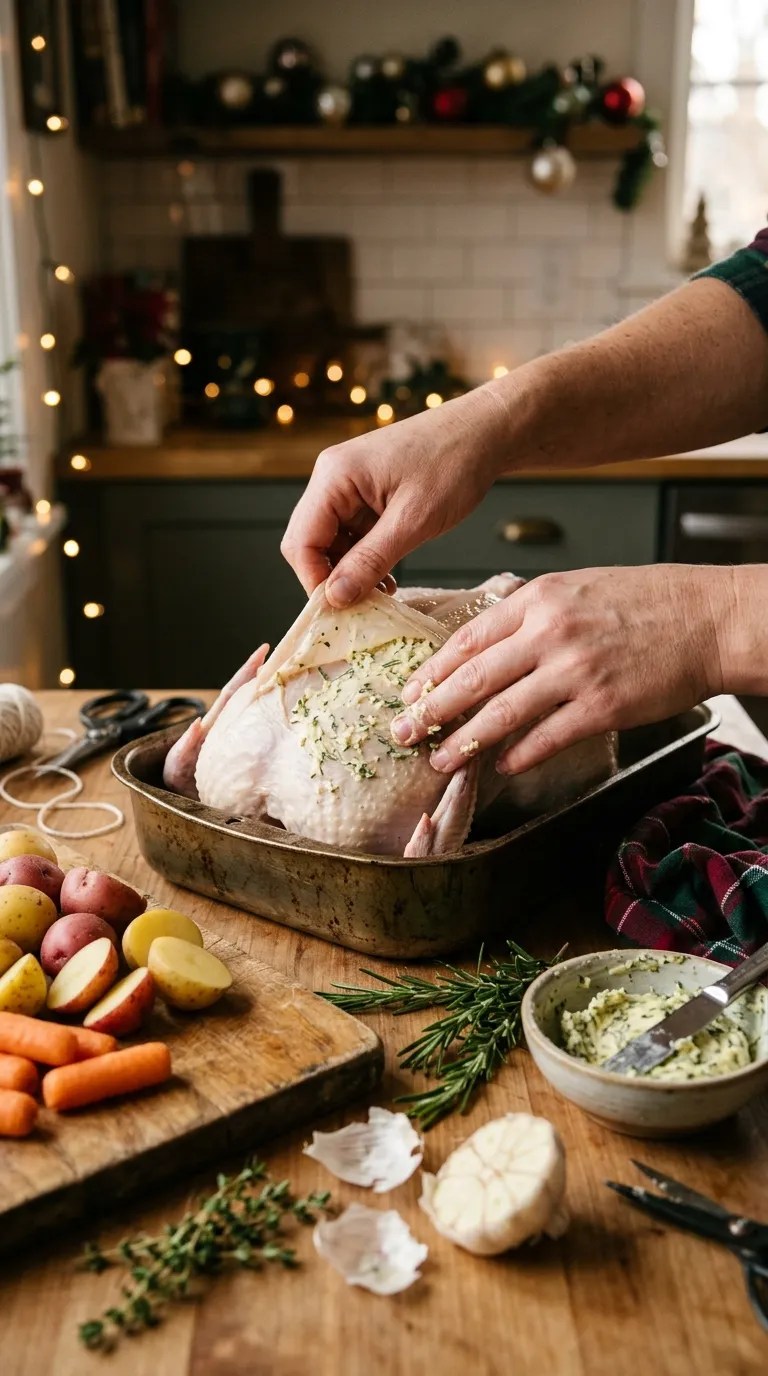
Add the softened butter, minced garlic, rosemary, thyme, salt, and black pepper to a small bowl.
Mash everything together with a fork until the herbs and garlic distribute evenly.
Gently loosen the skin over the chicken breasts with your fingers. Slide some of the herb butter underneath the skin, then spread the remaining butter over the outside.
Don’t worry if the butter looks a little messy. It will melt into the chicken as it roasts.
3. Fill the Chicken Cavity
Place the lemon halves and quartered onion inside the cavity.
You don’t need to pack it tightly. The lemon and onion mainly add aroma while the chicken cooks.
Set the chicken breast-side up in a roasting pan or large oven-safe skillet. Pour 1 cup of chicken broth into the bottom of the pan.
4. Start Roasting
Place the chicken in the 425°F oven and roast for 20 minutes.
After those first 20 minutes, reduce the oven temperature to 375°F (190°C).
Continue roasting for roughly 60–75 minutes, depending on the size of the chicken and your oven.
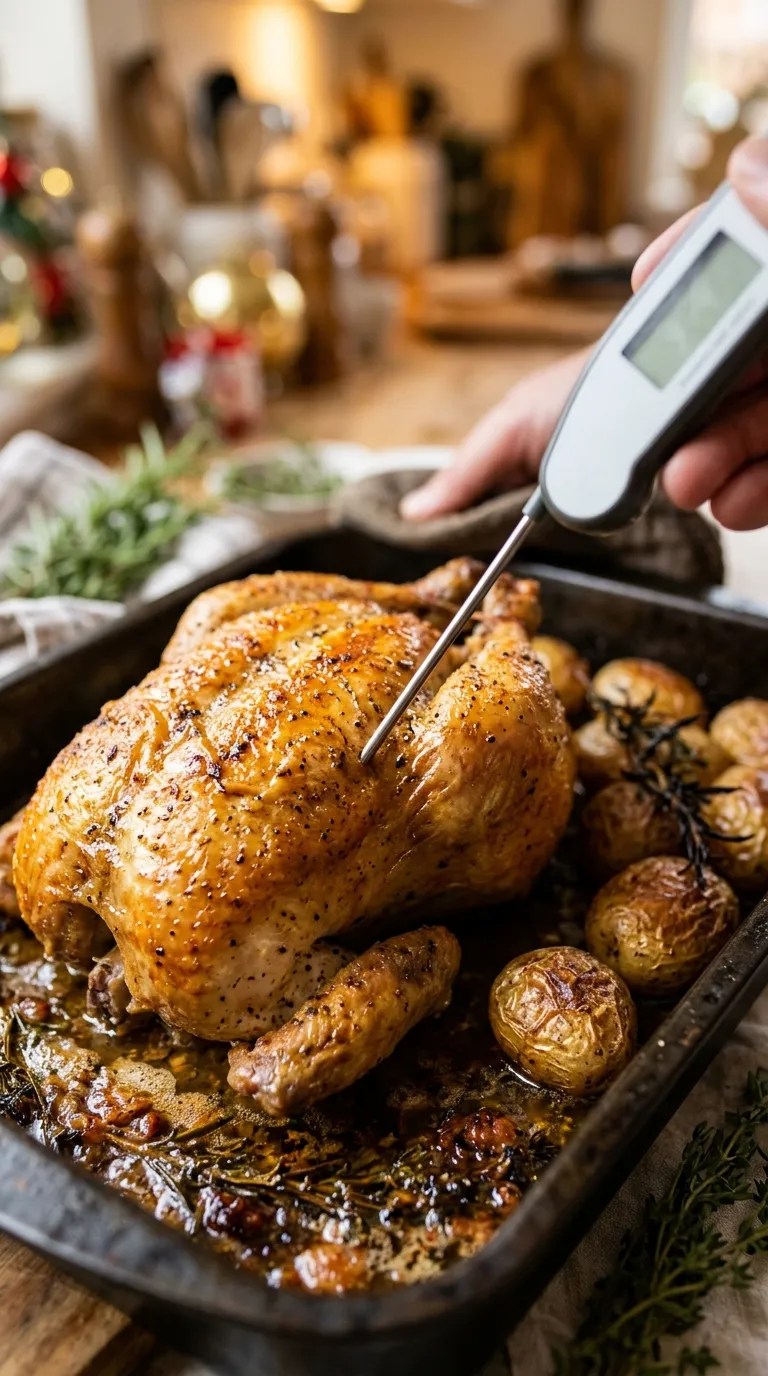
The most reliable way to judge doneness involves temperature rather than the clock. Insert an instant-read thermometer into the thickest part of the thigh without touching the bone.
The chicken should reach 165°F (74°C).
If the skin becomes deeply browned before the chicken finishes cooking, loosely cover the breast area with foil.
5. Start the Potatoes
While the chicken cooks, place the halved potatoes in a large bowl.
Add olive oil, salt, pepper, rosemary, and garlic powder. Toss until every potato has a light coating.
Spread them cut-side down on a baking sheet.
For especially crisp potatoes, avoid crowding the pan. Give each piece a little breathing room.
Roast them for about 35–45 minutes, turning them once halfway through.
Look for deeply golden edges and a fork-tender center.
6. Prepare the Carrots
Toss the carrots with olive oil, salt, and pepper.
Spread them on another baking sheet or add them to the potato tray if there is enough room.
Roast for about 25–30 minutes, until they become tender and develop browned edges.
Mix the honey and melted butter together in a small bowl.
During the final 8–10 minutes of roasting, toss the carrots with the honey-butter mixture and return them to the oven.
Watch them closely because honey can brown quickly.
Sprinkle chopped parsley over the carrots just before serving.
7. Rest the Chicken
When the chicken reaches 165°F, remove it from the oven.
Transfer it to a cutting board and loosely cover it with foil.
Let it rest for 15–20 minutes.
This is not the moment to start carving immediately. Resting gives the juices time to settle, which makes carving much easier and helps keep the meat moist.
Use the resting time to finish the gravy and bring the vegetables together.
8. Make the Pan Gravy
Place the roasting pan over low to medium heat if it works safely on your stovetop. Otherwise, transfer the pan juices to a saucepan.
Melt 3 tablespoons of butter in a saucepan.
Whisk in the flour and cook for about 1–2 minutes, whisking constantly.
Slowly pour in the chicken broth while whisking.
Add the Worcestershire sauce and black pepper.
Simmer for about 5–7 minutes, stirring frequently, until the gravy becomes smooth and thick enough to coat the back of a spoon.
Taste before adding salt because the chicken juices and broth may already contain plenty.
If the gravy becomes too thick, whisk in a small splash of broth.
9. Carve and Serve
Transfer the chicken to a large cutting board.
Use a sharp carving knife to remove the legs first, then separate the thighs and drumsticks. Slice the breast meat across the grain.
Arrange the chicken on a large serving platter and surround it with the roasted potatoes and honey-glazed carrots.
Pour the gravy into a warm serving jug and bring everything to the table while it’s hot.
Pro Tips & Tricks
Dry the Chicken Before Adding the Butter
It sounds insignificant, but drying the chicken skin makes a noticeable difference. Moisture on the surface can interfere with browning.
Give the skin a thorough pat-down with paper towels before seasoning.
Use a Thermometer Instead of Guessing
Roasting times can vary because ovens differ and chickens come in different sizes.
An inexpensive instant-read thermometer removes the guesswork. Check the thickest part of the thigh and avoid touching the bone with the probe.
Don’t Crowd the Potatoes
This is one of the easiest mistakes to make.
When potatoes sit too close together, they release steam and struggle to develop crisp edges. Use two baking sheets if necessary.
Make the Vegetables Earlier
You can peel and cut the carrots and potatoes several hours before dinner.
Keep the prepared vegetables refrigerated in separate covered containers until you’re ready to roast them.
For the potatoes, place the cut pieces in cold water if you’re preparing them well ahead. Drain and dry them extremely well before adding oil and seasoning.
Save the Leftover Chicken
Once dinner ends, remove the remaining chicken from the bones and refrigerate it promptly in a covered container.
Use it within a few days, or freeze it in meal-sized portions for another dinner.
Variations & Substitutions
Try a Garlic-Herb Chicken
For a stronger herb flavor, add 1 tablespoon of chopped fresh parsley and another minced garlic clove to the butter.
You can also add a little lemon zest for a bright citrus note.
Make It Gluten-Free
The chicken, potatoes, and carrots naturally work well without gluten.
For the gravy, replace the all-purpose flour with a suitable gluten-free flour blend. Check the labels on your broth and Worcestershire sauce as well, since packaged ingredients can vary.
Make a Vegetarian Holiday Dinner
If you’re cooking for someone who doesn’t eat meat, replace the chicken with a hearty roasted vegetable centerpiece.
A large stuffed acorn squash, mushroom Wellington, or lentil loaf can take the place of the chicken while the potatoes, carrots, and gravy remain part of the meal.
For vegetarian gravy, use vegetable broth and a vegetarian Worcestershire-style sauce or another savory seasoning.
Serving Suggestions

This Christmas dinner already gives you a solid plate, but a few extra sides can turn it into a full holiday spread.
A simple green salad adds freshness alongside the rich gravy and roasted vegetables. Steamed green beans with butter and lemon also fit beautifully without adding much work.
If you want another classic holiday side, prepare a small dish of cranberry sauce. The tartness cuts through the richness of the chicken and gravy.
For bread, warm dinner rolls or a crusty loaf make perfect companions for leftover gravy.
And don’t forget dessert. Apple pie, gingerbread, chocolate cake, or a simple Christmas pudding can finish the meal without requiring another complicated recipe.
For a relaxed family Christmas, serve everything family-style and let everyone build their own plate.
For a more formal dinner, slice the chicken before serving and arrange the vegetables around it on a large platter.
Related Recipes:
- Old Fashioned Pecan Pie Brownie
- Easy Pecan Pie Bars With Sugar Cookie Crust
- Easy Brown Sugar Pecan Pie Bars
- How to Make Pecan Pie Cheesecake From Scratch
FAQ’s
Can I prepare this Christmas dinner ahead of time?
Yes. You can prepare the herb butter, peel the carrots, and cut the potatoes several hours ahead.
Keep prepared ingredients refrigerated until you need them. You can also make the gravy shortly before serving and gently reheat it if necessary.
How should I store leftover Christmas dinner?
Let the leftovers cool appropriately, then place the chicken and vegetables in airtight containers and refrigerate them.
Keep the gravy in a separate covered container when possible. Use refrigerated leftovers within a few days for the best quality.
How do I reheat the chicken without drying it out?
Reheat sliced chicken gently rather than blasting it at a very high temperature.
Place the chicken in a covered oven-safe dish with a small splash of broth. Warm it in a moderate oven until heated through.
For a single serving, a microwave works too. Cover the chicken and heat it in short intervals so it doesn’t become tough.
Can I freeze leftover roast chicken?
Yes. Remove the chicken from the bones, divide it into convenient portions, and place it in airtight freezer-safe packaging.
Label it with the date so you know how long it has been stored. Thaw frozen chicken safely in the refrigerator before reheating.
The roasted potatoes and glazed carrots are better fresh because their texture can change after freezing.
Why did my roast chicken skin stay pale?
The most common culprit is moisture.
Pat the chicken dry before roasting and avoid covering the entire chicken unless you need to prevent excessive browning. Make sure your oven reaches the correct temperature before the chicken goes inside.
What if my gravy is too thin?
Let it simmer for a few extra minutes while stirring.
If you need to thicken it quickly, make a small slurry with flour and cold water or use another thickening method appropriate for your dietary needs. Add it gradually so you don’t accidentally make the gravy too thick.
Final Thought
A Christmas dinner doesn’t need to involve a dozen complicated recipes to feel memorable.
A golden roast chicken, crisp potatoes, sweet roasted carrots, and a jug of homemade gravy can create exactly the kind of meal people gather around a table for.
The little details make the difference: drying the chicken before roasting, giving the potatoes enough space, checking the temperature instead of guessing, and letting the chicken rest before carving.
Most importantly, leave yourself enough breathing room to enjoy the meal too.
Christmas dinner should fill the kitchen with good smells, the table with food, and the room with people who are happy to be there. If this recipe finds its way onto your holiday table, I hope it gives you one less thing to worry about and one more reason to linger around the table after dinner.
Leave a Reply
You must be logged in to post a comment.