

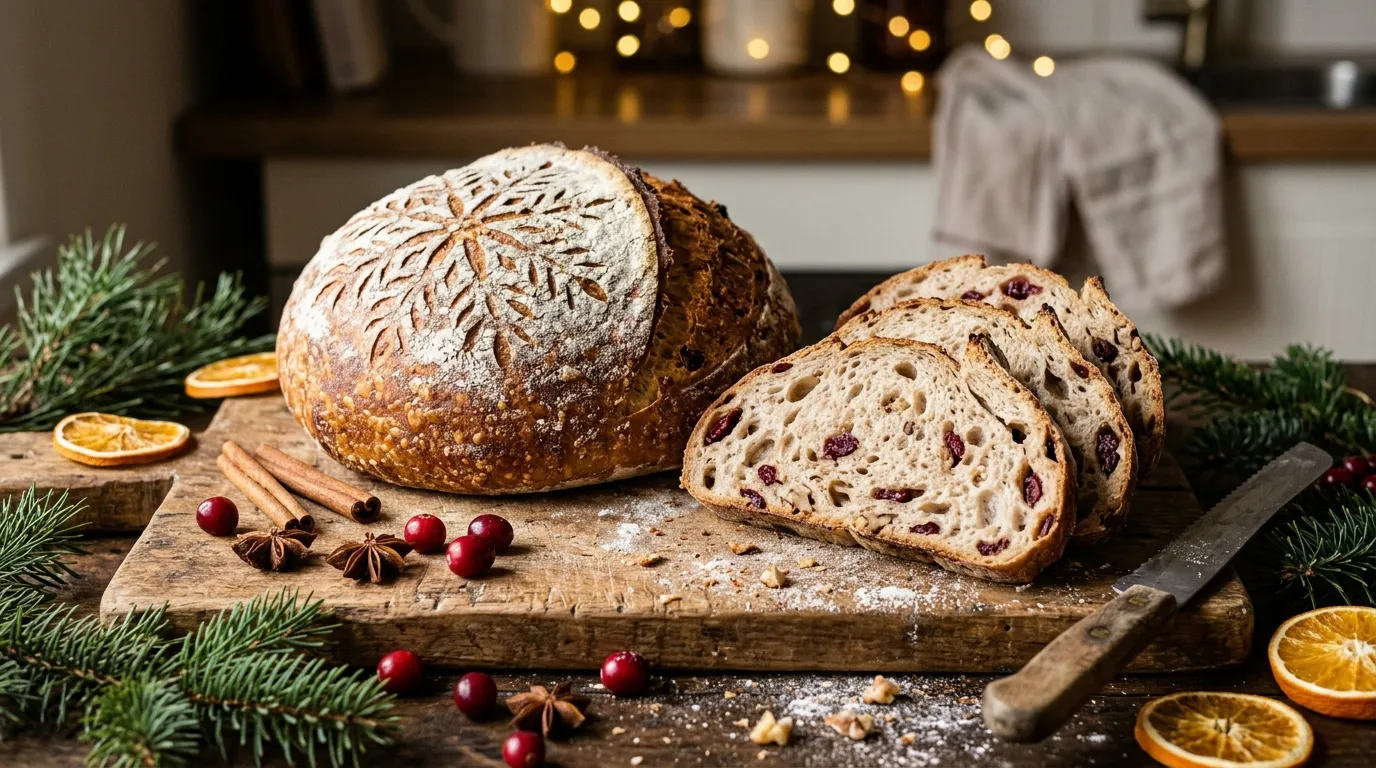
There is something magical about baking bread during the Christmas season. Maybe it’s the warmth of the oven, the smell of cinnamon and butter filling the kitchen, or the simple joy of pulling a beautiful golden loaf from the oven while Christmas music plays in the background.
I especially love making sourdough around the holidays. A few years ago, I started experimenting with festive flavors, hoping to create something a little more special than my usual everyday loaf. My first attempt turned out slightly denser than I expected, but the flavor was wonderful. After a few adjustments, I discovered a combination of dried cranberries, orange zest, cinnamon, and a touch of honey that completely changed my holiday baking routine.
That’s how this Christmas Sourdough Recipe became one of my favorite seasonal traditions.
This loaf has everything I want in Christmas bread. It has a lightly crisp golden crust, a soft and chewy interior, gentle sourdough tang, and little bursts of sweet cranberry in every slice. Orange zest adds a fresh holiday aroma, while cinnamon brings that familiar cozy flavor.
The best part? You don’t need complicated baking equipment or professional bread-making experience. If you already have an active sourdough starter and a little patience, you can make this beautiful holiday loaf right in your home kitchen.
Whether you’re preparing breakfast for Christmas morning, putting together a holiday brunch, or looking for a homemade edible gift, this festive sourdough bread deserves a place on your baking list.
Why You’ll Love This Christmas Sourdough Recipe

There are plenty of reasons to make this bread during the holiday season, but these are the ones that keep bringing me back to it.
- Beautiful holiday flavors: Dried cranberries, orange zest, cinnamon, and honey create a festive combination without making the bread overly sweet.
- A beginner-friendly sourdough project: The dough uses simple ingredients and straightforward techniques. You don’t need advanced shaping skills to get a lovely loaf.
- Perfect for sharing: One loaf makes plenty of slices for breakfast, brunch, afternoon snacks, or a holiday cheese board.
- Naturally leavened: An active sourdough starter provides the rise and signature tangy flavor without commercial yeast.
- Easy to prepare ahead: You can mix and shape the dough ahead of time, then refrigerate it overnight and bake it the next day.
I also love how flexible this recipe feels. You can keep the cranberry and orange combination, add chopped nuts, or change the spices depending on what your family enjoys.
Ingredients for Christmas Sourdough Bread
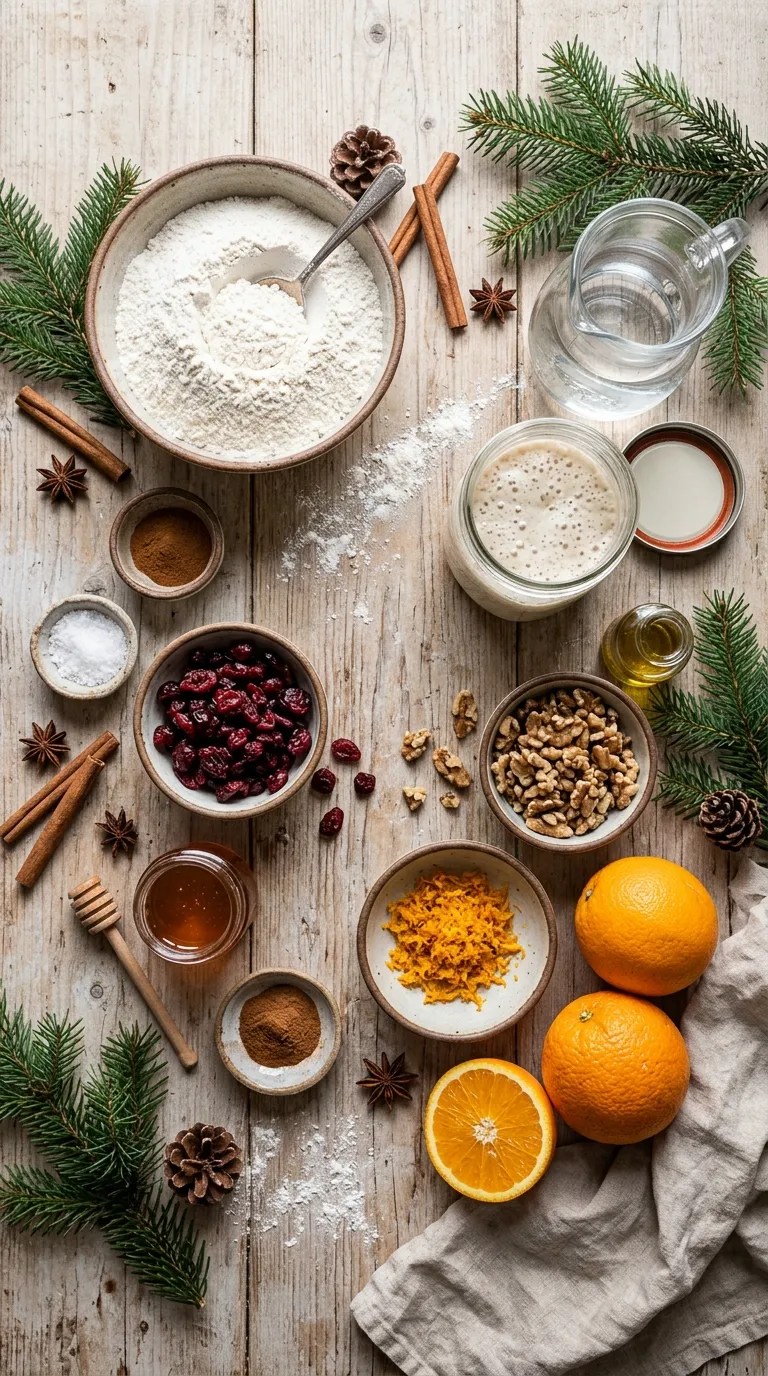
You only need a handful of everyday baking ingredients to make this festive loaf. Most of them are probably already in your pantry.
The quantities below make one medium-sized loaf.
For the sourdough dough
- 400g bread flour: Bread flour gives the loaf a chewy texture and helps it hold its shape. You can use strong white bread flour.
- 280g water: Use room-temperature water. If your kitchen feels particularly warm, slightly cooler water can help slow fermentation.
- 100g active sourdough starter: Use a bubbly starter that has recently doubled in size after feeding.
- 8g fine sea salt: Salt improves flavor and helps strengthen the dough.
- 25g honey: Honey adds gentle sweetness and complements the cranberries. You can substitute maple syrup if preferred.
- 15g olive oil: This adds a little softness to the crumb. A neutral vegetable oil also works.
For the Christmas filling
- 80g dried cranberries: These provide sweet and slightly tart bursts throughout the loaf.
- 50g chopped walnuts or pecans: These add a pleasant crunch. Leave them out if you prefer a nut-free loaf.
- Zest of 1 large orange: Fresh orange zest gives the bread its wonderful festive aroma.
- 1 teaspoon ground cinnamon: Adds warmth without overpowering the other flavors.
- ¼ teaspoon ground nutmeg: Optional, but lovely for a deeper holiday flavor.
Optional finishing ingredients
- 1 tablespoon melted butter for brushing the warm crust.
- 1 teaspoon honey for a light glaze.
- A little powdered sugar for serving, if desired.
A quick ingredient tip: Choose dried cranberries rather than fresh ones for this particular recipe. Fresh cranberries contain considerably more moisture, which can change the dough’s texture. If your dried cranberries feel very firm, soak them briefly in warm water and drain them thoroughly before adding them.
Step-by-Step Instructions for Christmas Sourdough
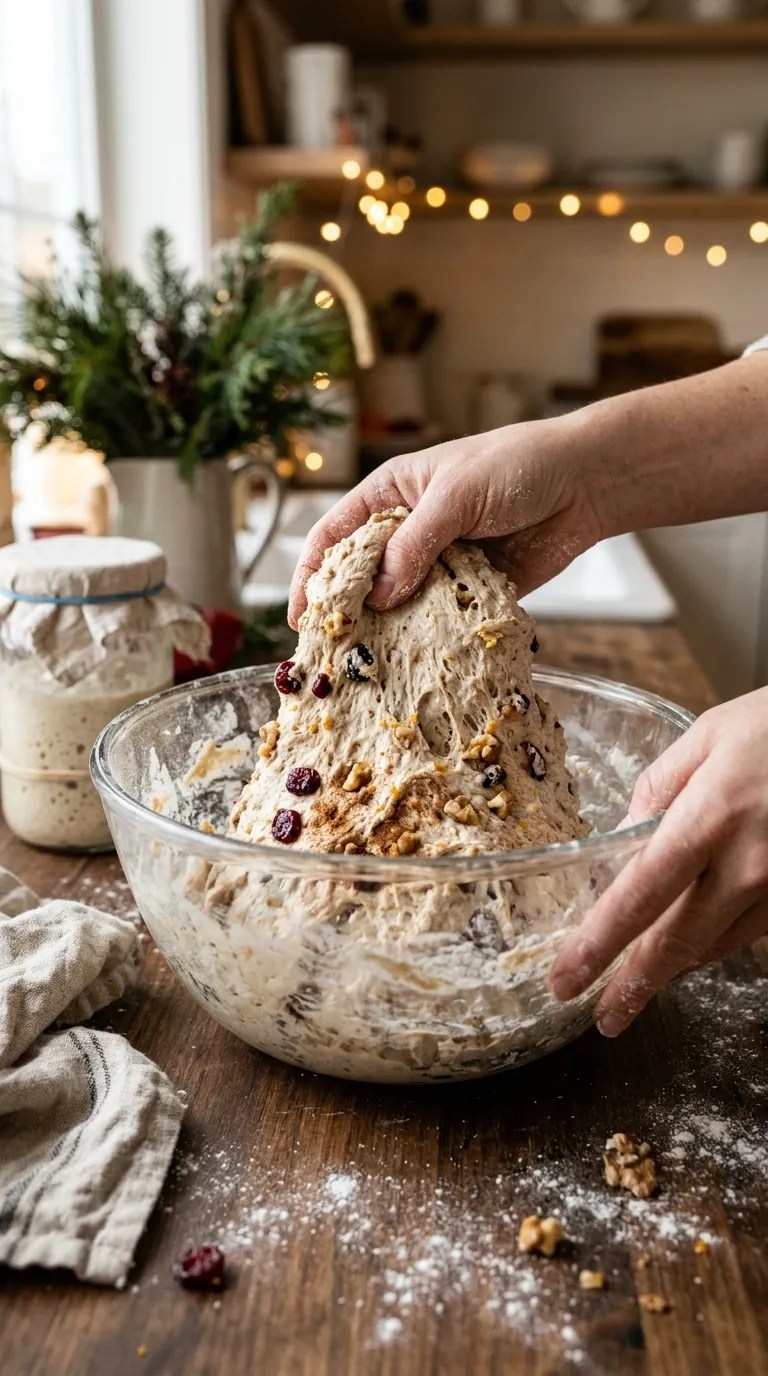
Don’t worry if sourdough baking sounds intimidating. The secret is to pay attention to how the dough looks and feels instead of relying entirely on the clock.
Fermentation times vary depending on your starter, flour, and kitchen temperature.
Step 1: Prepare Your Sourdough Starter
Time: 4–8 hours, depending on starter activity
Start by feeding your sourdough starter according to your usual routine.
For this recipe, you need 100g of active starter. Look for a starter that has risen noticeably, contains plenty of bubbles, and looks airy rather than flat.
If you scoop a little onto the surface of water, it may float, although the float test doesn’t always reliably indicate readiness.
I prefer using my starter close to its peak because it generally gives me a more predictable fermentation.
Step 2: Mix the Dough
Time: 10 minutes
Add the bread flour and water to a large mixing bowl. Stir until no dry flour remains.
Cover the bowl and let the mixture rest for approximately 30 minutes.
This resting period allows the flour to absorb the water and makes the dough easier to work with.
Next, add your active sourdough starter, honey, olive oil, and salt.
Mix everything with your hands or a sturdy dough scraper until the ingredients come together.
At first, the dough might feel sticky and slightly uneven. That’s perfectly normal. Give it a few minutes of gentle mixing, and it should become more cohesive.
You can also use a stand mixer fitted with a dough hook on low speed if you prefer not to mix by hand.
Step 3: Add the Christmas Flavors
Time: 5–10 minutes
Now comes my favorite part!
Add the dried cranberries, chopped walnuts, orange zest, cinnamon, and nutmeg.
Gently fold the ingredients into the dough.
I recommend adding the cranberries gradually rather than dumping everything into the bowl at once. This makes it easier to distribute them evenly.
Try not to knead aggressively. You want the fruit and nuts spread throughout the dough without tearing its developing structure.
If a few cranberries pop out while mixing, simply tuck them back inside.
At this stage, the dough should smell wonderfully festive, with the orange and cinnamon becoming especially noticeable.
Step 4: Start Bulk Fermentation
Time: Approximately 4–6 hours
Cover the bowl and let the dough rest at room temperature.
During the first two hours, perform three or four sets of stretch-and-folds, spacing them about 30 minutes apart.
Here’s how:
- Wet your hand slightly to prevent sticking.
- Grab one side of the dough.
- Gently stretch it upward without tearing.
- Fold it toward the center.
- Rotate the bowl and repeat on the remaining sides.
After several folds, you’ll notice that the dough feels stronger and holds its shape better.
Once you’ve completed the folds, leave the dough undisturbed.
The exact fermentation time depends on your kitchen temperature and starter strength. Look for dough that has expanded noticeably, feels lighter, and shows bubbles around the edges.
It doesn’t always need to double in size.
One mistake I made when learning sourdough was following the clock too closely. I once rushed a loaf into the refrigerator because the recipe time had passed, even though the dough hadn’t developed enough. The result was a noticeably denser bread.
Since then, I’ve learned to trust the dough more than the timer.
Step 5: Shape the Dough
Time: 15 minutes, plus 20–30 minutes of resting
Lightly flour your countertop and carefully turn the dough onto it.
Gently shape it into a round by folding the edges toward the center.
Flip the dough so the smooth side faces upward.
Use your hands or a dough scraper to create surface tension by gently pulling the dough toward you across the countertop.
Don’t press too hard. You want to preserve the air inside the dough.
Let it rest for 20–30 minutes.
For the final shaping, gently tighten the round into a neat boule.
Place it seam-side up inside a floured banneton basket or a bowl lined with a clean, well-floured kitchen towel.
Rice flour works particularly well for dusting proofing baskets because it helps prevent sticking.
Step 6: Refrigerate for the Final Proof
Time: 8–14 hours
Cover the basket with a reusable cover or plastic wrap.
Place it in the refrigerator overnight.
This slow fermentation gives the loaf additional flavor and makes the dough easier to score before baking.
I love this part because it means I can do most of the preparation the evening before Christmas breakfast or a holiday gathering.
Just remember that refrigeration doesn’t completely stop fermentation. If your dough already looks very puffy before chilling, avoid leaving it in the refrigerator longer than necessary.
Step 7: Preheat Your Oven
Time: 30–45 minutes
The next day, place a Dutch oven with its lid inside your oven.
Preheat the oven to 450°F (230°C).
Give the Dutch oven plenty of time to heat up. A properly heated baking vessel helps create a crisp crust and good oven spring.
If you don’t own a Dutch oven, you can use a baking stone or heavy baking tray with a suitable oven-safe steam setup.
Always follow the equipment manufacturer’s safety instructions when working with hot cookware and steam.
Step 8: Score and Bake the Bread
Time: 40–45 minutes
Remove the dough from the refrigerator and carefully turn it onto a piece of baking parchment.
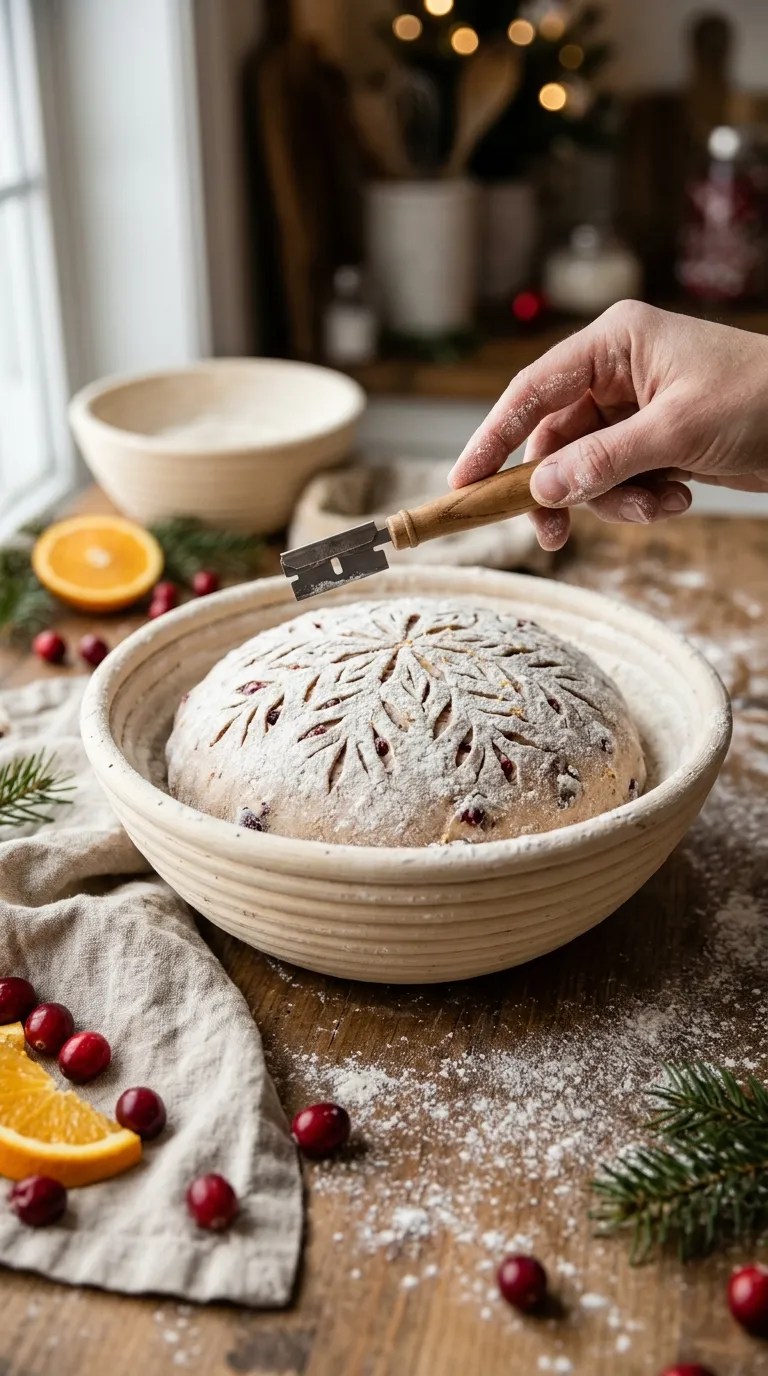
Use a bread lame or sharp scoring tool to make one main slash across the top, approximately ½ inch deep.
You can create a simple Christmas-inspired pattern with a few additional decorative cuts.
Keep decorative scoring relatively simple, especially if this is your first sourdough loaf.
Carefully transfer the dough into the preheated Dutch oven.
Cover with the lid and bake for 20 minutes at 450°F (230°C).
Remove the lid and continue baking for another 20–25 minutes, until the crust turns a deep golden brown.
The loaf should feel firm, and the crust should look crisp.
If you have an instant-read thermometer, the center should generally reach approximately 205–210°F (96–99°C).
Step 9: Cool Before Slicing
Time: At least 2 hours
Once the bread finishes baking, carefully transfer it to a wire cooling rack.
If you want a softer, slightly sweeter crust, brush the top lightly with melted butter while the loaf is still warm.
Now comes the hardest part: waiting!
I know how tempting it is to slice into fresh bread immediately, especially when the kitchen smells like Christmas. However, cutting sourdough too early can leave the center gummy because the crumb still needs time to set.
Allow the loaf to cool for at least two hours before slicing.
Once you cut into it, you’ll see the beautiful pockets of cranberry, nuts, and orange zest throughout the soft interior.
Pro Tips & Tricks for the Best Christmas Sourdough
After making festive sourdough several times, I’ve picked up a few little tricks that make the process much easier.
1. Use an Active Starter
Your starter is responsible for the rise, so don’t use one that looks sleepy or has just come out of the refrigerator without feeding.
A healthy, bubbly starter makes fermentation easier to manage.
If your starter takes longer than usual to rise, give it another feeding and wait until it becomes active.
2. Don’t Add Too Much Filling
It’s tempting to add extra cranberries, nuts, and spices, but too many additions can interfere with gluten development.
Stick to the recommended quantities the first time.
Once you understand how the dough behaves, you can experiment with small adjustments.
3. Drain Soaked Cranberries Properly
If you soak dried cranberries to soften them, drain them thoroughly and pat them dry.
Excess water can make the dough sticky and difficult to shape.
This is a small detail, but it can make a noticeable difference.
4. Watch the Dough During Fermentation
A warm kitchen can speed up fermentation, while a cooler room can slow it down.
Instead of assuming every loaf needs exactly five hours, watch for signs of expansion, bubbles, and a lighter texture.
A clear-sided container makes it easier to see how much the dough has grown.
5. Store the Bread Properly
Once the loaf cools completely, keep it in a bread bag or airtight container at room temperature.
The crust gradually softens during storage, but the bread should retain a pleasant texture for a couple of days.
For longer storage, slice the bread and freeze it in a freezer-safe bag.
You can toast individual slices directly from frozen.
Variations & Substitutions
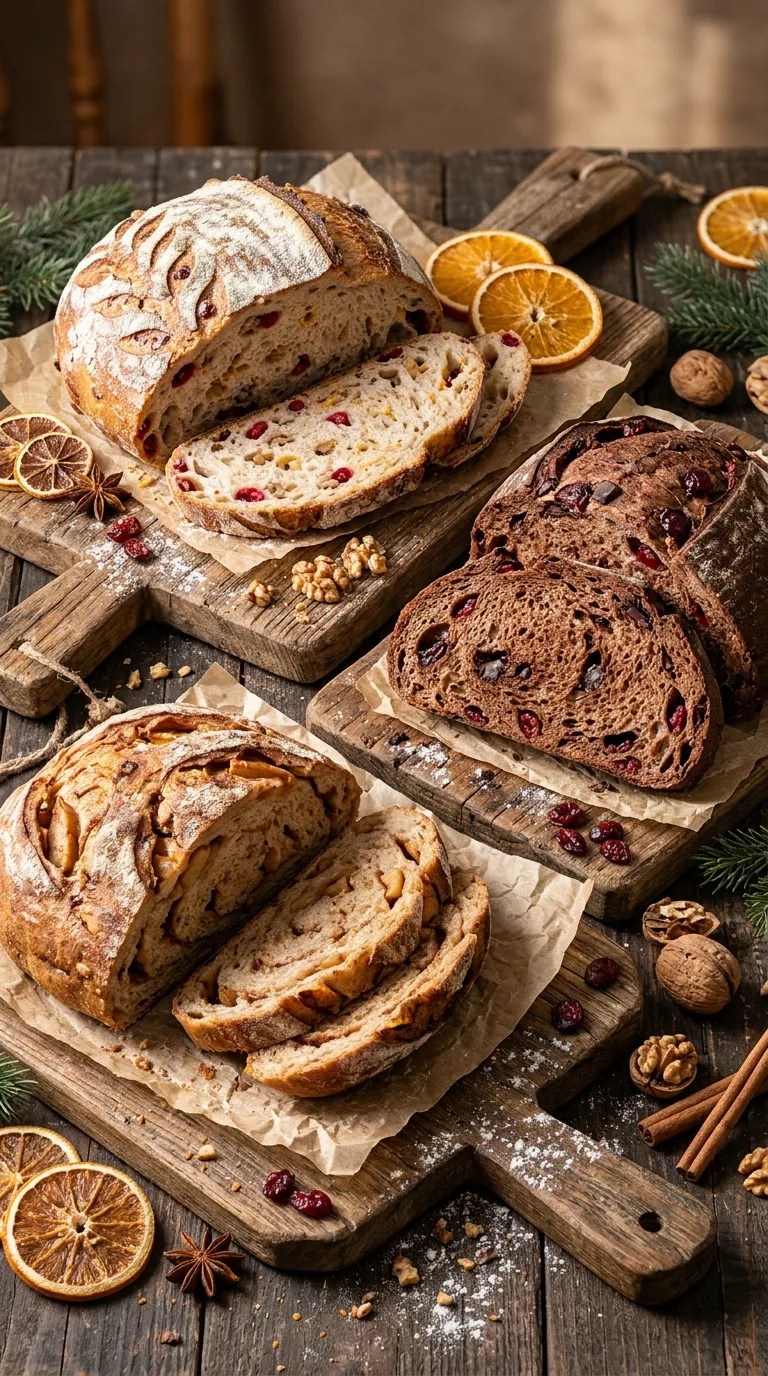
One of the best things about this Christmas Sourdough Recipe is how easily you can adjust the flavors.
Here are a few combinations worth trying.
1. Cranberry Orange Walnut Sourdough
This is my favorite variation.
Keep the original cranberry and orange combination, but increase the walnuts to 70g if you enjoy extra crunch.
The walnuts bring a slightly earthy flavor that balances the sweetness of the cranberries.
You can also add a little extra orange zest if you prefer a brighter citrus aroma.
2. Christmas Chocolate and Cranberry Sourdough
For something a little more dessert-like, replace the walnuts with 60g of dark chocolate chunks.
Keep the cranberries, but reduce the cinnamon slightly so the chocolate flavor comes through.
Choose chocolate designed for baking so it holds up reasonably well during mixing and baking.
This version tastes especially good lightly toasted and served with butter.
3. Apple Cinnamon Holiday Sourdough
If you prefer classic Christmas spices, try replacing the cranberries with 80g of finely chopped dried apple.
Add an extra ½ teaspoon of cinnamon and keep the orange zest for a little freshness.
I recommend using dried apple rather than fresh apple because fresh fruit adds moisture that can make the dough harder to manage.
What about gluten-free or vegan substitutions?
For a vegan variation, replace the honey with maple syrup and use olive oil instead of butter for finishing.
For a gluten-free version, use a specifically formulated gluten-free sourdough bread recipe rather than simply swapping the bread flour one-for-one. Gluten-free dough behaves differently and needs adjusted hydration and structure-building ingredients.
Serving Suggestions

This bread tastes wonderful on its own, but serving it with a few simple extras makes it even more special.
Here are some of my favorite ways to enjoy it.
For Christmas morning breakfast: Toast a thick slice and spread it with salted butter. Add a little honey or orange marmalade for extra sweetness.
For a holiday brunch: Serve the loaf alongside scrambled eggs, fresh fruit, yogurt, and coffee. Its fruity flavor works beautifully with a savory breakfast spread.
For a festive cheese board: Slice the bread thinly and serve it with mature cheddar, brie, walnuts, fresh grapes, and cranberry preserves.
For an afternoon snack: Toast a slice and spread it with cream cheese. The combination of creamy cheese, tangy cranberries, and orange is delicious.
For French toast: Slightly stale slices work beautifully in French toast. Dip them in a mixture of eggs, milk, cinnamon, and vanilla, then cook in a buttered skillet until golden on both sides.
You can also wrap a completely cooled loaf in food-safe packaging and give it as a homemade Christmas gift. Add a small handwritten label with storage instructions, and you’ve got something much more personal than a store-bought present.
Related Recipes:
- Christmas Breakfast Recipe – Easy Holiday Favorite
- Christmas Pie Recipe – Easy & Festive Holiday Dessert
- Christmas Chex Mix Recipe Holiday
- Vintage Christmas Cookie Recipe
FAQ’s
1. Can I make Christmas sourdough dough the night before?
Absolutely! This recipe already includes an overnight refrigerator proof.
Prepare the dough, complete bulk fermentation, shape it, and place it in a covered proofing basket in the refrigerator.
Bake it the following day. Check that the dough has developed enough before baking, as refrigeration slows fermentation rather than stopping it completely.
2. How should I store Christmas sourdough bread?
Let the bread cool completely before storing it.
Keep it in a bread bag or airtight container at room temperature for approximately 2–3 days.
Avoid refrigerating the loaf because refrigerator temperatures can make bread stale more quickly.
For longer storage, slice the bread and freeze it in a freezer-safe bag.
3. Can I freeze Christmas sourdough?
Yes! Christmas sourdough freezes very well.
I prefer slicing the loaf before freezing because I can remove only the number of slices I need.
Place baking parchment between slices if you want to separate them easily.
Store the bread in a well-sealed freezer bag for up to approximately three months for best quality.
Toast frozen slices directly or allow them to thaw at room temperature.
4. Why is my Christmas sourdough dense?
A dense loaf can have several causes.
The most common include an inactive starter, insufficient bulk fermentation, underdeveloped dough strength, or incorrect hydration.
Make sure your starter looks bubbly and active before mixing.
Also, don’t rush the fermentation process. Look for noticeable expansion and an airy texture before shaping.
Too much filling can also make it harder for the dough to develop and hold its structure.
5. Can I use all-purpose flour instead of bread flour?
Yes, you can use all-purpose flour, but the finished loaf may have a slightly softer structure and less chew.
Start with the same quantity, but hold back a little water when mixing.
Add it gradually if the dough feels too firm.
Bread flour remains my first choice because it generally provides better structure for a loaf containing dried fruit and nuts.
6. Can I use fresh cranberries instead of dried cranberries?
You can experiment with fresh cranberries, but I recommend dried cranberries for this particular recipe.
Fresh cranberries contain more moisture and have a sharper flavor.
If you want to use them, you’ll need to account for their moisture and adjust the dough accordingly. For a predictable first attempt, stick with dried cranberries.
7. What if I don’t have a Dutch oven?
You can still bake excellent sourdough without a Dutch oven.
Use a preheated baking stone or heavy baking tray and an appropriate oven-safe steam setup to create a humid baking environment during the initial baking stage.
A Dutch oven simply makes it easier to trap steam around the dough.
8. Can I make this Christmas sourdough without nuts?
Of course!
Simply leave out the walnuts or pecans.
You don’t need to replace them with anything. The cranberry, orange, and cinnamon flavors are delicious on their own.
If you want a little extra texture, try adding a small amount of pumpkin seeds instead, provided they suit your dietary needs.
Final Thought
There’s something genuinely satisfying about making homemade bread during the Christmas season.
From feeding your starter to shaping the dough and finally hearing that beautiful crust crackle as the loaf cools, every step feels like a small holiday ritual.
This Christmas Sourdough Recipe brings together everything I love about seasonal baking. The cranberries add little bursts of sweetness, the orange zest gives the loaf a fresh festive flavor, and the cinnamon makes the kitchen smell wonderful.
I especially love serving it slightly toasted with butter on Christmas morning, alongside a warm cup of coffee or tea.
Don’t worry if your first loaf doesn’t look exactly like the pictures. Sourdough takes practice, and every bake teaches you something new. Pay attention to your dough, give fermentation enough time, and enjoy the process.
You can even make this recipe your own by experimenting with different dried fruits, nuts, and spices.
If you try this Christmas sourdough, I’d love to hear how it turns out! Leave a comment sharing your favorite additions, any little changes you made, or how you served it during the holidays.
Happy holiday baking, and may your kitchen be filled with the wonderful smell of freshly baked bread!
Leave a Reply
You must be logged in to post a comment.