

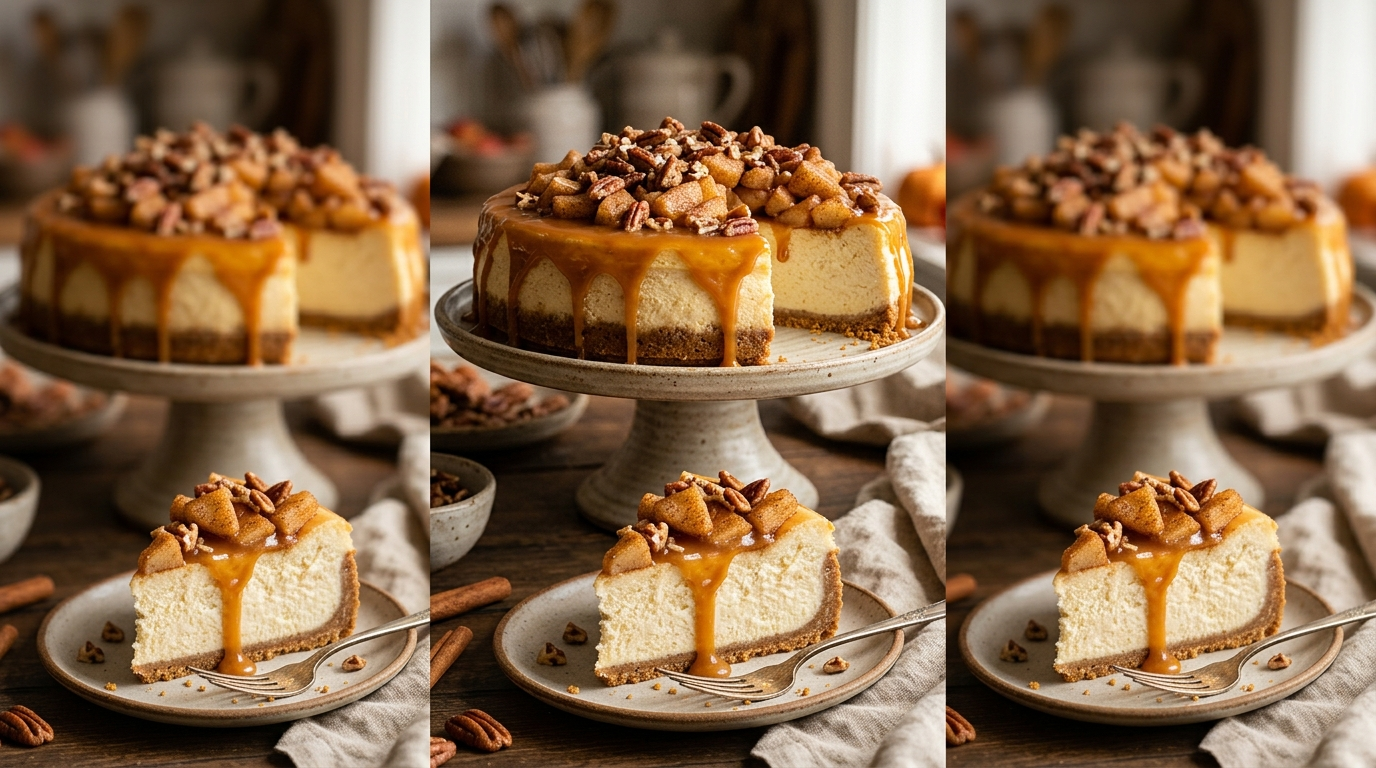
There are desserts that look impressive when you set them on the table, and then there are desserts that make everyone hover around the kitchen waiting for you to cut them. This caramel apple cheesecake belongs firmly in the second group.
I first started making this combination when I had a few apples sitting in the fruit bowl that needed using. I had planned something simple, but once I paired tender cinnamon apples with creamy cheesecake and caramel sauce, I knew I had stumbled onto something worth repeating.
The best part is that you don’t need complicated pastry skills to make it. The cheesecake has a buttery graham cracker crust, a smooth vanilla filling, a layer of cinnamon-coated apples, and plenty of caramel sauce. Each bite tastes a little like a classic caramel apple and a creamy cheesecake decided to become friends.
I especially love serving this in autumn, but honestly, I don’t wait for apple season. When I want a dessert that feels homemade and special without requiring an entire afternoon in the kitchen, this is one of the recipes I reach for.
And don’t worry if your first cheesecake has a tiny crack across the top. Mine have certainly had them. A generous drizzle of caramel hides almost every imperfection.
Why You’ll Love This Recipe

- It looks fancy without being fussy. The caramel drizzle does most of the decorating work.
- The flavors work beautifully together. Sweet apples, cinnamon, tangy cream cheese, and buttery caramel balance each other.
- You can make it ahead. Cheesecake actually benefits from several hours in the refrigerator.
- It feeds a crowd. A 9-inch cheesecake gives you plenty of slices for family dinners or gatherings.
- You can adjust it easily. Use your favorite apples, homemade or store-bought caramel, and your preferred cookie crust.
Ingredients
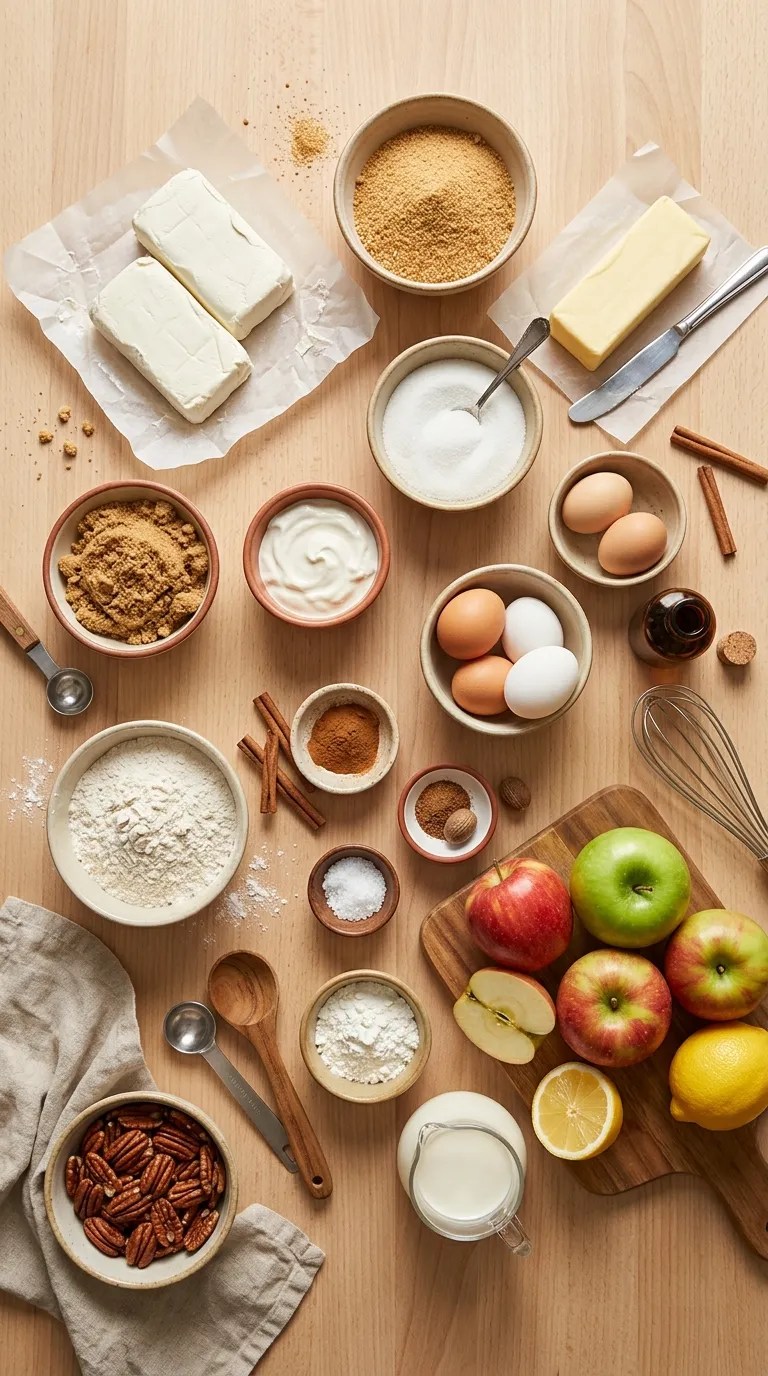
You’ll need ingredients for the crust, cheesecake filling, cinnamon apples, and caramel topping.
For the Crust
- 2 cups graham cracker crumbs
- 5 tablespoons unsalted butter, melted
- 2 tablespoons granulated sugar
- 1/4 teaspoon ground cinnamon
- Pinch of salt
If you don’t have graham crackers, crushed digestive biscuits work well. You can also use vanilla wafer crumbs for a slightly sweeter crust.
For the Cheesecake Filling
- 24 ounces full-fat cream cheese, softened to room temperature
- 3/4 cup granulated sugar
- 1/2 cup sour cream
- 2 large eggs, room temperature
- 1 teaspoon pure vanilla extract
- 2 tablespoons all-purpose flour
- 1/4 teaspoon salt
Full-fat cream cheese gives the filling the richest texture. Reduced-fat cream cheese can work, but the cheesecake may not feel quite as creamy.
For the Cinnamon Apples
- 2 medium apples, peeled, cored, and diced small
- 2 tablespoons unsalted butter
- 2 tablespoons light brown sugar
- 1 teaspoon ground cinnamon
- 1/4 teaspoon ground nutmeg
- 1 teaspoon lemon juice
- 1 teaspoon cornstarch
- 1 tablespoon water
I usually use Granny Smith apples because their tartness cuts through the sweetness. Honeycrisp, Pink Lady, or Braeburn apples also work nicely.
For the Caramel Sauce
- 1 cup granulated sugar
- 5 tablespoons unsalted butter, cut into pieces
- 1/2 cup heavy cream, warmed
- 1/2 teaspoon vanilla extract
- 1/4 teaspoon salt
You can substitute a good-quality prepared caramel sauce if you’d rather save a step. I do that myself when I’m making this dessert for a busy dinner.
Optional Toppings
- Whipped cream
- Chopped toasted pecans
- Extra diced apples
- A pinch of flaky sea salt
- Extra caramel sauce
Step-by-Step Instructions
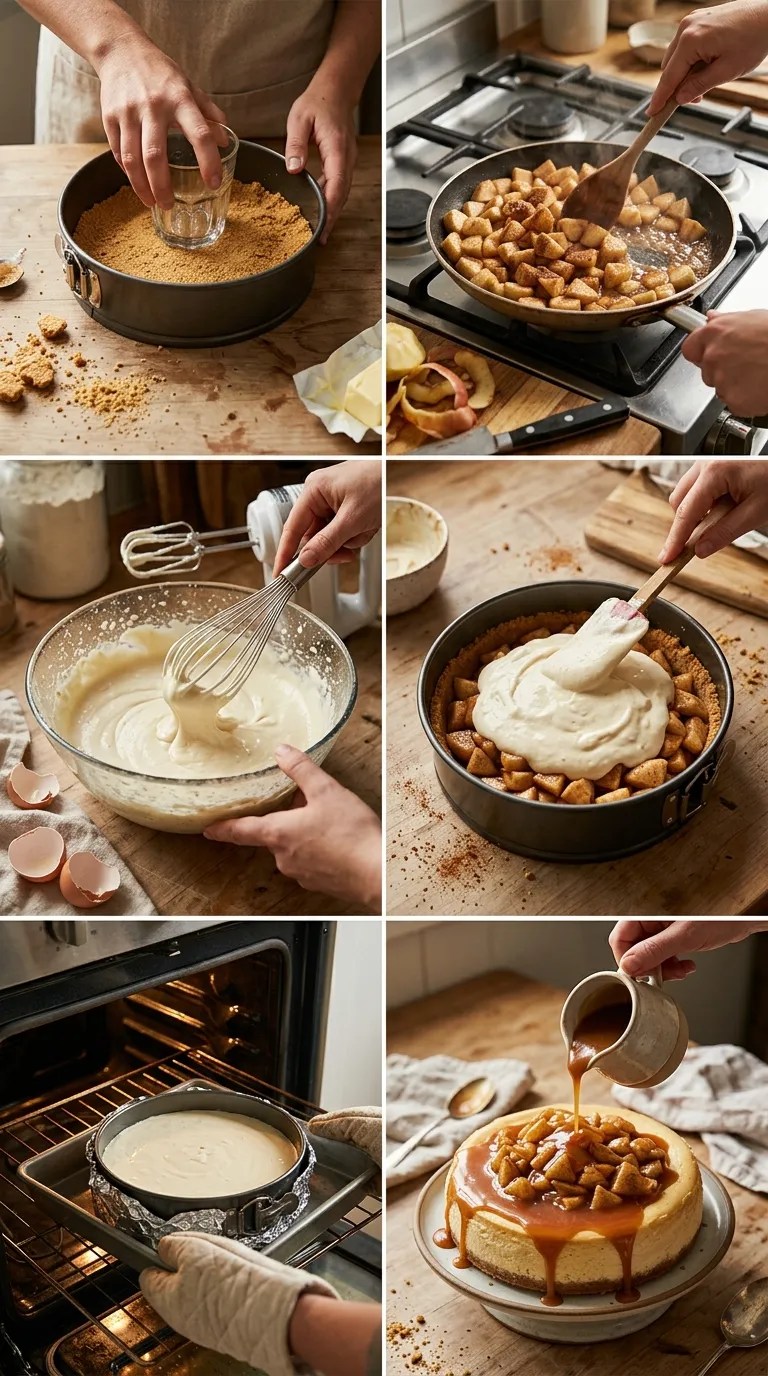
1. Bring the Cheesecake Ingredients to Room Temperature
Take the cream cheese, eggs, and sour cream out of the refrigerator about 30–45 minutes before you begin.
This small step makes a noticeable difference. Softened cream cheese blends much more easily, so you won’t need to beat it aggressively to remove lumps.
2. Prepare the Pan
Heat your oven to 325°F (165°C).
Grease a 9-inch springform pan lightly. Then line the bottom with parchment paper if you have some handy.
Wrap the outside bottom of the pan with two layers of heavy-duty aluminum foil if you plan to bake the cheesecake in a water bath. Keep the foil snug around the pan so water cannot seep inside.
3. Make the Graham Cracker Crust
Mix the graham cracker crumbs, melted butter, sugar, cinnamon, and salt in a bowl.
The mixture should resemble damp sand. When you squeeze some between your fingers, it should hold together rather than crumble immediately.
Press the mixture firmly into the bottom of the springform pan.
I like to use the flat bottom of a measuring cup to compact the crust evenly. Pay particular attention to the edges because loose crumbs there can create a messy first slice.
Bake the crust for 8–10 minutes, then let it cool while you prepare the filling.
4. Cook the Cinnamon Apples
Melt the butter in a small skillet over medium heat.
Add the diced apples, brown sugar, cinnamon, nutmeg, and lemon juice. Cook for about 4–6 minutes, stirring occasionally.
The apples should soften slightly but still hold their shape. You don’t want applesauce.
In a small bowl, stir together the cornstarch and water until smooth.
Add that mixture to the skillet and cook for another 30–60 seconds, stirring constantly. The juices should thicken into a glossy coating.
Remove the pan from the heat and let the apples cool.
This is one of the little discoveries I made after a few batches: cooling the apples before adding them to the cheesecake keeps the filling from becoming unnecessarily warm and soft.
5. Make the Cheesecake Filling
Place the softened cream cheese and sugar in a large mixing bowl.
Using a stand mixer fitted with the paddle attachment or a hand mixer, beat on medium-low speed until smooth, about 1–2 minutes.
Add the sour cream, vanilla, flour, and salt.
Mix just until everything comes together.
Add the eggs one at a time, mixing on low speed after each addition. Stop as soon as you no longer see streaks of egg.
Don’t whip the filling like you’re making frosting. Too much air can make the cheesecake puff dramatically in the oven and then sink as it cools.
A few small bubbles on the surface aren’t a disaster. You can gently tap the bowl on the counter a couple of times to encourage larger air bubbles to rise.
6. Assemble the Cheesecake
Pour about half of the cheesecake filling over the cooled crust.
Spoon roughly half of the cinnamon apples over the filling, keeping them slightly away from the outer edge.
Add the remaining cheesecake filling and smooth the top with a spatula.
Scatter the remaining apples over the surface.
Don’t push the apples deeply into the batter. Leaving some visible on top gives the finished cheesecake a lovely homemade appearance.
7. Bake the Cheesecake
Place the springform pan in a larger roasting pan if you’re using a water bath.
Pour hot water into the roasting pan until it reaches about halfway up the sides of the cheesecake pan.
Bake for approximately 55–70 minutes.
The cheesecake should look set around the edges while the center still has a gentle wobble when you carefully nudge the pan.
That wobble matters. If you wait until the entire cheesecake looks completely firm, you may end up with a drier texture.
Turn off the oven, crack the oven door slightly, and let the cheesecake sit inside for about 30 minutes.
Then remove it from the oven and let it cool completely at room temperature.
8. Chill Thoroughly
Once the cheesecake has cooled, cover it loosely and refrigerate it for at least 4 hours.
Overnight works even better.
I know it’s difficult to wait when your kitchen smells like baked apples and caramel, but don’t rush this part. A properly chilled cheesecake slices much more cleanly and develops a wonderfully creamy texture.
9. Make the Caramel Sauce
While the cheesecake chills, make the caramel sauce.
Place the sugar in a medium, heavy-bottomed saucepan over medium heat.
Let it melt gradually, stirring occasionally with a heat-resistant spatula. The sugar will clump at first, then slowly melt into an amber-colored liquid.
Once the sugar reaches a deep golden amber color, add the butter carefully.
The mixture will bubble vigorously, so keep your hands and face away from the steam.
Stir until the butter melts completely.
Slowly pour in the warm heavy cream while stirring. The caramel will bubble again.
Continue stirring until smooth, then remove the pan from the heat.
Stir in the vanilla and salt.
Let the sauce cool until it’s warm but pourable.
If it becomes too thick, gently warm it again. If it seems too thin, give it a little more time to cool.
10. Decorate and Serve
Remove the chilled cheesecake from the springform pan.
Drizzle the caramel sauce generously over the top.
Add chopped pecans, a little flaky sea salt, or a few extra apple pieces if you like.
For the cleanest slices, use a sharp knife and wipe the blade with a warm, damp towel between cuts.
Then serve each slice with another spoonful of caramel sauce.
Yes, another spoonful. I won’t tell.
Pro Tips & Tricks
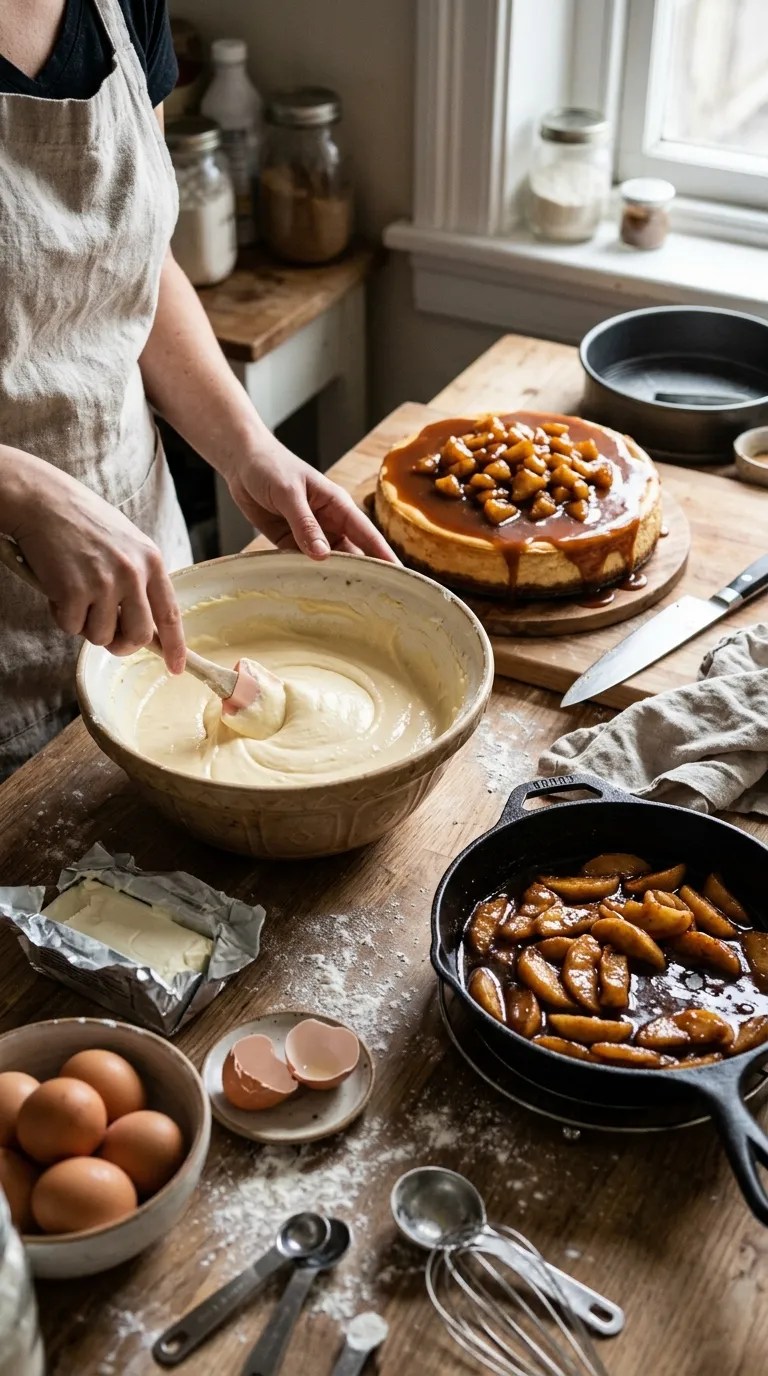
Don’t Start With Cold Cream Cheese
Cold cream cheese can leave stubborn little lumps in the filling. Room-temperature ingredients blend much more smoothly.
If you forget to soften it, cut the cream cheese into small cubes and let it sit for a while rather than trying to aggressively beat cold blocks into submission.
Don’t Overmix the Eggs
Once you add the eggs, mix only until incorporated.
The goal isn’t to add lots of air. A gentle mixing approach helps you get that dense, creamy cheesecake texture.
Let the Apples Cool
Hot apples can warm the cheesecake batter and make the layers harder to handle.
Cook them first, then give them time to cool before assembling the cheesecake.
Don’t Overbake
The center should still have a slight jiggle when the cheesecake comes out of the oven.
It will continue setting as it cools and chills.
A cheesecake that looks completely firm in the oven has probably gone a little too far.
Make the Caramel Ahead
You can make the caramel sauce several days ahead and keep it refrigerated in an airtight container.
Warm it gently before serving so it becomes easy to drizzle.
Store Leftovers Properly
Cover leftover cheesecake and refrigerate it for up to 4 days.
Keep the caramel sauce refrigerated separately when possible. That way, you can warm just the amount you need for each serving.
Variations & Substitutions
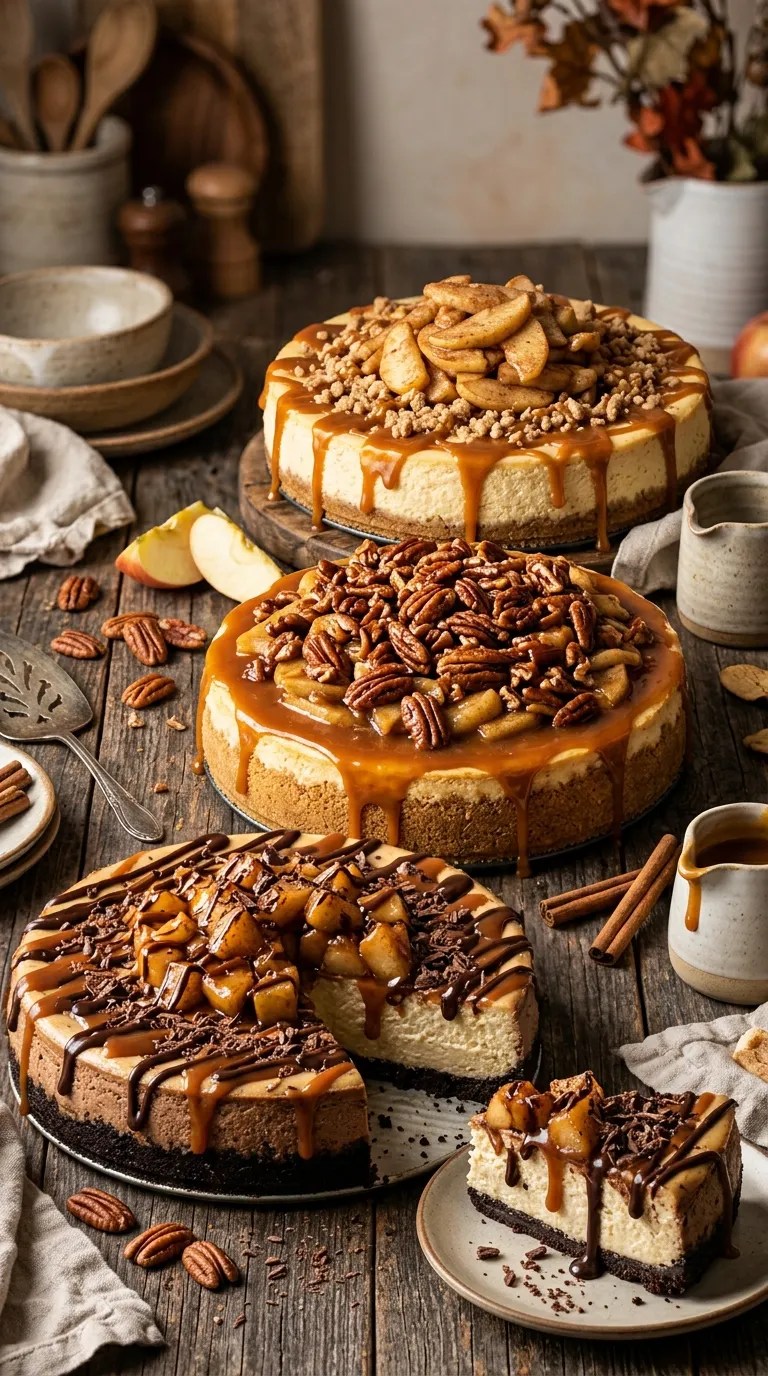
Try a Different Apple Combination
You don’t have to use only one apple variety.
For a more complex flavor, combine a tart apple such as Granny Smith with a sweeter variety such as Honeycrisp.
Just dice the apples into similar-sized pieces so they cook evenly.
Use a Cookie Crust
A graham cracker crust works beautifully, but crushed vanilla wafers, digestive biscuits, or cinnamon cookies can give you a different flavor.
If you use a particularly sweet cookie, reduce the added sugar in the crust slightly.
Add a Pecan Topping
For extra crunch, toast about 1/2 cup chopped pecans in a dry skillet over medium-low heat for 3–5 minutes.
Let them cool completely before sprinkling them over the cheesecake.
The toasted nuts add a lovely contrast to the soft filling and apples.
Make a Chocolate-Caramel Version
For a chocolate twist, replace about 1/4 cup of the graham cracker crumbs with unsweetened cocoa powder.
The chocolate flavor pairs surprisingly well with the apples and caramel without completely taking over the dessert.
Serving Suggestions

I like serving caramel apple cheesecake slightly chilled rather than ice-cold. Letting it sit at room temperature for about 15–20 minutes before slicing softens the texture just enough.
A small dollop of whipped cream makes an easy finishing touch.
For a dinner party, add toasted pecans and a pinch of flaky sea salt. It gives the cheesecake a little extra texture and makes the presentation feel special without requiring elaborate decorating.
This cheesecake also fits beautifully on a Thanksgiving or fall dessert table.
If you’re serving several desserts, cut the cheesecake into thinner slices. It’s rich, so guests often appreciate a smaller piece with plenty of caramel sauce on the side.
For a cozy weekend dessert, though, I have no objection to a generous slice and a cup of coffee.
Related Recipes:
- How to Make Caramel Apple Streusel Cheesecake
- How to Make Pecan Pie Cheesecake From Scratch
- Southern Pecan Pie Cheesecake for Thanksgiving
- Homemade Pumpkin Cupcake With Cinnamon
FAQ’s
Can I make caramel apple cheesecake ahead of time?
Absolutely. Cheesecake works particularly well as a make-ahead dessert.
Bake and chill the cheesecake the day before serving. Keep it covered in the refrigerator, then add the caramel sauce shortly before serving.
You can also prepare the caramel sauce a few days ahead and gently warm it before drizzling.
How should I store leftover cheesecake?
Cover the cheesecake tightly or place individual slices in airtight containers.
Refrigerate them and enjoy within about 4 days.
Because the topping contains apples and dairy, keep the cheesecake refrigerated rather than leaving it at room temperature for an extended period.
Can I freeze this cheesecake?
Yes, you can freeze the cheesecake, preferably without the caramel topping.
Let it chill completely first, then wrap it well and place it in a freezer-safe container.
For the best texture, use it within about 1 month.
Thaw it overnight in the refrigerator. Add fresh caramel sauce after thawing for the best finish.
Why did my cheesecake crack?
Several things can cause cracks, including overmixing, overbaking, or sudden temperature changes.
Don’t panic if it happens. This is one dessert where the topping comes to the rescue.
Pour caramel sauce over the top, add some toasted pecans, and nobody will complain.
Can I use store-bought caramel sauce?
Definitely.
Homemade caramel tastes wonderful, but a good store-bought sauce makes this recipe much faster. Choose a thick caramel sauce that you enjoy on its own because you’ll taste it quite clearly on the finished cheesecake.
What if I don’t have a springform pan?
A springform pan makes removing cheesecake much easier, but you can use a deep 9-inch cake pan lined with parchment paper that extends up the sides.
Leave enough parchment hanging over the edges to help lift the chilled cheesecake out.
The presentation may not look quite as neat, but the flavor will still be there.
Final Thought
There is something wonderfully comforting about the combination of apples, cinnamon, caramel, and cheesecake.
It’s familiar enough to feel nostalgic but special enough to earn a place at a holiday table.
After making this several times, my biggest advice is simple: don’t rush the cooling and chilling stages. The oven does the cooking, but the refrigerator does a lot of the finishing work.
And if your cheesecake comes out with a tiny crack or your caramel isn’t perfectly smooth, don’t scrap it. Add a generous drizzle of sauce, grab a fork, and call it rustic.
I hope this caramel apple cheesecake finds its way onto your dessert table soon. If you make it, I’d love to hear which apples you used and whether you went all-in with the caramel drizzle.
Leave a Reply
You must be logged in to post a comment.