

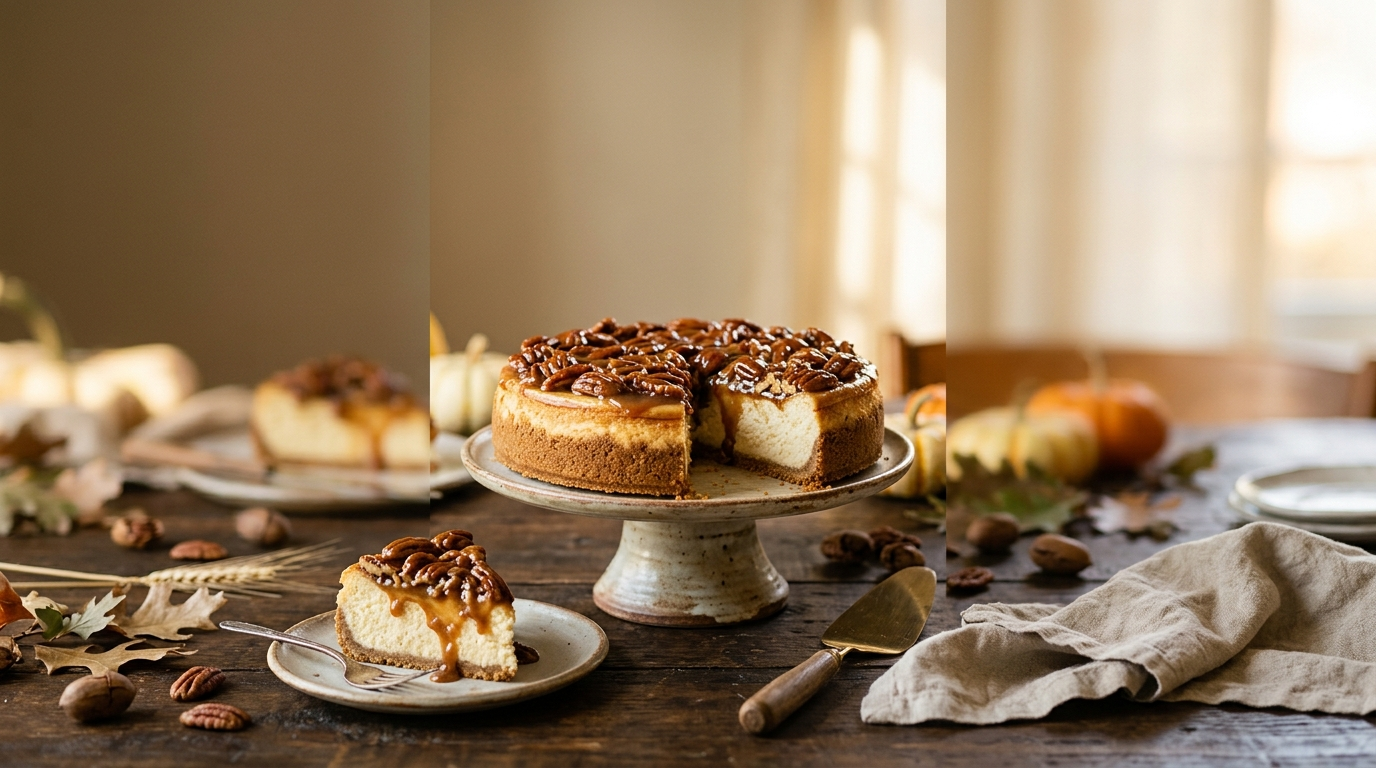
Every Thanksgiving, I reach the point where I start wondering whether I really need another dessert.
Then I remember pecan pie cheesecake.
The first time I made it, I expected the usual Thanksgiving chaos: people wandering into the kitchen, sneaking bites, asking when dinner would be ready. Instead, everyone went unusually quiet after I cut the first slices. The creamy cheesecake layer, buttery pecan topping, and crisp cookie crust had somehow managed to combine two holiday favorites into one very serious dessert.
I also learned a few things the hard way.
I once rushed the cooling process and ended up with a cheesecake that looked perfectly fine until I sliced it. Another time, I poured the pecan topping on while the cheesecake was still too warm, and the layers didn’t look nearly as neat. Neither mistake ruined the dessert, but both taught me that cheesecake rewards patience.
This Southern pecan pie cheesecake has become one of those recipes I make when I want Thanksgiving dessert to feel special without making three different pies. It takes a little planning, but most of the work happens before the big meal, which makes it much easier to manage when the kitchen is already busy.
The recipe takes inspiration from two beloved Southern-style desserts: rich cheesecake and classic pecan pie. It isn’t meant to replace either tradition. Instead, it brings their familiar flavors together in one showstopping dessert.
Why You’ll Love This Recipe

- Two Thanksgiving favorites in one dessert. You get smooth cheesecake and gooey pecan pie flavor in every slice.
- It looks much harder than it is. The finished layers make it look bakery-worthy, even though the method is straightforward.
- You can make it ahead. In fact, I prefer making it the day before Thanksgiving.
- The texture has plenty of contrast. A buttery crust, creamy filling, and caramel-like pecan topping keep every bite interesting.
- It feeds a crowd. Thin slices are surprisingly satisfying because this cheesecake is rich.
Ingredients
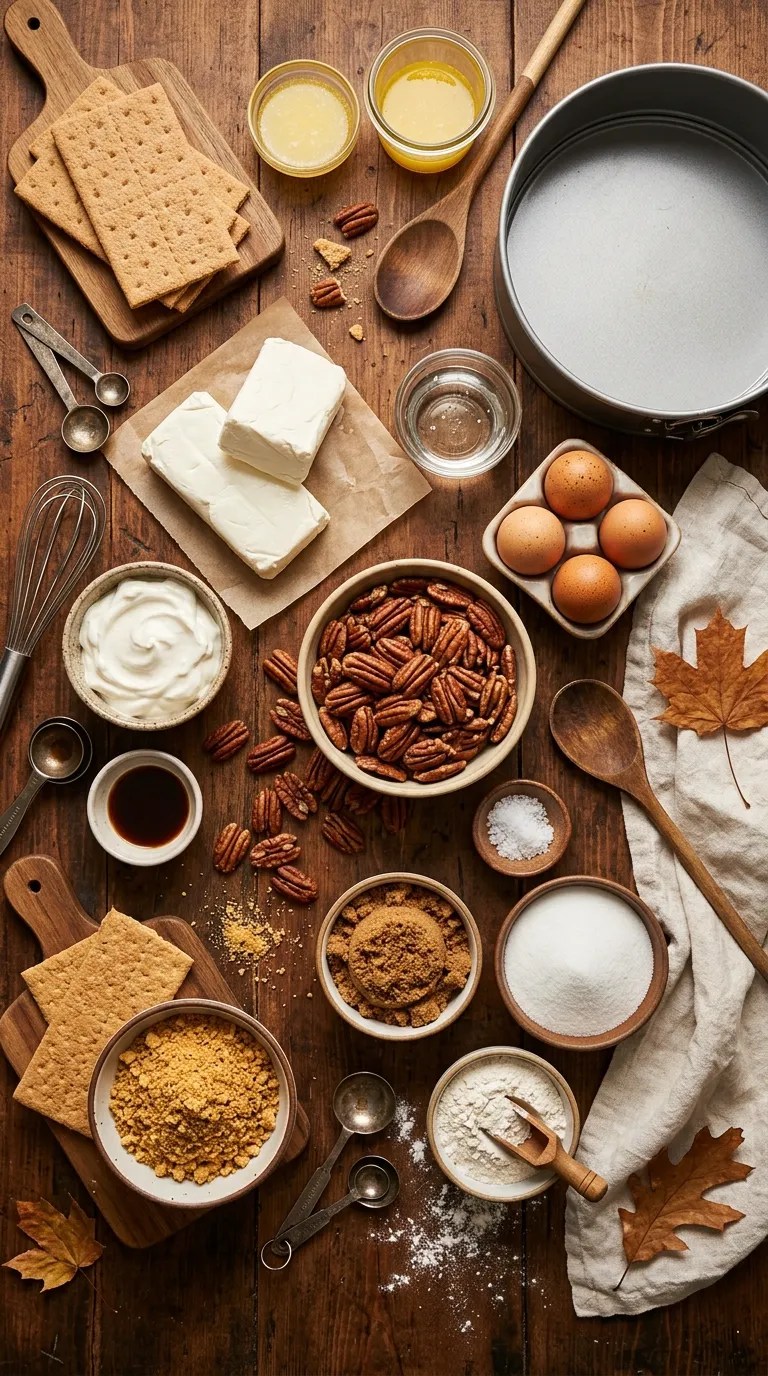
I recommend measuring everything before you start. Cheesecake isn’t the kind of recipe where I like stopping halfway through to search for an ingredient.
For the Crust
- 2 cups finely crushed graham crackers
- 5 tablespoons unsalted butter, melted
- 2 tablespoons granulated sugar
- ¼ teaspoon salt
You can use digestive biscuits if you don’t have graham crackers. For a slightly more Southern-inspired crust, crushed vanilla wafers work beautifully too.
For the Cheesecake Filling
- 24 ounces full-fat cream cheese, softened
- ¾ cup granulated sugar
- 3 large eggs, room temperature
- 1 cup sour cream
- 2 teaspoons pure vanilla extract
- 2 tablespoons all-purpose flour
- ¼ teaspoon salt
Full-fat cream cheese gives the filling its best texture. Reduced-fat cream cheese can make the cheesecake softer and less creamy, so I save the substitutions for other ingredients.
For the Pecan Pie Topping
- 1 cup packed light brown sugar
- ½ cup light corn syrup
- ¼ cup unsalted butter
- 2 large eggs
- 1 teaspoon vanilla extract
- ¼ teaspoon salt
- 1½ cups pecan halves or roughly chopped pecans
If you prefer a stronger molasses flavor, dark brown sugar works well in place of light brown sugar.
For Serving
- Whipped cream, optional
- Extra toasted pecans, optional
- A small drizzle of caramel sauce, optional
You don’t need much on top. The cheesecake already has plenty going on.
Step-by-Step Instructions
1. Prepare the Pan and Oven — 10 Minutes
Start by heating your oven to 325°F (165°C).
Use a 9-inch springform pan. I like to wrap the outside bottom of the pan with two layers of heavy-duty aluminum foil if I’m using a water bath. Make sure the foil comes well up the sides so water can’t sneak into the pan.
Lightly grease the inside of the pan.
Set a rack in the center of the oven.
2. Make the Crust — 10 Minutes
Combine the crushed graham crackers, sugar, salt, and melted butter in a bowl.
Stir until the crumbs look evenly moistened. When you squeeze a little mixture in your hand, it should hold together rather than crumble immediately.
Press the mixture firmly into the bottom of the springform pan.
I use the bottom of a measuring cup to compact it. Pay particular attention to the edges because loose crumbs can make the crust fall apart when you serve the cheesecake.
Bake the crust for 8–10 minutes, until it smells buttery and looks slightly darker around the edges.
Remove it and let it cool while you prepare the filling.
3. Beat the Cream Cheese — 5 Minutes
Place the softened cream cheese and sugar in the bowl of a stand mixer fitted with the paddle attachment, or use a hand mixer.
Beat on medium speed until the mixture looks smooth and creamy, about 2–3 minutes.
Scrape down the sides of the bowl.
This is one of those small steps that makes a big difference. If cream cheese sticks to the sides, it won’t magically blend itself into the filling later.
4. Add the Eggs Carefully — 5 Minutes
Add the eggs one at a time.
Mix on low speed after each addition and stop as soon as the egg disappears into the batter.
Don’t whip the batter aggressively. Too much air can cause the cheesecake to puff dramatically in the oven and then sink as it cools.
Add the sour cream, vanilla, flour, and salt.
Mix just until everything looks smooth.
The batter should be thick, glossy, and pourable.
5. Bake the Cheesecake Layer — About 55–65 Minutes
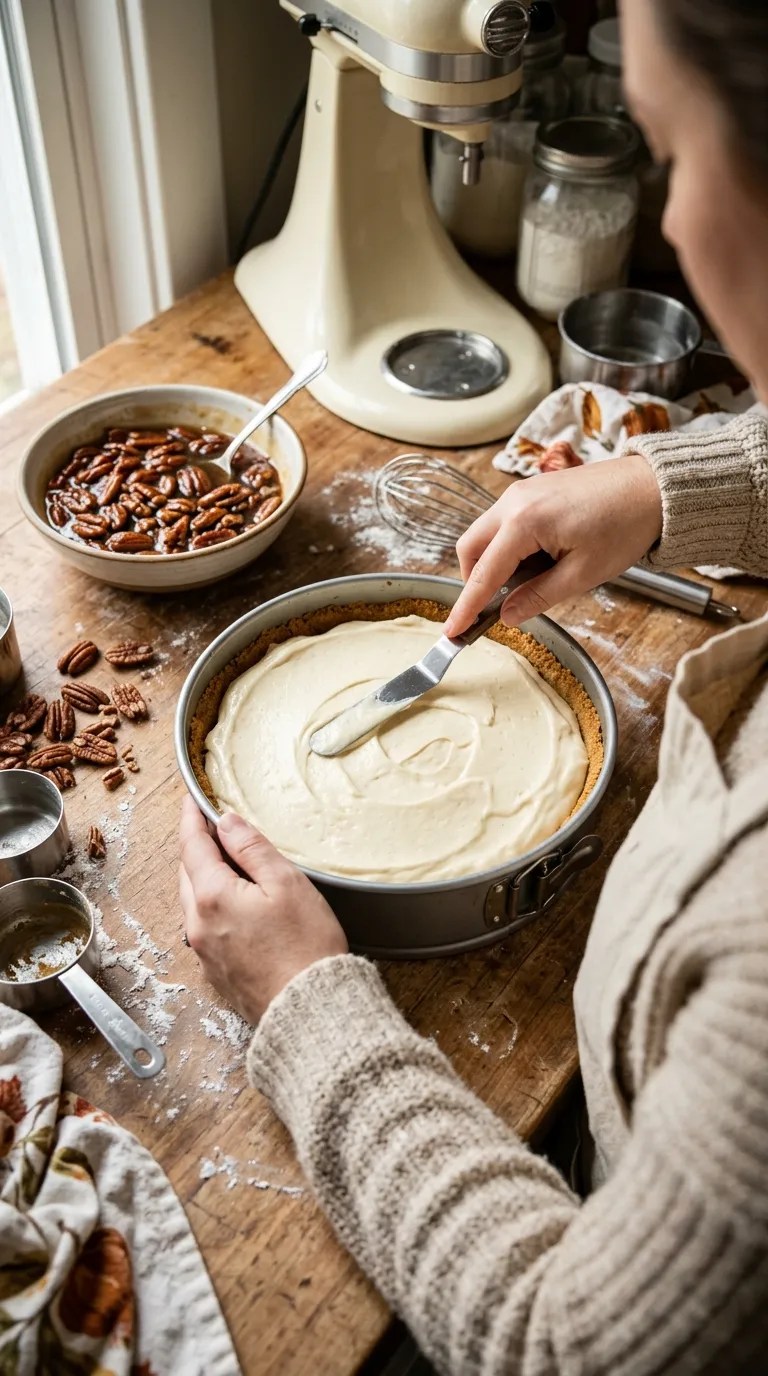
Pour the cheesecake mixture over the cooled crust.
Smooth the top with a spatula.
For the most even texture, place the springform pan inside a larger roasting pan. Pour hot water into the roasting pan until it reaches about halfway up the outside of the cheesecake pan.
Carefully transfer everything to the oven.
Bake for approximately 55–65 minutes.
The cheesecake should look set around the edges but still have a gentle wobble in the center when you carefully nudge the pan.
Don’t wait until the entire surface looks firm. That’s usually a sign you’ve gone too far.
6. Make the Pecan Topping — About 10 Minutes
While the cheesecake bakes, prepare the pecan layer.
Melt the butter in a medium saucepan over medium-low heat.
Add the brown sugar and corn syrup.
Stir until the sugar dissolves and the mixture becomes smooth.
Remove the saucepan from the heat.
Let it cool for a few minutes, then whisk in the eggs, vanilla, and salt.
Stir in the pecans.
The mixture should look glossy and thick, with the pecans evenly coated.
7. Add the Pecan Layer
When the cheesecake has baked for about 45 minutes, carefully check it.
If the edges have set but the center still jiggles, gently spoon the pecan mixture over the top.
Spread it carefully so you don’t disturb the cheesecake underneath.
Return the pan to the oven and continue baking for another 15–20 minutes, or until the pecan topping looks set and the cheesecake still has a slight wobble in the middle.
If the pecans begin browning too quickly, loosely tent the top with aluminum foil.
8. Cool It Slowly — At Least 2 Hours
Turn off the oven and crack the oven door open.
Let the cheesecake sit inside for about 30 minutes.
Then remove it from the water bath and transfer it to a cooling rack.
Let it cool at room temperature for another 1–2 hours.
This slow cooling process helps reduce the chance of cracks.
Don’t worry if you see a small crack anyway. The pecan topping covers a multitude of cheesecake sins.
9. Refrigerate Overnight
Once the cheesecake has cooled, cover it and refrigerate it for at least 6 hours, preferably overnight.
This is where the texture really comes together.
The filling firms up, the pecan topping settles, and the crust becomes easier to slice cleanly.
For Thanksgiving, I almost always make this dessert the day before.
10. Slice and Serve
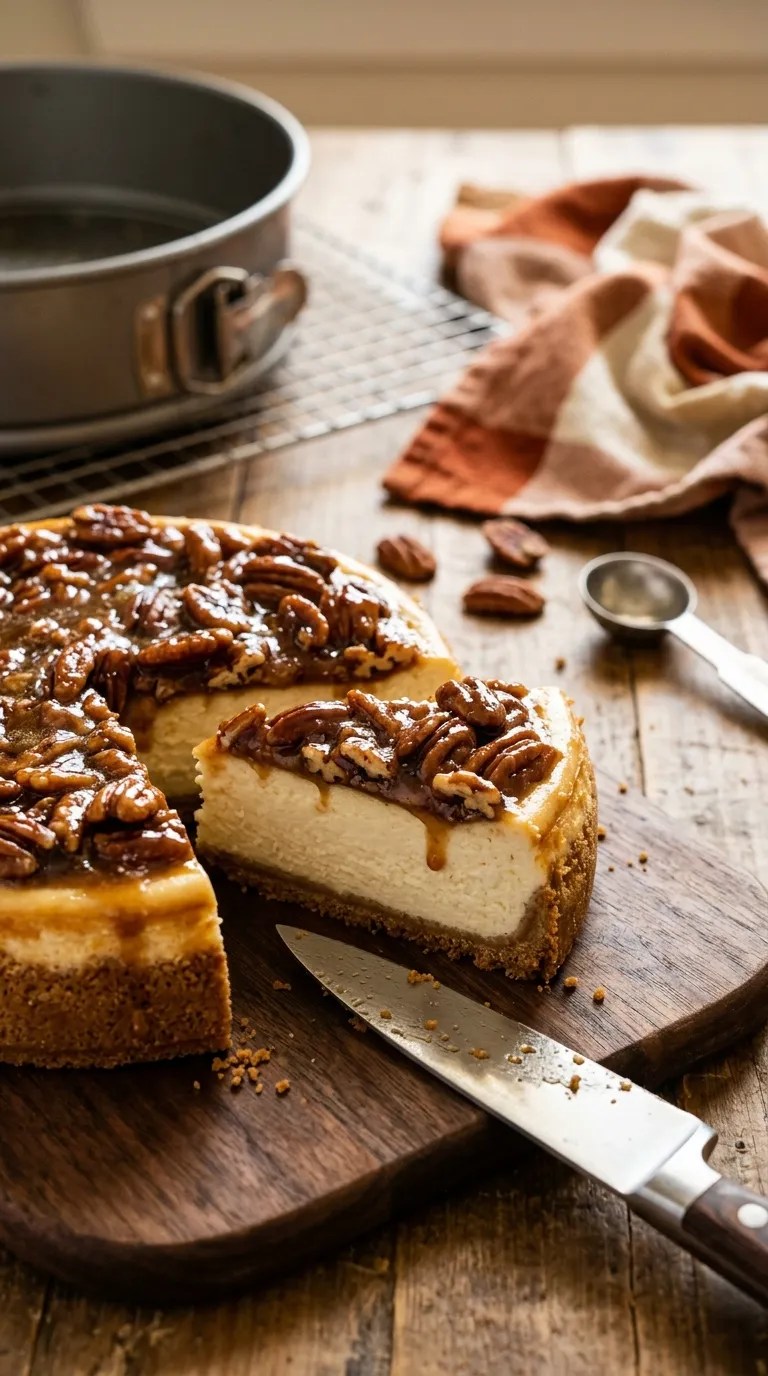
Run a thin, sharp knife around the edge of the cheesecake before releasing the springform pan.
For clean slices, dip your knife in hot water, wipe it dry, and slice.
Clean and rewarm the knife between cuts.
Serve each slice chilled or let it sit at room temperature for about 15–20 minutes before serving.
That short rest takes some of the chill off the cheesecake and lets the flavors come through beautifully.
Pro Tips & Tricks
Use Room-Temperature Cream Cheese
Cold cream cheese tends to leave little lumps in cheesecake batter.
Set the cream cheese and eggs out about 30–60 minutes before you begin. Don’t leave them sitting out for hours; you simply want them cool rather than refrigerator-cold.
Don’t Overmix the Eggs
Once the eggs go into the bowl, slow down.
Mixing until everything combines is enough. You don’t need to beat the batter until it’s fluffy.
This simple habit helps you avoid unnecessary air bubbles and an overly puffy cheesecake.
Don’t Rush the Cooling
I know it’s tempting to move the cheesecake straight from the oven into the refrigerator.
Resist.
A dramatic temperature change can encourage cracking and can affect the final texture. Let it cool gradually before refrigerating.
Keep the Pecan Topping Under Control
The topping should be thick enough to sit on the cheesecake rather than run down the sides.
If your pecan mixture looks extremely loose, give it a few minutes to cool before adding it. Warm mixtures naturally become thicker as they cool.
Make It the Day Before Thanksgiving
This is my favorite trick.
Make the cheesecake on Wednesday, refrigerate it overnight, and leave the finishing touches for Thursday.
That frees up oven space and removes one dessert from your Thanksgiving-day to-do list.
Store Leftovers Properly
Cover leftover cheesecake tightly and refrigerate it.
It should keep well for about 4 days when properly refrigerated.
I recommend storing it in a cake carrier or covered container so the cheesecake doesn’t absorb refrigerator odors.
Variations & Substitutions
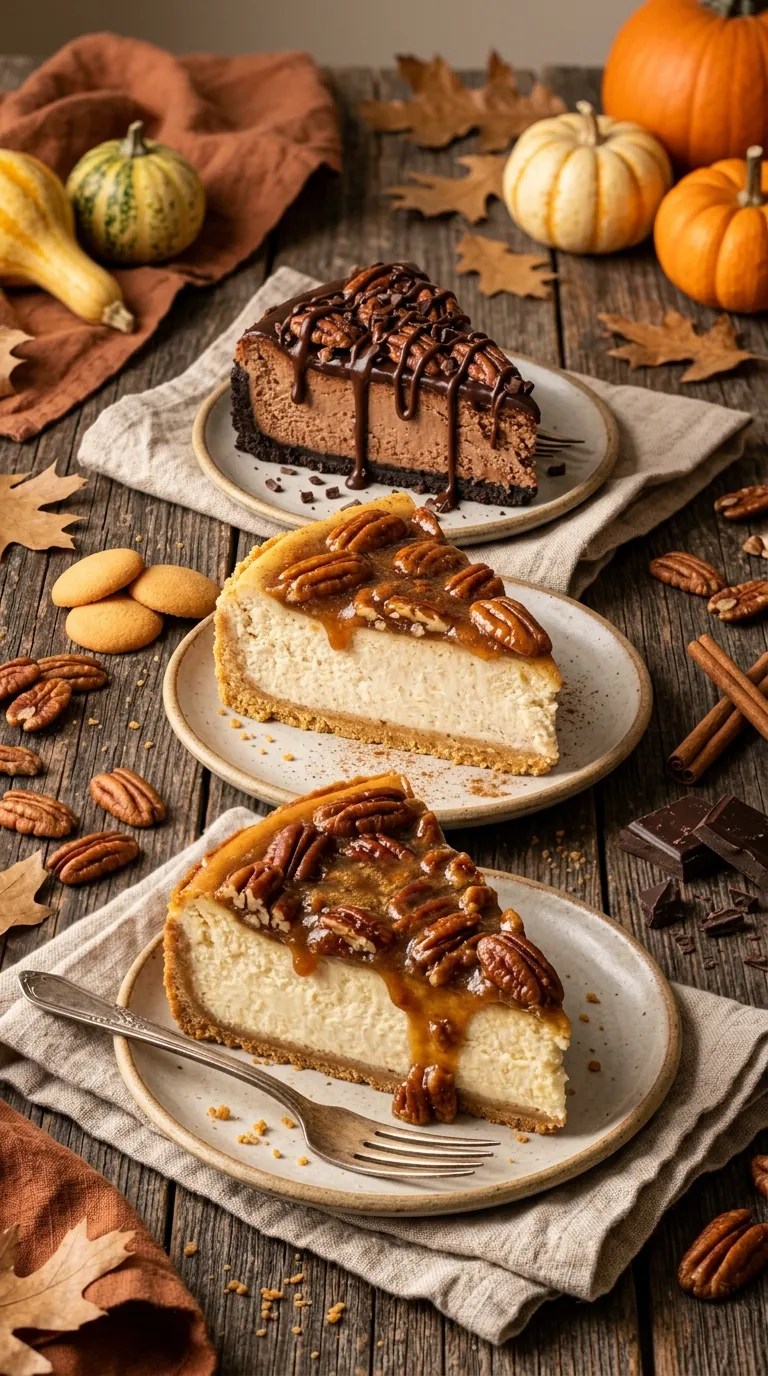
Try a Vanilla Wafer Crust
If you’re a fan of Southern-style desserts, replace the graham crackers with finely crushed vanilla wafers.
Use the same amount of crumbs and proceed with the recipe as written.
The vanilla flavor pairs especially well with the brown sugar and pecans.
Add a Little Cinnamon
For a warmer holiday flavor, add ½ teaspoon ground cinnamon to the pecan topping.
You could also add a tiny pinch of nutmeg, but go easy. You want the pecans and caramel-like brown sugar flavor to remain the stars.
Make a Chocolate-Pecan Version
For chocolate lovers, replace about ¼ cup of the graham cracker crumbs with unsweetened cocoa powder.
You can also sprinkle a small amount of mini chocolate chips over the crust before adding the cheesecake filling.
I wouldn’t go overboard. This dessert already has plenty of richness, and too much chocolate can overpower the pecan flavor.
Gluten-Free Option
Use certified gluten-free graham crackers or gluten-free cookies for the crust.
Also check your individual packaged ingredients if you need to avoid gluten carefully, since formulations can vary by brand.
Serving Suggestions

This Southern pecan pie cheesecake fits naturally on a Thanksgiving dessert table, but I don’t think you need to save it for Thanksgiving.
It’s a great choice for Christmas dinners, family reunions, fall birthdays, Sunday dinners, or any gathering where you want one dessert to make a big impression.
For Thanksgiving, I like serving relatively small slices.
The cheesecake is rich, so a narrow wedge gives everyone enough room to enjoy it without feeling like they’ve just eaten another entire meal.
A spoonful of lightly sweetened whipped cream works nicely on the side.
If you want something extra festive, add a few toasted pecans to each plate and a very light drizzle of caramel sauce.
For drinks, coffee is my first choice. The slight bitterness cuts through the sweetness of the pecan topping. Black tea also works well if you’re serving dessert in the afternoon.
If children are at the table, warm milk or hot chocolate makes a cozy pairing.
Related Recipes:
- Easy Pumpkin Cheesecake Recipe for Thanksgiving
- Creamy Pumpkin Cheesecake Without Sour Cream
- How to Make Pumpkin Cheesecake Without Cream Cheese
- Homemade Pecan Pie Bars for Thanksgiving
- Pumpkin Crisp Bars
FAQ’s
Can I make Southern pecan pie cheesecake ahead of time?
Yes, and I actually recommend it.
Prepare the cheesecake the day before serving and refrigerate it overnight. The extra chilling time gives the cheesecake a firmer texture and makes slicing easier.
Why did my cheesecake crack?
Cracks usually happen because the cheesecake experienced too much heat, baked too long, or cooled too quickly.
A small crack won’t affect the taste. The pecan topping also hides most imperfections, so don’t panic if your cheesecake isn’t perfectly smooth.
Can I use chopped pecans instead of pecan halves?
Absolutely.
Pecan halves give you a more dramatic appearance, while chopped pecans distribute their flavor throughout the topping.
I often use a mixture of both because it gives the finished cheesecake a nice combination of texture and visual appeal.
Can I freeze pecan pie cheesecake?
Yes. For the best results, freeze individual slices or freeze the whole cheesecake without decorative toppings.
Wrap it tightly, place it in a freezer-safe container, and freeze for up to 2 months.
Thaw it slowly in the refrigerator before serving.
The texture may change slightly after freezing, but it can still make a very good make-ahead dessert.
How should I reheat cheesecake?
You don’t really need to reheat cheesecake.
For the best texture, serve it chilled or allow it to sit at room temperature for about 15–20 minutes before serving.
If you prefer the pecan topping slightly warm, warm individual portions very gently, but avoid overheating the cheesecake because excessive heat can soften the filling.
What if I don’t have a springform pan?
A springform pan makes cheesecake much easier to remove, so it’s worth using if you have one.
If you only have a deep 9-inch cake pan, you can bake the cheesecake in it, but removing the finished dessert becomes considerably trickier.
I wouldn’t recommend attempting to flip a fully assembled pecan pie cheesecake out of a standard cake pan.
Final Thought
There is something especially satisfying about putting a pecan pie cheesecake in the middle of a Thanksgiving table.
It has that familiar holiday feeling without being just another pie. The crust gives you a little crunch, the cheesecake stays smooth and creamy, and the pecan topping brings the buttery brown-sugar flavor that makes pecan pie so hard to resist.
And honestly, don’t worry about making it look perfect.
I’ve learned that homemade cheesecake can have a tiny crack, an uneven pecan here or there, or a slice that isn’t quite bakery-perfect and still disappear remarkably fast.
Make it the day before, give it plenty of time to cool, and don’t rush the final chill.
Then cut yourself the first slice.
If you’re making this Southern pecan pie cheesecake for Thanksgiving, I’d love to hear how it turned out — especially if you added your own twist to the pecan topping or crust.
Leave a Reply
You must be logged in to post a comment.