

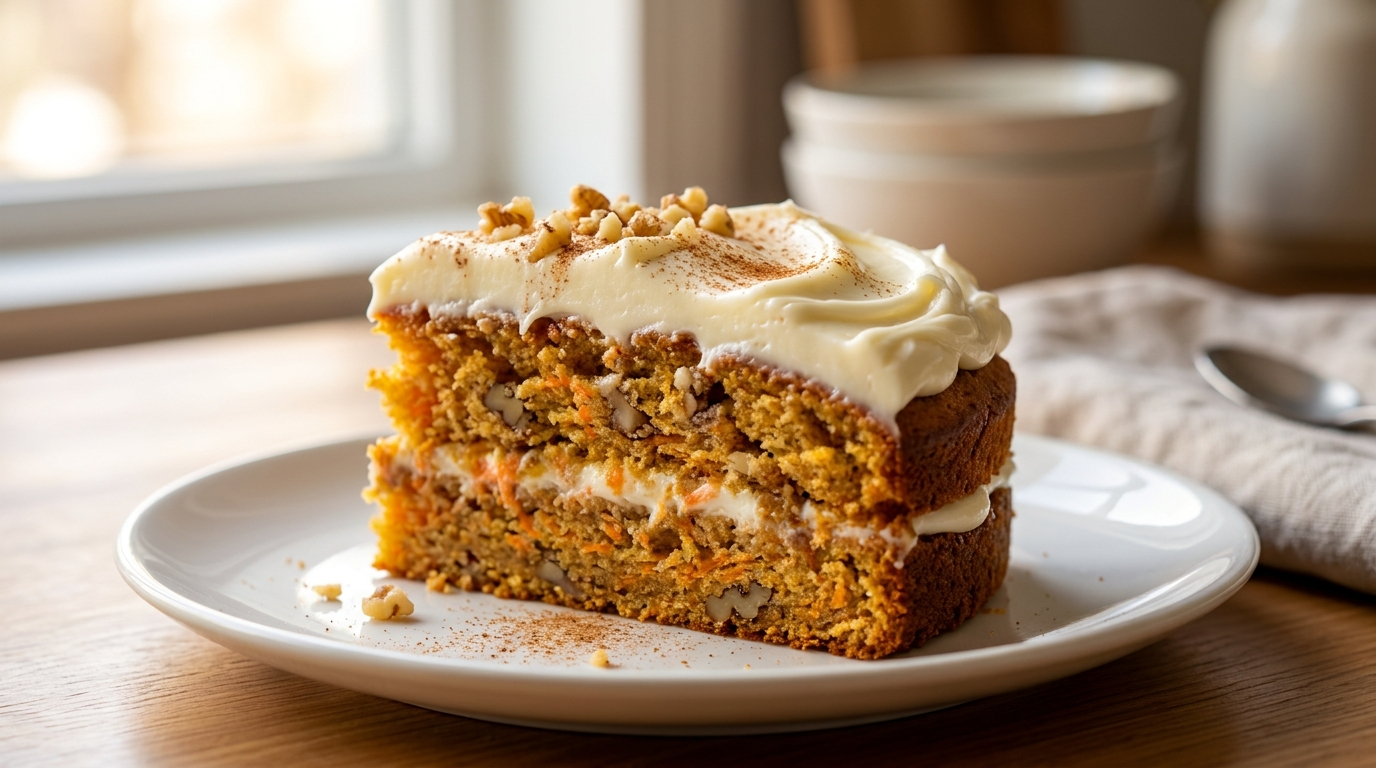
I’ll admit it: I used to think “healthy frosting” was code for frosting that looked sad sitting on top of a perfectly good cake.
Then one afternoon, I had a carrot cake ready to frost and realized I was out of powdered sugar. Instead of making another grocery run, I started experimenting with cream cheese, Greek yogurt, a little maple syrup, and vanilla. I expected something runny and disappointing.
What I got surprised me.
The frosting turned out creamy, tangy, lightly sweet, and rich enough to spread over cake without feeling like I had dumped a bowl of sugar on top. I’ve made several versions since then, and this one has become my favorite when I want a lighter cream cheese frosting that still tastes like an actual treat.
The trick is simple: use thick Greek yogurt, soften the cream cheese properly, and don’t add too much liquid sweetener. I learned that last part after creating one very memorable frosting puddle. My carrot cake survived. My confidence took a small hit.
Why You’ll Love This Recipe

- Less sugary: Maple syrup gives it gentle sweetness without making it overly sweet.
- Creamy and tangy: Cream cheese and Greek yogurt create a lovely balance.
- Quick to make: You can whip it together in about 10 minutes.
- No complicated equipment: A hand mixer works perfectly.
- Versatile: Use it on carrot cake, muffins, cupcakes, banana bread, or pancakes.
- Easy to adjust: You control the sweetness and thickness.
Ingredients

For the Frosting
- 8 ounces (226 g) full-fat or reduced-fat cream cheese, softened
- 1/2 cup (120 g) plain Greek yogurt, preferably thick and strained
- 3 tablespoons pure maple syrup
- 1 teaspoon pure vanilla extract
- 1/4 teaspoon ground cinnamon, optional
- Pinch of fine salt
- 1–2 tablespoons powdered erythritol or powdered sweetener, optional, if you prefer sweeter frosting
A Few Ingredient Notes
Cream cheese: I usually use a regular block of cream cheese rather than whipped cream cheese. The block gives the frosting better structure and makes it easier to spread.
Greek yogurt: Choose thick Greek yogurt. A watery yogurt can turn your frosting loose, and nobody wants frosting sliding down the side of a cake.
Maple syrup: Pure maple syrup gives the frosting a warm flavor. You can replace it with honey if you prefer, although honey makes the flavor slightly different.
Vanilla: Don’t skip it. Vanilla makes the cream cheese taste smoother and adds a little dessert-shop magic.
Cinnamon: I love adding a tiny pinch when I make this for carrot cake or apple muffins. It isn’t necessary, but it works beautifully.
Step-by-Step Instructions
1. Soften the Cream Cheese
Take the cream cheese out of the refrigerator about 30–45 minutes before mixing.
Place it in a mixing bowl and let it soften at room temperature.
You want it soft enough that a mixer can easily blend it. It shouldn’t look melted or greasy.
I used to rush this step by microwaving the cream cheese. Sometimes that worked, and sometimes I ended up with warm, weirdly soft cream cheese. Now I simply plan.
2. Beat the Cream Cheese
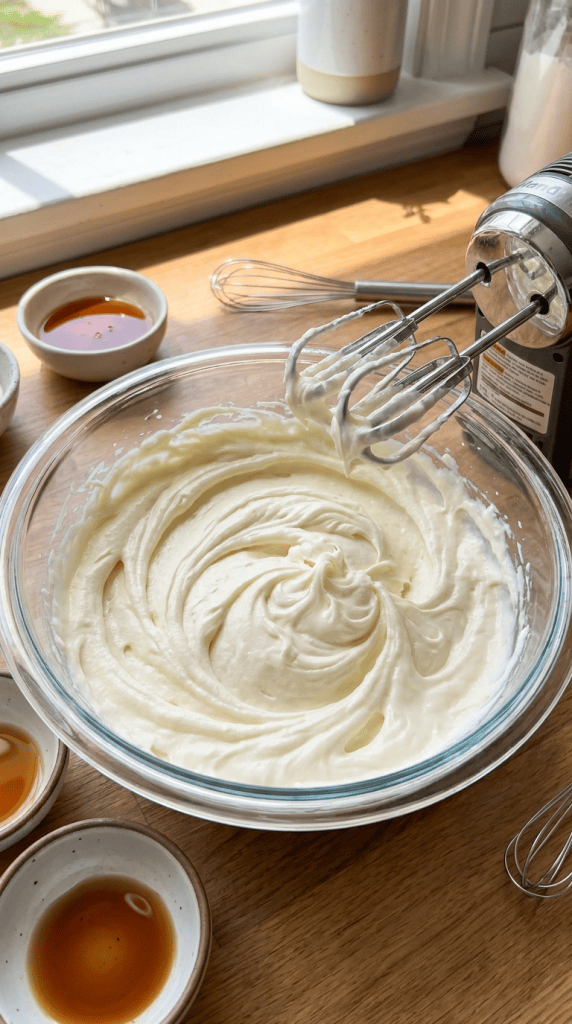
Use a hand mixer or stand mixer fitted with the paddle attachment.
Beat the softened cream cheese for about 1–2 minutes on medium speed.
Stop when it looks smooth and creamy with no visible lumps.
Scrape the sides and bottom of the bowl with a spatula.
This little step matters more than you might think. Cream cheese likes to hide in the corners.
3. Add the Greek Yogurt
Add the 1/2 cup Greek yogurt to the bowl.
Mix for about 30–45 seconds, just until everything looks smooth.
Don’t keep beating it forever. Overmixing can make the frosting softer than you want.
At this point, the mixture should look creamy and thick.
4. Add the Maple Syrup and Vanilla
Pour in 3 tablespoons maple syrup and add 1 teaspoon vanilla extract.
Add the cinnamon and salt if you’re using them.
Mix on low speed first so you don’t send yogurt flying across your kitchen.
Then increase the speed slightly and mix for about 30 seconds.
Taste the frosting.
If you want it sweeter, add powdered sweetener 1 tablespoon at a time.
5. Check the Consistency
This is where I recommend trusting your eyes instead of blindly following the clock.
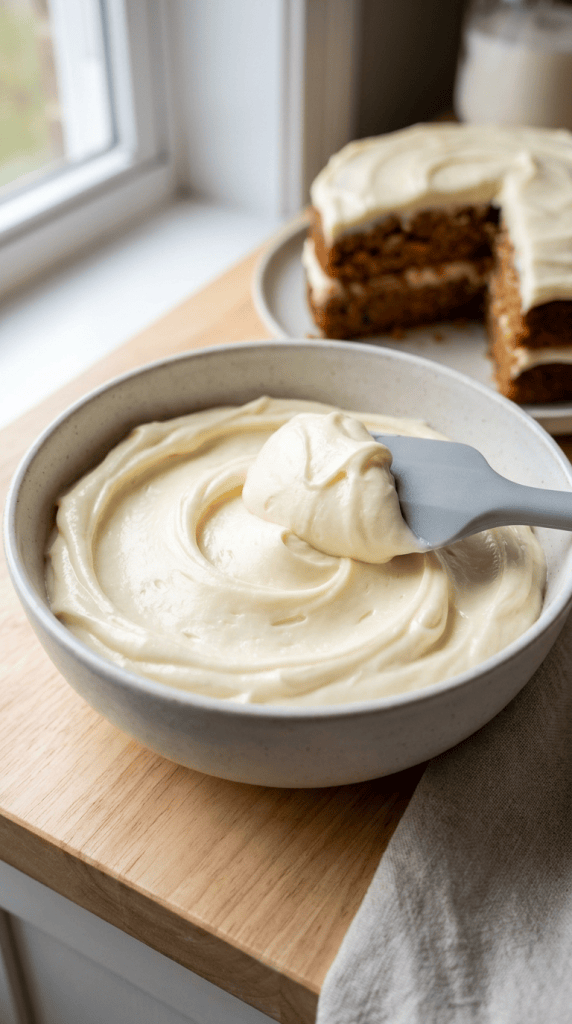
The frosting should be thick enough to sit on a spoon without immediately running off.
If you’re using it on cupcakes, you want a slightly thicker consistency.
If you’re spreading it over a sheet cake or banana bread, a softer texture works nicely.
If the frosting feels too loose, place it in the refrigerator for 20–30 minutes.
6. Chill Before Decorating
For the best texture, refrigerate the frosting for 20–30 minutes before spreading or piping.
This gives the cream cheese time to firm up.
I especially recommend chilling it if your kitchen feels warm.
7. Frost Your Dessert
Once chilled, give the frosting a quick stir.
Spread it over a completely cooled cake, cupcakes, muffins, or quick bread.
For a rustic cake, I like using an offset spatula and leaving a few little swirls on top.
It doesn’t need to look perfect. Homemade frosting should look homemade.
Pro Tips & Tricks
Use Block Cream Cheese
Block-style cream cheese usually gives you a firmer frosting than spreadable cream cheese sold in tubs.
Tub-style products often contain extra moisture, which can make the frosting softer.
Don’t Add All the Maple Syrup at Once
If you’re making this for the first time, start with 2 tablespoons maple syrup, taste it, and then add the remaining tablespoon if needed.
Different Greek yogurt and cream cheese brands can have slightly different textures and flavors.
Keep the Yogurt Thick
If your Greek yogurt looks watery, strain it first.
Place it in a fine-mesh strainer lined with cheesecloth or a clean coffee filter and let it sit over a bowl in the refrigerator for about 30–60 minutes.
This removes some excess liquid and gives you thicker yogurt.
Let the Cake Cool Completely
This sounds obvious, but I’ve broken this rule more than once.
Warm cake melts frosting.
Then you get frosting sliding down the sides instead of sitting neatly on top.
Let cakes and cupcakes cool completely before decorating.
Chill the Finished Frosting
If your kitchen runs warm, don’t leave this frosting sitting on the counter for long.
Keep it refrigerated until you’re ready to use it.
Don’t Overmix
Once everything looks smooth, stop mixing.
More mixing doesn’t automatically create better frosting. In this case, too much mixing can make the texture softer.
Variations & Substitutions
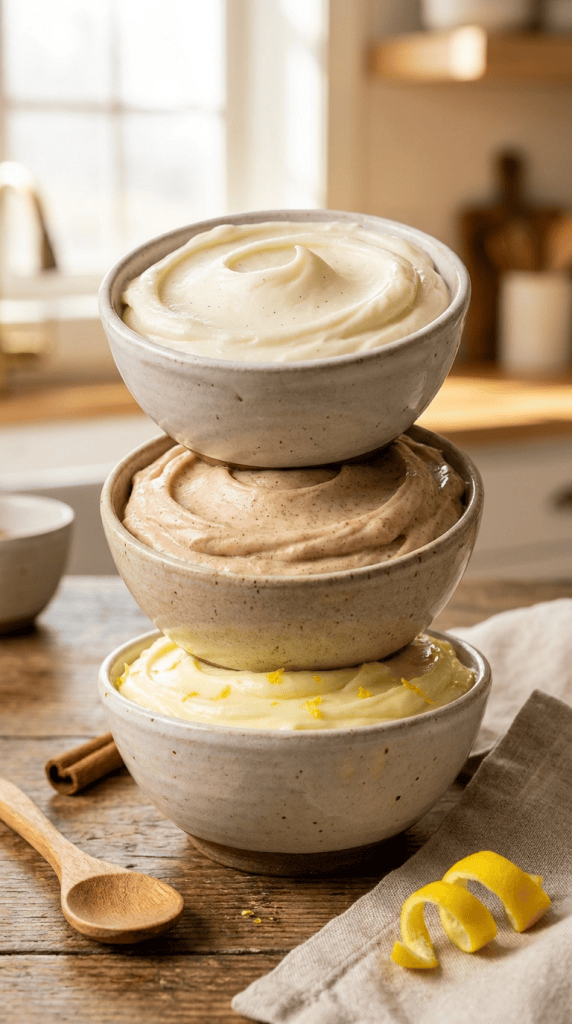
Honey Cream Cheese Frosting
Replace the maple syrup with 2–3 tablespoons honey.
Honey gives the frosting a slightly floral sweetness and pairs especially well with banana bread, spice cake, and apple muffins.
Cinnamon Cream Cheese Frosting
Add 1/2 teaspoon cinnamon instead of the smaller amount listed in the main recipe.
You can also add a tiny pinch of nutmeg.
I love this version on carrot cake because the warm spices make the tangy cream cheese taste even better.
Lemon Cream Cheese Frosting
Add 1 teaspoon finely grated lemon zest and 1 teaspoon fresh lemon juice.
Start with the smaller amount of lemon juice because extra liquid can loosen the frosting.
This version tastes fantastic with blueberry muffins, lemon cake, vanilla cupcakes, and pound cake.
Lower-Sugar Version
For a less sweet frosting, use only 2 tablespoons maple syrup and skip the optional powdered sweetener.
The result will taste more tangy and less dessert-like.
Personally, I prefer this version when I’m frosting a naturally sweet cake such as banana bread.
Serving Suggestions

This healthy cream cheese frosting works with much more than cupcakes.
My favorite pairing is carrot cake. The tangy frosting balances the warm spices and sweetness perfectly.
Try it on:
- Carrot cake
- Carrot cupcakes
- Banana bread
- Pumpkin muffins
- Apple spice cake
- Zucchini bread
- Blueberry muffins
- Cinnamon rolls
- Baked oatmeal
- Whole-grain pancakes
- Waffles
- Chocolate cupcakes
For a simple dessert, spread a thin layer over banana bread and add a sprinkle of chopped walnuts.
For cupcakes, use a small offset spatula for a simple swirl or pipe the frosting with a large round decorating tip.
You can also turn plain muffins into something that looks surprisingly fancy with just a spoonful of frosting and a little cinnamon dusted over the top.
FAQ’s
How long does healthy cream cheese frosting last?
Store it in an airtight container in the refrigerator for up to 4–5 days.
Because this frosting contains cream cheese and Greek yogurt, keep it refrigerated when you’re not serving it.
Can I make this frosting ahead of time?
Absolutely.
You can prepare it 1–2 days ahead and keep it covered in the refrigerator.
Before using it, let it sit at room temperature for about 10–15 minutes, then stir it gently.
If it feels too firm, a quick stir should bring the creamy texture back.
Can I freeze cream cheese frosting?
Yes, although the texture may change slightly after freezing and thawing.
Place it in a freezer-safe airtight container and freeze for up to 1 month for the best quality.
Thaw it overnight in the refrigerator.
Stir it gently before using.
Why is my frosting too runny?
The most common reasons include using thin yogurt, adding too much maple syrup, using very soft cream cheese, or overmixing.
First, refrigerate the frosting for 20–30 minutes.
If it still feels too loose, stir in a small amount of powdered sweetener.
You can also use thicker Greek yogurt next time.
Can I use low-fat cream cheese?
Yes.
Low-fat cream cheese works, but the frosting may taste slightly less rich and may have a softer texture.
If you use low-fat cream cheese, chilling the finished frosting becomes even more helpful.
Can I pipe this frosting onto cupcakes?
Yes, but keep your expectations realistic.
This frosting works best for simple swirls rather than extremely detailed decorations.
For firmer piping, chill the frosting for 30–45 minutes before transferring it to a piping bag.
If your kitchen is warm, return the piping bag to the refrigerator for a few minutes whenever the frosting starts getting soft.
Final Thoughts
I’ve made plenty of cream cheese frostings over the years, and I still come back to this version when I want something creamy without an aggressively sweet finish.
It has that familiar cream cheese tang, a little maple sweetness, and a lovely texture from thick Greek yogurt. It also gives you plenty of room to make it your own.
My favorite way to use it is still on carrot cake, especially when I add a tiny pinch of cinnamon to the frosting.
So grab that block of cream cheese, let it soften, and give it a try. And if your first batch ends up a little softer than planned, don’t panic. Stick it in the fridge, let it chill, and give it another look.
That’s one of the best things about home baking: a little kitchen improvisation usually gets you where you need to go.
Leave a Reply
You must be logged in to post a comment.