

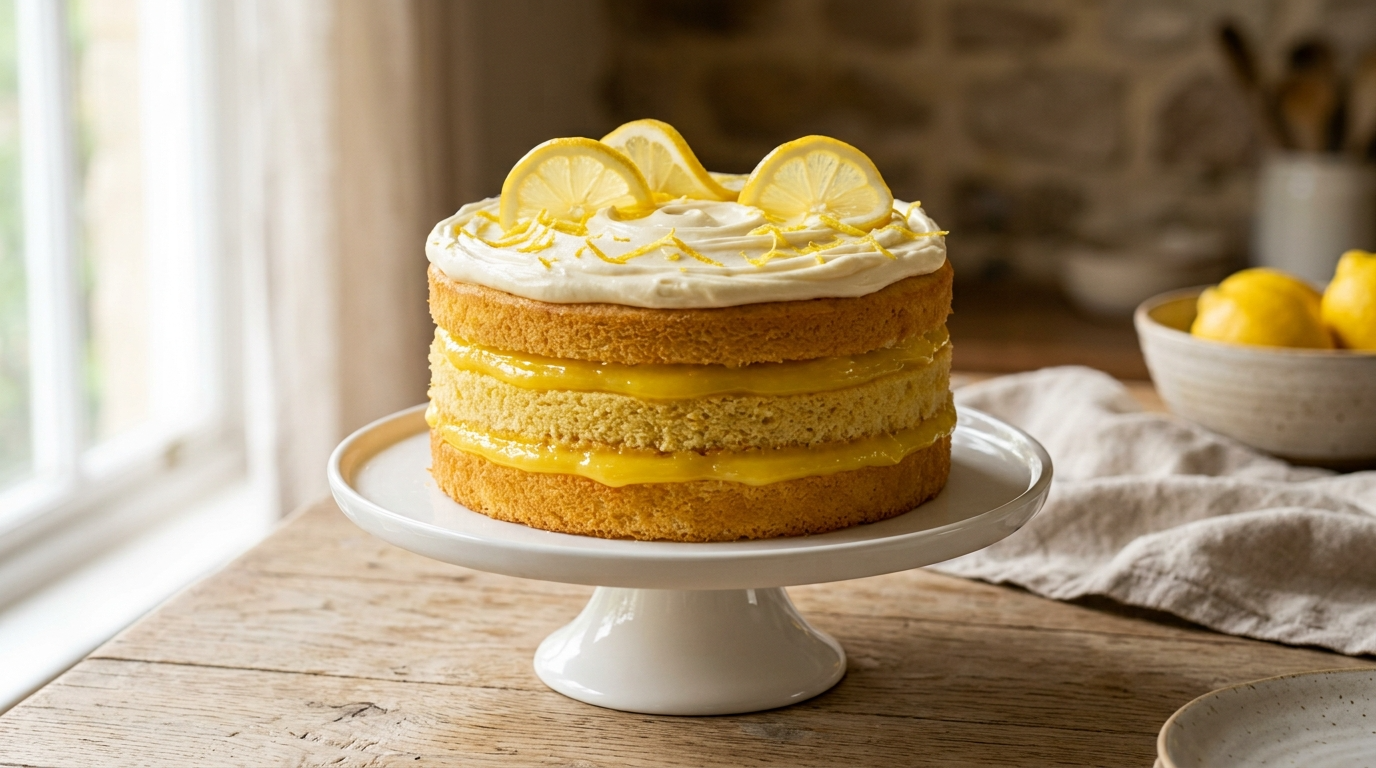
The first time I made this lemon curd cake, I had a little bowl of homemade lemon curd sitting in the fridge and absolutely no plan for it. You know how that goes. You make something because it sounds delicious, and then three days later you stare at the leftovers wondering what brilliant idea you had in mind.
Cake was the answer.
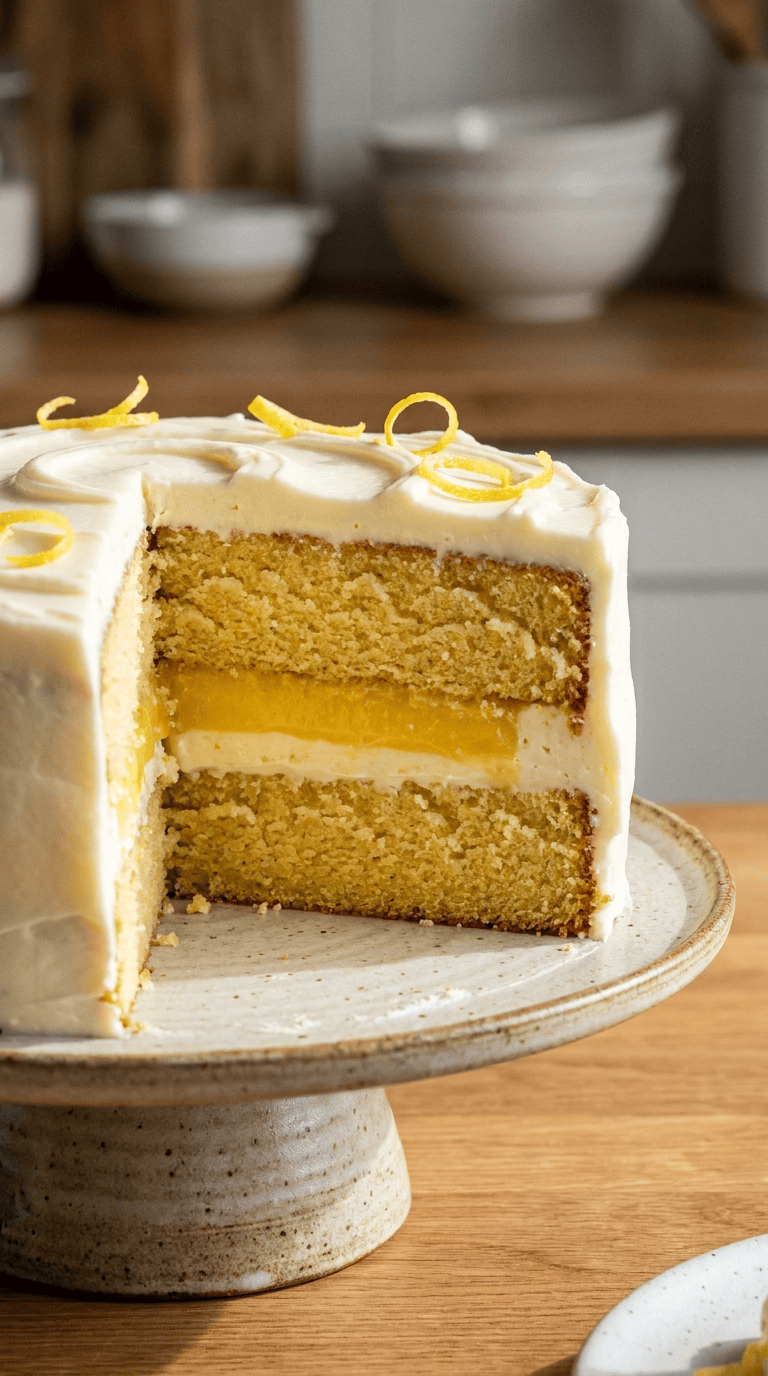
I layered that bright, silky lemon curd between soft lemon cake layers and covered the whole thing with tangy cream cheese frosting. One bite later, I knew I had accidentally created one of my favorite cakes.
I’ve made this cake many times since then, including for family gatherings, afternoon coffee, birthdays, and those completely valid occasions when you simply want cake. The lemon curd gives every slice a fresh, buttery citrus center, while the cream cheese frosting adds just enough richness without making the cake feel heavy.
The combination sounds fancy, but the process feels surprisingly homey. You just need a little patience, especially when you let the cake layers cool completely before assembling them. I learned that lesson the messy way after trying to frost a slightly warm cake. Let’s just say the frosting had its own plans that day.
This lemon curd cake makes a beautiful centerpiece, but you don’t need to wait for a special occasion. A cup of coffee, a sunny afternoon, and a fork are perfectly good reasons.
Why You’ll Love This Recipe

- Bright lemon flavor: Lemon zest, lemon juice, and lemon curd work together without making the cake taste sour.
- Soft and tender: The cake stays moist and fluffy when you avoid overmixing the batter.
- Creamy frosting: Cream cheese frosting brings a gentle tang that balances the sweet lemon curd.
- Great for celebrations: It looks impressive on a cake stand but doesn’t require professional decorating skills.
- Make-ahead friendly: You can bake the cake layers ahead and assemble everything later.
- Easy to customize: Add berries, toasted coconut, or a little extra lemon zest when you want to change things up.
Ingredients
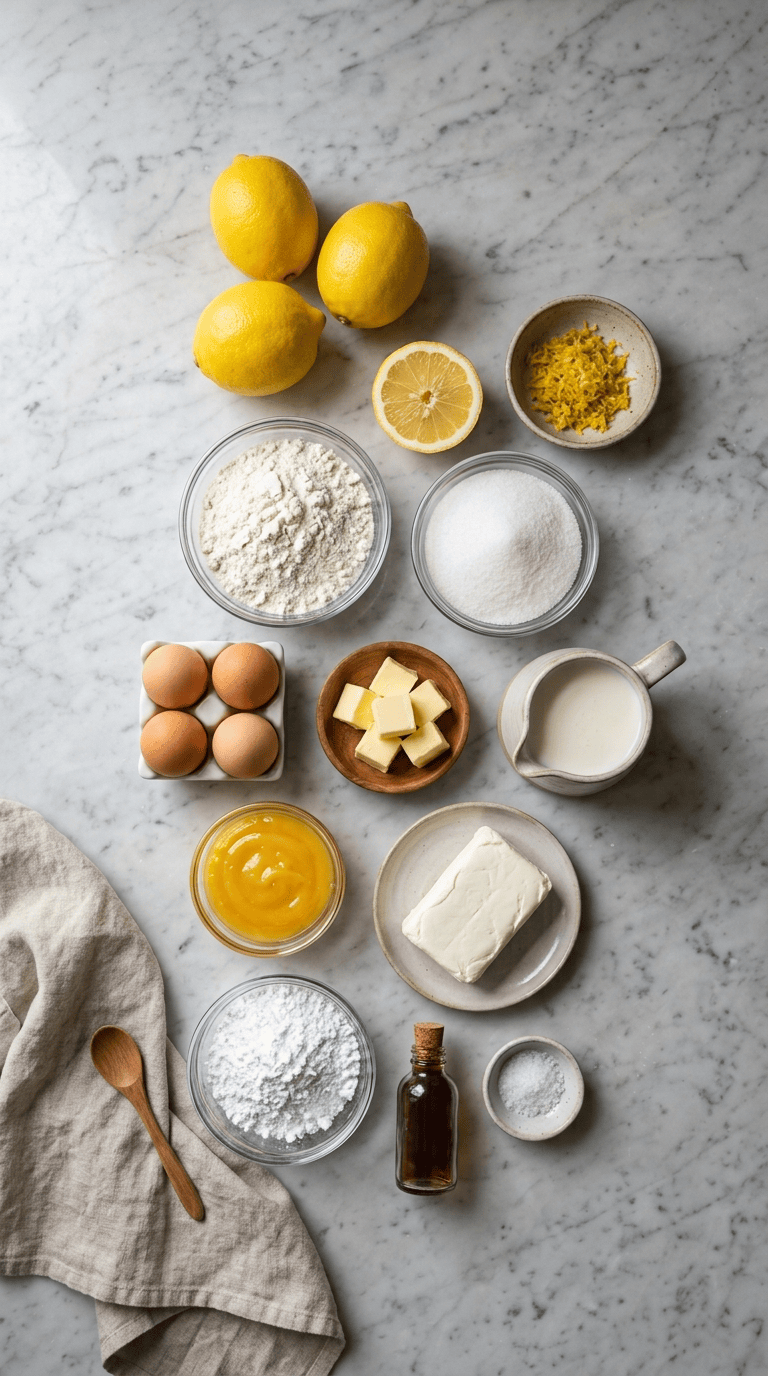
For the Lemon Cake
- 2 ½ cups all-purpose flour
- 2 teaspoons baking powder
- ½ teaspoon baking soda
- ½ teaspoon salt
- 1 cup unsalted butter, softened
- 1 ¾ cups granulated sugar
- 4 large eggs, room temperature
- 2 tablespoons finely grated lemon zest
- ⅓ cup fresh lemon juice
- 1 teaspoon pure vanilla extract
- 1 cup buttermilk, room temperature
If you don’t have buttermilk, mix 1 cup milk with 1 tablespoon lemon juice and let it sit for about 5 minutes. It works well in a pinch.
For the Lemon Curd Filling
- ¾ cup prepared lemon curd
- 1 tablespoon fresh lemon juice, optional
- ½ teaspoon finely grated lemon zest, optional
You can use homemade lemon curd or a good-quality store-bought version. If your curd tastes especially sweet, the extra lemon juice helps sharpen the flavor.
For the Cream Cheese Frosting
- 8 ounces full-fat cream cheese, softened
- ½ cup unsalted butter, softened
- 3 ½ cups powdered sugar
- 1 teaspoon pure vanilla extract
- 1 tablespoon fresh lemon juice
- 1 teaspoon finely grated lemon zest
- Pinch of salt
I prefer full-fat cream cheese because it gives the frosting a thicker, creamier texture. Reduced-fat cream cheese can work, but the frosting may turn out softer.
For Decorating
- Extra lemon zest
- Thin lemon slices or small lemon wedges
- Fresh berries, optional
- A few small edible flowers, optional
Step-by-Step Instructions
1. Prepare the Cake Pans
Start by preheating your oven to 350°F (175°C).
Grease two 9-inch round cake pans with butter or nonstick baking spray. Line the bottoms with parchment paper, then lightly grease the parchment too.
I strongly recommend the parchment. Cakes have a funny habit of becoming extremely attached to pans when you don’t give them a little insurance.
2. Mix the Dry Ingredients
Whisk together the flour, baking powder, baking soda, and salt in a medium bowl.
Give everything a good stir so the leavening ingredients spread evenly throughout the flour.
Set the bowl aside while you work on the wet ingredients.
3. Cream the Butter and Sugar
Add the softened butter and granulated sugar to a large mixing bowl or the bowl of a stand mixer.
Beat on medium speed for about 3–4 minutes.
The mixture should look pale, fluffy, and creamy. Don’t rush this part. Properly creamed butter gives the cake a lighter texture.
I used to stop mixing as soon as the butter and sugar looked combined. Once I started giving it those extra few minutes, I noticed a real difference in the finished cake.
4. Add the Eggs
Add the eggs one at a time, beating well after each addition.
Scrape down the sides of the bowl with a spatula as needed.
Add the lemon zest and vanilla extract and mix briefly.
At this point, the batter should smell wonderfully lemony. That fresh lemon zest does most of the aromatic heavy lifting.
5. Add the Lemon and Buttermilk
Combine the fresh lemon juice and buttermilk in a small bowl.
With the mixer on low, add about one-third of the dry ingredients to the butter mixture.
Add half of the buttermilk mixture and mix gently.
Repeat with another third of the dry ingredients, followed by the remaining buttermilk. Finish with the remaining dry ingredients.
Mix only until you no longer see dry flour.
Do not keep beating the batter once everything comes together. Overmixing can make the cake dense instead of soft and tender.
6. Divide and Bake
Divide the batter evenly between the prepared cake pans.
Smooth the tops with a spatula.
Bake for approximately 25–30 minutes, or until the tops look lightly golden and a toothpick inserted into the center comes out clean or with a few moist crumbs.
The cakes should spring back gently when you press the center with a fingertip.
Let the cakes cool in their pans for about 10 minutes.
Then carefully turn them onto a wire rack, remove the parchment, and let them cool completely.
This usually takes around 1 hour.
Do not assemble the cake while the layers are still warm. I know you’ll want to. I’ve done it too. The frosting will soften, slide, and generally make you question your life choices.
7. Prepare the Cream Cheese Frosting
Place the softened cream cheese and butter in a large bowl.
Beat until smooth and creamy, about 2–3 minutes.
Gradually add the powdered sugar, mixing on low speed so you don’t cover the kitchen in a powdered-sugar cloud.
Add the vanilla, lemon juice, lemon zest, and salt.
Beat for another minute or two until smooth and fluffy.
If the frosting seems too soft, refrigerate it for about 15–20 minutes before using it.
8. Get the Lemon Curd Ready
Give the lemon curd a good stir.
If it feels very thick, let it sit at room temperature for a few minutes so it spreads more easily.
You want the curd soft enough to spread but not runny.
If desired, stir in a little fresh lemon zest or a teaspoon of lemon juice for an extra citrus kick.
9. Assemble the Cake
Place the first cooled cake layer on a cake stand or serving plate.
Spread a thin layer of cream cheese frosting over the top.
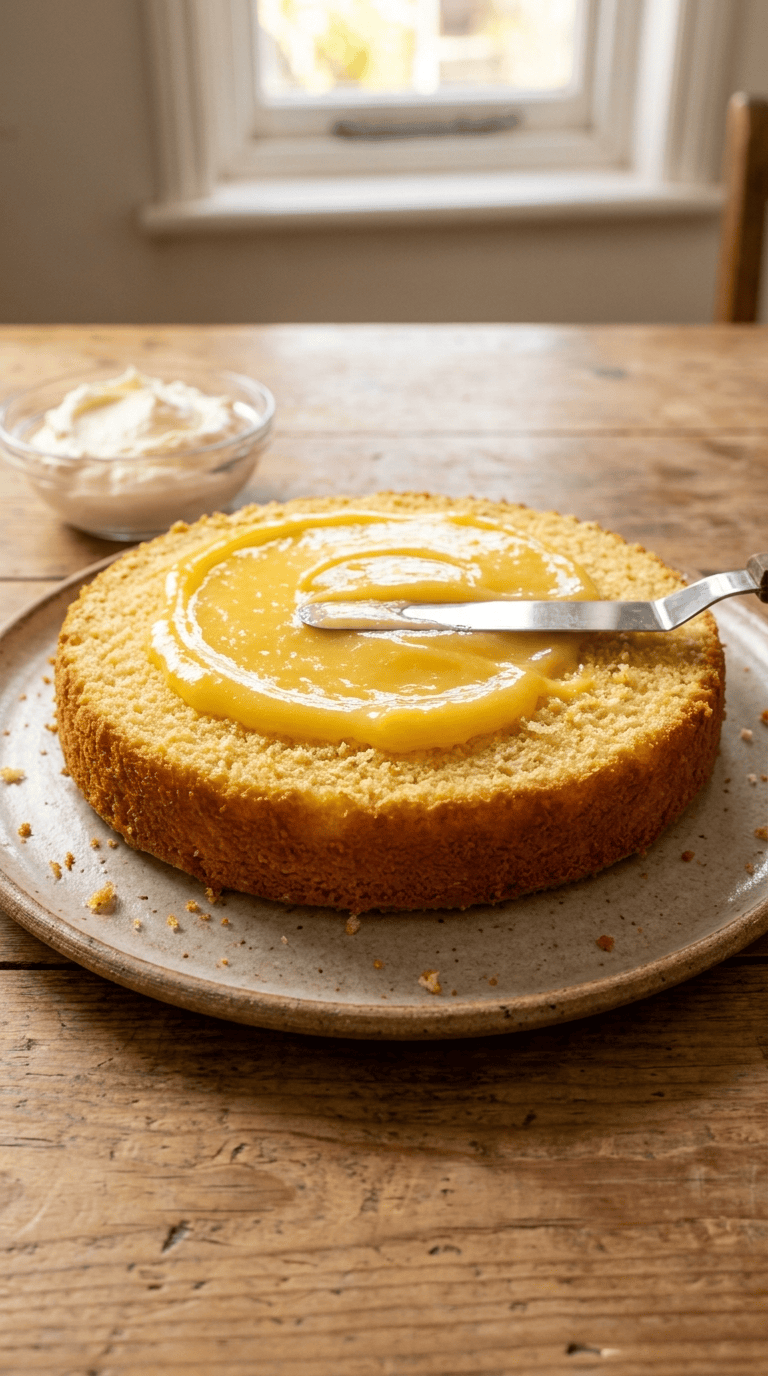
Pipe or spread a small border of frosting around the edge. This little border helps keep the lemon curd from escaping when you add the second layer.
Spread the lemon curd inside the frosting border.
Don’t pile it too thick. A generous but controlled layer gives you plenty of lemon flavor without making the cake difficult to stack.
Place the second cake layer on top.
Press down very gently to settle everything into place.
10. Frost the Cake
Spread a thin layer of frosting over the entire cake.
This is your crumb coat.
You don’t need it to look perfect. Its job is simply to trap loose crumbs.
Refrigerate the cake for about 15–20 minutes.
Then spread the remaining frosting over the top and sides.
You can make the finish completely smooth or leave a few casual swirls. Personally, I love the slightly rustic look. It makes the cake look homemade in the best possible way.
11. Decorate and Chill
Finish the cake with fresh lemon zest, thin lemon slices, or a few fresh berries.
Place the assembled cake in the refrigerator for at least 30 minutes before slicing.
That short chilling time helps the frosting firm up and gives the lemon curd a chance to settle between the layers.
Take the cake out about 15–20 minutes before serving for the best texture.
Pro Tips & Tricks
Use Fresh Lemons
Fresh lemon juice makes a noticeable difference here.
Bottled lemon juice can taste sharper and less fragrant, while fresh lemons give you both juice and zest. Since the zest carries so much citrus aroma, don’t skip it.
Bring Your Ingredients to Room Temperature
Room-temperature butter, eggs, buttermilk, and cream cheese blend more smoothly.
Cold ingredients can make the cake batter look curdled and can leave your frosting lumpy.
Set refrigerated ingredients on the counter for about 30–45 minutes before baking.
Don’t Overfill With Lemon Curd
It’s tempting to add a huge layer of curd because it tastes so good.
Resist.
Too much filling can make the cake layers slide around. Keep the curd layer relatively thin and even, and use the frosting border to keep it contained.
Chill Soft Frosting
If your kitchen feels warm and the frosting seems loose, don’t fight with it.
Put the bowl in the refrigerator for 15–20 minutes, then beat it briefly again before frosting.
Cream cheese frosting responds much better to chilling than to dumping in huge amounts of extra powdered sugar.
Make It Ahead
You can bake the cake layers 1–2 days ahead.
Let them cool completely, wrap each layer tightly in plastic wrap, and refrigerate them.
You can also prepare the frosting a day ahead and keep it covered in the refrigerator. Let it soften slightly before spreading.
Store It Properly
Because the cake contains cream cheese frosting and lemon curd, keep it refrigerated.
Store the covered cake in the refrigerator for up to 4 days.
For the best flavor, let each slice sit at room temperature for about 15–20 minutes before serving.
Variations & Substitutions
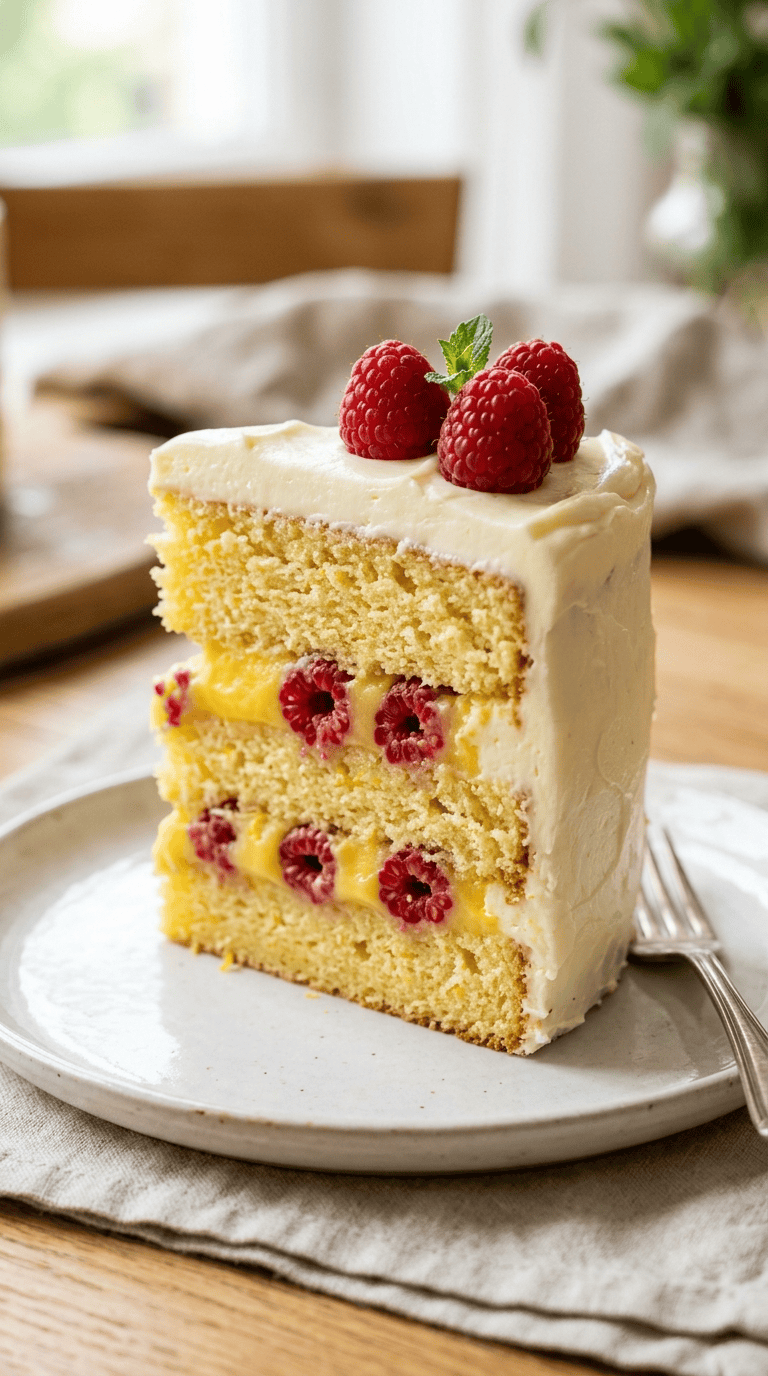
Lemon Raspberry Cake
Add a thin layer of fresh raspberries over the lemon curd before placing on the second cake layer.
The berries bring a lovely tart contrast to the sweet frosting.
You can also decorate the top with raspberries and lemon zest for a pretty spring or summer cake.
Lemon Blueberry Cake
Fold about 1 cup of fresh blueberries into the cake batter before dividing it between the pans.
Toss the blueberries with a tablespoon of flour first. This helps reduce sinking.
The combination of lemon and blueberry never seems to get old, especially with that tangy cream cheese frosting.
Lemon Coconut Cake
Add ½ cup unsweetened shredded coconut to the cake batter.
For decoration, press lightly toasted coconut onto the sides of the frosted cake.
The coconut adds a subtle chewy texture and makes the cake feel a little more tropical.
Gluten-Free Option
Use a good-quality 1-to-1 gluten-free baking flour blend designed for cakes.
Choose a blend that already contains xanthan gum if possible, and check that your lemon curd and other ingredients meet your dietary needs.
The texture may differ slightly from the original, but a reliable baking blend can produce a lovely cake.
Orange Instead of Lemon
If you want something a little sweeter and less sharp, replace the lemon with orange.
Use fresh orange zest and juice in the cake, then use orange curd as the filling if you can find or make it.
The same cream cheese frosting works beautifully.
Serving Suggestions
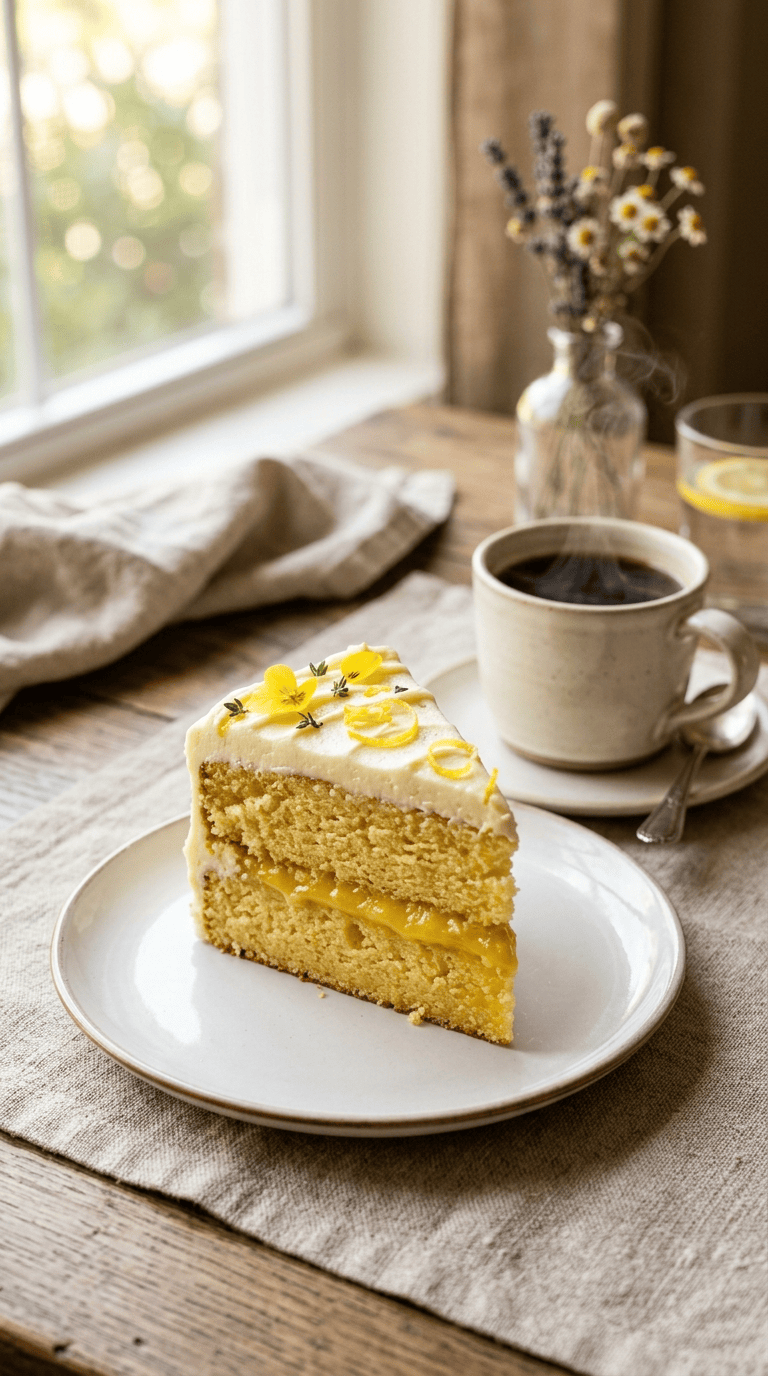
I love serving this cake slightly chilled but not refrigerator-cold.
Give each slice about 15–20 minutes at room temperature before serving. The frosting softens, the cake becomes more tender, and the lemon curd loosens just enough to give you that beautiful creamy center.
For a simple presentation, place each slice on a small dessert plate and add a few fresh berries beside it.
A light dusting of powdered sugar also works if you want something understated.
For afternoon gatherings, serve the cake with hot tea, coffee, or iced lemon tea. The citrus flavor makes it especially nice for spring and summer lunches, bridal showers, birthdays, Easter gatherings, and weekend family dinners.
For a more elegant dessert table, decorate the top with lemon curls, fresh berries, and a few edible flowers.
And honestly, you don’t need an occasion. I’ve cut a slice just because there was cake sitting on the counter. I consider that perfectly reasonable behavior.
FAQ’s
How should I store lemon curd cake with cream cheese frosting?
Store the cake covered in the refrigerator because both the lemon curd and cream cheese frosting need refrigeration.
It should keep well for about 4 days. For the best texture, let slices sit at room temperature for 15–20 minutes before eating.
Can I make this cake ahead of time?
Yes.
Bake the cake layers up to 2 days ahead, wrap them tightly, and refrigerate them.
You can also prepare the frosting one day ahead. Keep it covered and refrigerated, then allow it to soften slightly before frosting the cake.
Can I freeze lemon curd cake?
You can freeze the unfrosted cake layers.
Wrap each completely cooled layer tightly in plastic wrap, then wrap it in foil, and freeze for up to 2 months.
Thaw the layers in the refrigerator overnight before assembling.
I prefer to make the frosting and assemble the cake after thawing because the finished texture stays nicer that way.
Why did my cake turn out dense?
Overmixing usually causes trouble.
Once you add the flour, mix only until the dry ingredients disappear. Also make sure your baking powder and baking soda are still fresh.
Accurate measuring matters too. If you scoop flour directly from the bag and pack it into the measuring cup, you can accidentally add too much.
For the most reliable results, use a kitchen scale.
Why is my cream cheese frosting runny?
Your cream cheese or butter may have been too warm.
Extra moisture from certain cream cheese brands can also make frosting softer.
Chill the frosting for 15–20 minutes before using it. If it still feels too soft, add powdered sugar a little at a time rather than adding a large amount all at once.
Can I use store-bought lemon curd?
Absolutely.
Homemade lemon curd tastes wonderful, but good-quality prepared lemon curd saves time and works perfectly in this cake.
Give it a taste before using it. If it tastes very sweet, stir in a small amount of fresh lemon juice or lemon zest to brighten it.
Final Thoughts
This lemon curd cake has become one of those recipes I make when I want something that feels special without spending an entire day decorating a cake.
The soft lemon cake, silky curd, and tangy cream cheese frosting each bring something different to the party. None of them overpower the others, which is exactly what I want from a layered cake.
And if your first attempt looks a little less polished than the cakes you see in a bakery window, don’t worry. Mine certainly have. A few frosting swirls can hide an impressive number of baking adventures.
Make it for a birthday, bring it to a family gathering, or keep it in the fridge for yourself. Just make sure you save a slice before everyone else discovers how good it is.
If you make this lemon curd cake, I’d love to hear how it turned out. And if you add your own twist—berries, coconut, extra lemon, or something completely unexpected—go for it. That’s how favorite home recipes are born.
Leave a Reply
You must be logged in to post a comment.