

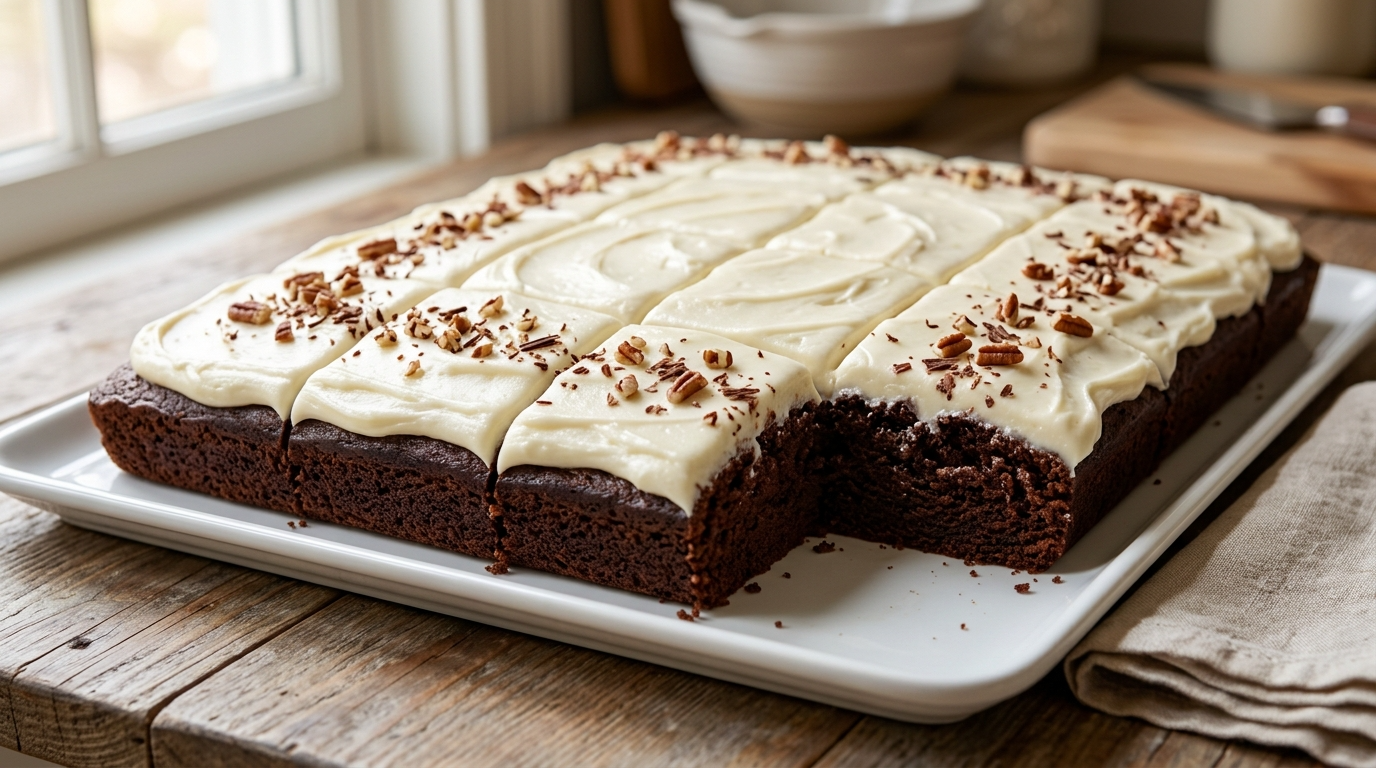
There are some cakes that look impressive without asking you to spend half your afternoon decorating them. Texas sheet cake is one of those cakes for me. I first fell in love with it because of how quickly it comes together, but the rich chocolate flavor and soft, tender crumb are what keep bringing me back.
The first time I made it, I underestimated how quickly the frosting would set. I waited too long, spread it over the cake, and ended up with a slightly rustic-looking top. Honestly? Nobody cared. Everyone grabbed a piece before I could even finish cutting the cake.
Since then, I’ve made this Texas sheet cake with cream cheese frosting more times than I can count. I love serving it at family gatherings, potlucks, birthdays, and those random weekends when I decide a normal afternoon needs chocolate cake.
The cream cheese frosting adds a tangy, creamy layer that works beautifully with the rich chocolate cake. It also gives the cake a slightly different personality from the traditional Texas sheet cake, which often uses a chocolate or pecan frosting.
Texas sheet cake has strong roots in Southern and Texan home baking traditions, where simple ingredients and large-pan desserts make feeding a crowd much easier. This version keeps that generous, homemade spirit while adding a creamy frosting that I think makes every bite extra special.
Why You’ll Love This Texas Sheet Cake

- It feeds a crowd: A sheet pan gives you plenty of generous slices without making multiple cakes.
- The cake stays wonderfully soft: Buttermilk and melted butter help create that tender texture I love.
- The frosting is creamy and tangy: Cream cheese balances the sweetness of the chocolate cake.
- You don’t need fancy decorating skills: A simple swirl of frosting looks perfectly homemade.
- It’s easy enough for beginners: The batter comes together quickly, and you don’t need a stand mixer for the cake.
Ingredients You’ll Need
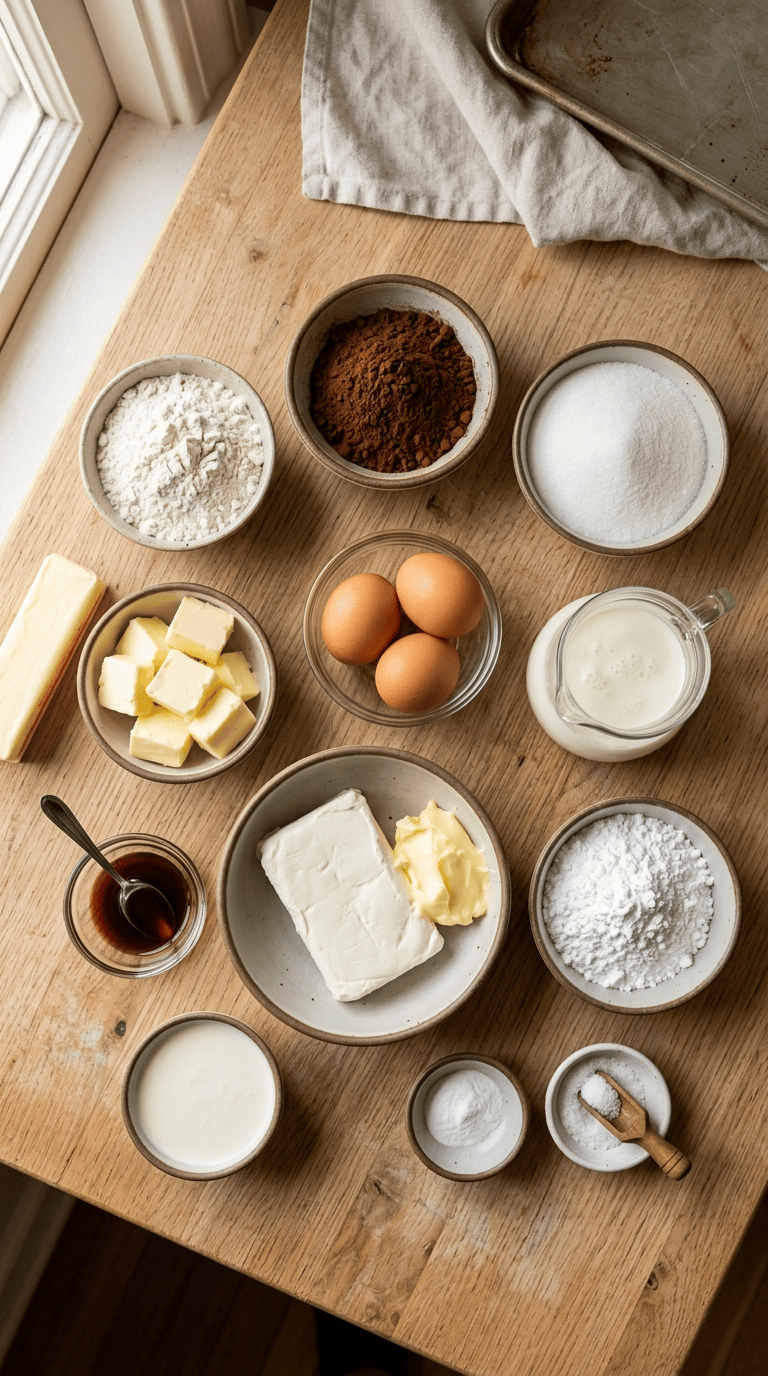
For the Chocolate Sheet Cake
- 2 cups all-purpose flour
- 2 cups granulated sugar
- 1 teaspoon baking soda
- 1/2 teaspoon salt
- 1 cup unsalted butter
- 1 cup water
- 1/2 cup unsweetened cocoa powder
- 1/2 cup buttermilk
- 2 large eggs
- 1 teaspoon vanilla extract
If you don’t have buttermilk, mix 1/2 cup regular milk with 1 1/2 teaspoons lemon juice or white vinegar. Let it sit for about 5 minutes before using it.
For the Cream Cheese Frosting
- 8 ounces full-fat cream cheese, softened
- 1/2 cup unsalted butter, softened
- 3 cups powdered sugar
- 1 teaspoon vanilla extract
- 2 tablespoons heavy cream or milk
- Pinch of salt
I prefer full-fat cream cheese because it gives the frosting a richer texture and helps it hold its shape better.
Helpful Tools
You’ll need a large mixing bowl, a medium saucepan, a whisk, a hand mixer or stand mixer, a rubber spatula, and a 10×15-inch jelly-roll pan.
I usually use a light-colored aluminum pan because it helps the cake bake evenly. A darker pan can brown the edges faster, so keep an eye on the baking time if that’s what you have.
Step-by-Step Instructions
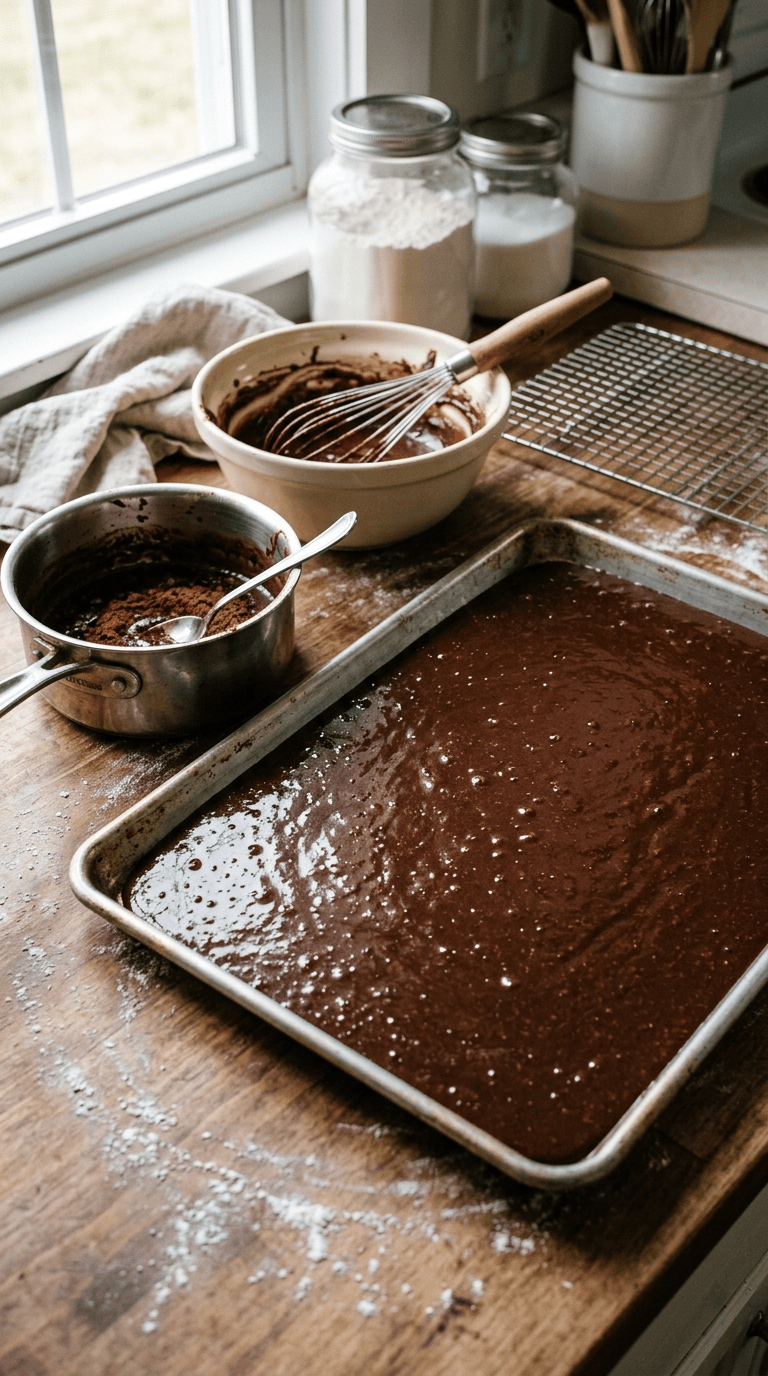
1. Prepare the Pan
Preheat your oven to 350°F (175°C).
Grease a 10×15-inch jelly-roll pan thoroughly with butter or baking spray. I also like to line the bottom with parchment paper because it makes serving and cleanup easier.
Give the oven plenty of time to preheat while you prepare the batter. A properly heated oven helps the cake rise evenly.
2. Mix the Dry Ingredients
Add the flour, granulated sugar, baking soda, and salt to a large mixing bowl.
Whisk everything together for about 30 seconds. You don’t need to overwork it. Just make sure the baking soda and salt spread evenly through the flour.
Set the bowl aside while you prepare the chocolate mixture.
3. Make the Chocolate Mixture
Place the butter, water, and cocoa powder in a medium saucepan.
Heat the mixture over medium heat, stirring frequently.
Once the butter melts and the mixture becomes smooth and glossy, bring it just to a gentle simmer. You don’t need a hard boil.
Remove the saucepan from the heat.
This step gives the cocoa a chance to bloom in the hot butter mixture. That’s one of the little tricks that helps the chocolate flavor taste deeper and richer.
4. Combine the Wet and Dry Ingredients
Slowly pour the warm chocolate mixture into the dry ingredients.
Whisk gently until the flour disappears.
Don’t worry if the batter looks thinner than a typical cake batter. Texas sheet cake batter should have a pourable consistency.
5. Add the Buttermilk, Eggs, and Vanilla
Add the buttermilk, eggs, and vanilla extract.
Whisk until everything looks smooth and evenly combined.
At this point, the batter should look glossy and fairly thin. That’s exactly what you want.
One mistake I made years ago was adding cold eggs straight from the refrigerator to a very warm chocolate mixture. The temperature difference wasn’t ideal. Now I let my eggs sit at room temperature for a little while, which makes mixing much easier.
6. Pour the Batter Into the Pan
Pour the batter into your prepared sheet pan.
Use a spatula to gently guide the batter toward the corners.
Tap the pan lightly on the counter once or twice to remove any large air pockets.
Don’t bang it repeatedly. A couple of gentle taps are enough.
7. Bake the Cake
Place the pan in the preheated oven and bake for approximately 18–23 minutes.
Start checking around the 18-minute mark.
The cake should look set in the center, and a toothpick inserted into the middle should come out with a few moist crumbs attached.
Don’t wait for the toothpick to come out completely dry. Overbaking can turn this wonderfully soft cake into a dry one.
Let the cake cool completely before frosting it.
8. Make the Cream Cheese Frosting
While the cake cools, prepare the frosting.
Add softened cream cheese and softened butter to a large mixing bowl.
Beat them with a hand mixer on medium speed for about 2 minutes, or until smooth and creamy.
Add the powdered sugar gradually.
Mix on low speed at first so powdered sugar doesn’t fly all over your kitchen. Trust me, I’ve learned this one the messy way.
Add the vanilla, heavy cream, and salt.
Increase the mixer speed and beat for another 1–2 minutes until the frosting becomes fluffy and smooth.
If the frosting seems too thick, add another teaspoon of cream. If it seems too soft, add a little more powdered sugar.
9. Frost the Cake
Make sure the cake has cooled completely before adding the frosting.
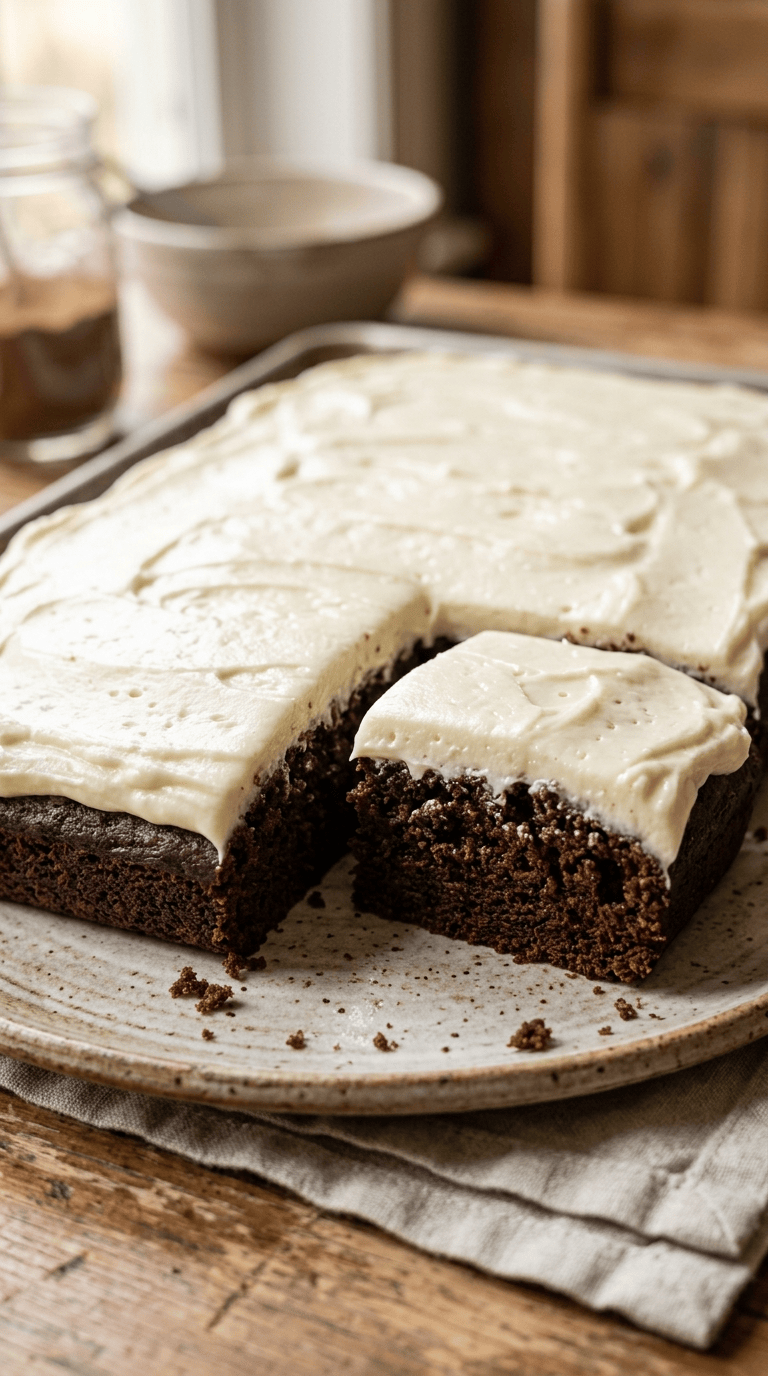
Spread the cream cheese frosting evenly across the surface.
You can use an offset spatula to create smooth edges or make little swirls for a more casual homemade look.
Don’t worry about making it perfect. This cake looks best when it looks like someone actually made it in a real kitchen.
10. Slice and Serve
For cleaner slices, chill the frosted cake for about 20–30 minutes before cutting.
Use a sharp knife and wipe it clean between cuts.
I usually cut the cake into small squares because this dessert is rich. You can always go back for another piece, and somehow people usually do.
Pro Tips & Tricks
Don’t Overbake the Cake
This is probably my biggest tip.
Sheet cakes bake quickly because the batter spreads across a wide pan. Check the cake early rather than relying only on the recipe timer.
The center should feel springy when you gently press it.
Let the Cream Cheese Soften
Cold cream cheese can leave little lumps throughout your frosting.
Let both the cream cheese and butter soften at room temperature before mixing. They should feel soft when pressed but shouldn’t look melted.
Cool the Cake Completely
I know it’s tempting to spread frosting over a warm cake, especially when the kitchen smells incredible.
Don’t.
Warm cake can melt the cream cheese frosting and make it slide around. Give the cake enough time to cool completely.
Don’t Add Too Much Liquid
Start with 2 tablespoons of heavy cream or milk. You can always add more, but fixing overly thin frosting takes more work.
Make It Ahead
You can bake the cake a day ahead and keep it covered at room temperature if your kitchen isn’t too warm. Prepare the frosting separately and refrigerate it.
Let the frosting soften slightly before spreading it.
Keep Leftovers Chilled
Because the frosting contains cream cheese, I recommend storing the frosted cake in the refrigerator.
Cover the pan tightly with plastic wrap or transfer individual pieces to an airtight container.
Variations & Substitutions
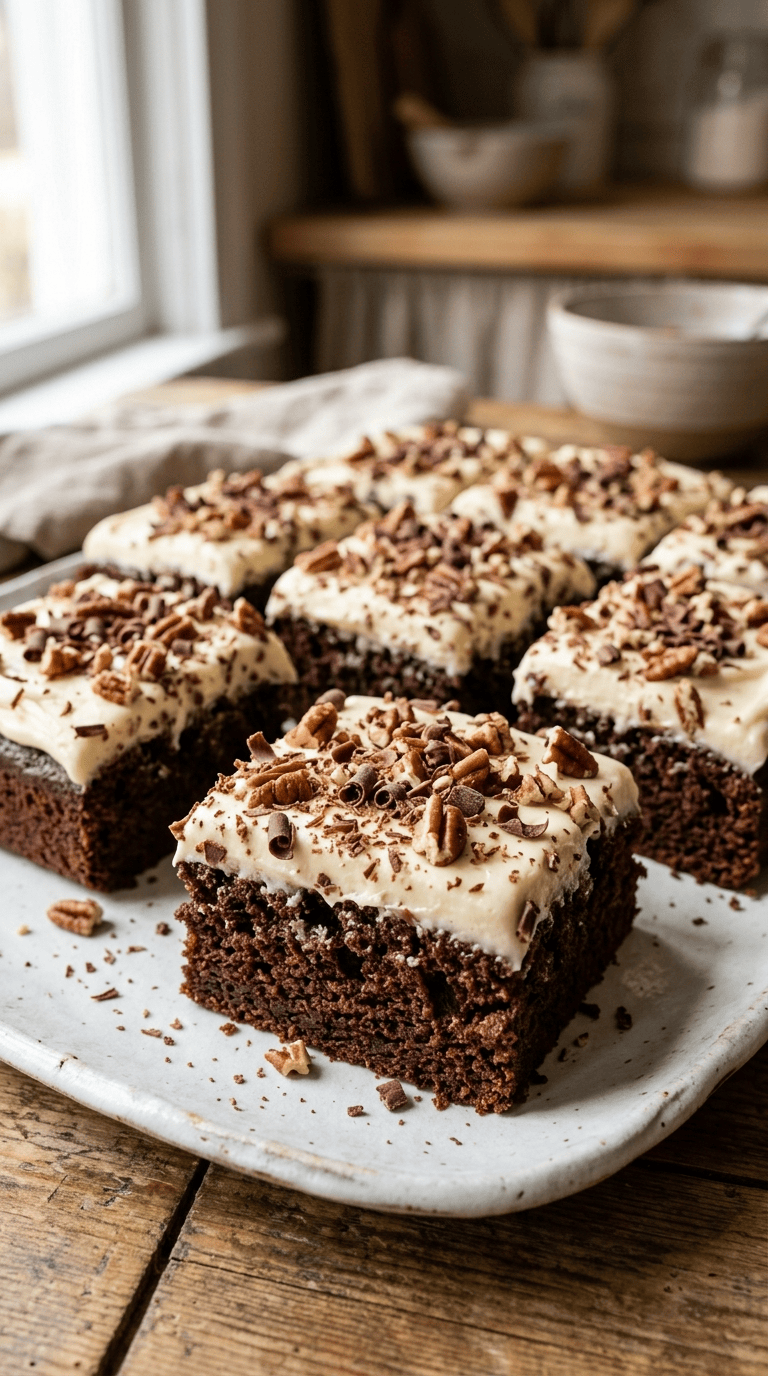
Add Toasted Pecans
For a classic Southern-inspired touch, sprinkle about 3/4 cup chopped toasted pecans over the cream cheese frosting.
Toast the pecans in a dry skillet over medium-low heat for a few minutes until they smell nutty. Let them cool before adding them to the cake.
Make It Extra Chocolatey
Add 1/2 cup mini chocolate chips to the batter before pouring it into the pan.
You can also sprinkle a few chocolate chips over the frosting while it is still soft.
Add a Little Coffee
For a deeper chocolate flavor, replace a few tablespoons of the water with strongly brewed coffee.
You won’t end up with a coffee-flavored cake. Instead, the coffee can make the chocolate taste more pronounced.
Gluten-Free Option
For a gluten-free version, use a good-quality 1:1 gluten-free baking flour that contains xanthan gum.
Since gluten-free flour blends behave differently from brand to brand, check the package instructions and avoid overmixing the batter.
Serving Suggestions

I love serving Texas sheet cake with cream cheese frosting slightly chilled or at cool room temperature.
For a simple dessert plate, add fresh strawberries or raspberries beside each slice. The slight tartness works beautifully with the rich chocolate.
A scoop of vanilla ice cream also makes a fantastic pairing, especially when you’re serving the cake at a family dinner.
For birthdays, sprinkle chocolate shavings, chopped pecans, or colorful sprinkles over the frosting.
For potlucks, I recommend cutting the cake into smaller squares before leaving home. It makes serving much easier, and guests can grab a piece without needing a plate and fork.
This cake also works beautifully for bake sales, church gatherings, holiday tables, backyard cookouts, and casual weekend dinners.
FAQ’s
Can I make Texas sheet cake a day ahead?
Yes. You can bake the cake the day before and store it covered. Once you add the cream cheese frosting, keep the cake refrigerated.
For the best texture, take it out of the refrigerator about 15–20 minutes before serving.
How should I store Texas sheet cake with cream cheese frosting?
Store the frosted cake in an airtight container or cover the pan tightly with plastic wrap.
Keep it refrigerated because the frosting contains cream cheese. It should stay enjoyable for several days when properly covered and chilled.
Can I freeze this cake?
Yes. I recommend freezing individual unfrosted cake portions when possible.
Wrap each piece tightly in plastic wrap, then place the wrapped pieces in a freezer-safe container or bag.
Thaw the cake in the refrigerator and add fresh cream cheese frosting afterward.
You can also freeze frosted pieces, but the frosting may lose some of its perfectly smooth texture after thawing.
Why did my cake turn out dry?
The most common reason is overbaking.
Sheet cakes don’t need as much time as deeper cakes. Start checking the cake early and remove it once the center has set and a toothpick comes out with a few moist crumbs.
Measuring too much flour can also make the cake dry. Spoon flour into your measuring cup and level the top rather than packing flour directly into the cup.
Can I use a different frosting?
Absolutely.
Chocolate buttercream, vanilla buttercream, whipped cream frosting, or the traditional Texas sheet cake-style chocolate frosting can all work.
I personally love cream cheese frosting because its tangy flavor cuts through the richness of the chocolate cake.
Can I use a 9×13-inch pan?
You can, but the cake will be thicker and may need a longer baking time.
Start checking it around the usual baking time, then continue baking as needed until the center sets.
Avoid filling the pan too high. If you have the option, a larger sheet pan gives you the classic thin Texas sheet cake texture.
Final Thoughts
This Texas sheet cake with cream cheese frosting has become one of those recipes I keep coming back to whenever I want something homemade without turning dessert into a major project.
I love how simple the cake looks when it comes out of the oven, then how completely irresistible it becomes once that creamy frosting goes on top.
And if your frosting swirls aren’t perfect or your slices aren’t the same size, don’t worry. Mine certainly aren’t. That’s part of the charm of a homemade sheet cake.
Make it for your next gathering, cut yourself the corner piece if that’s your favorite, and don’t be surprised when someone asks you for the recipe before the serving plate is empty.
Happy baking!
Leave a Reply
You must be logged in to post a comment.