

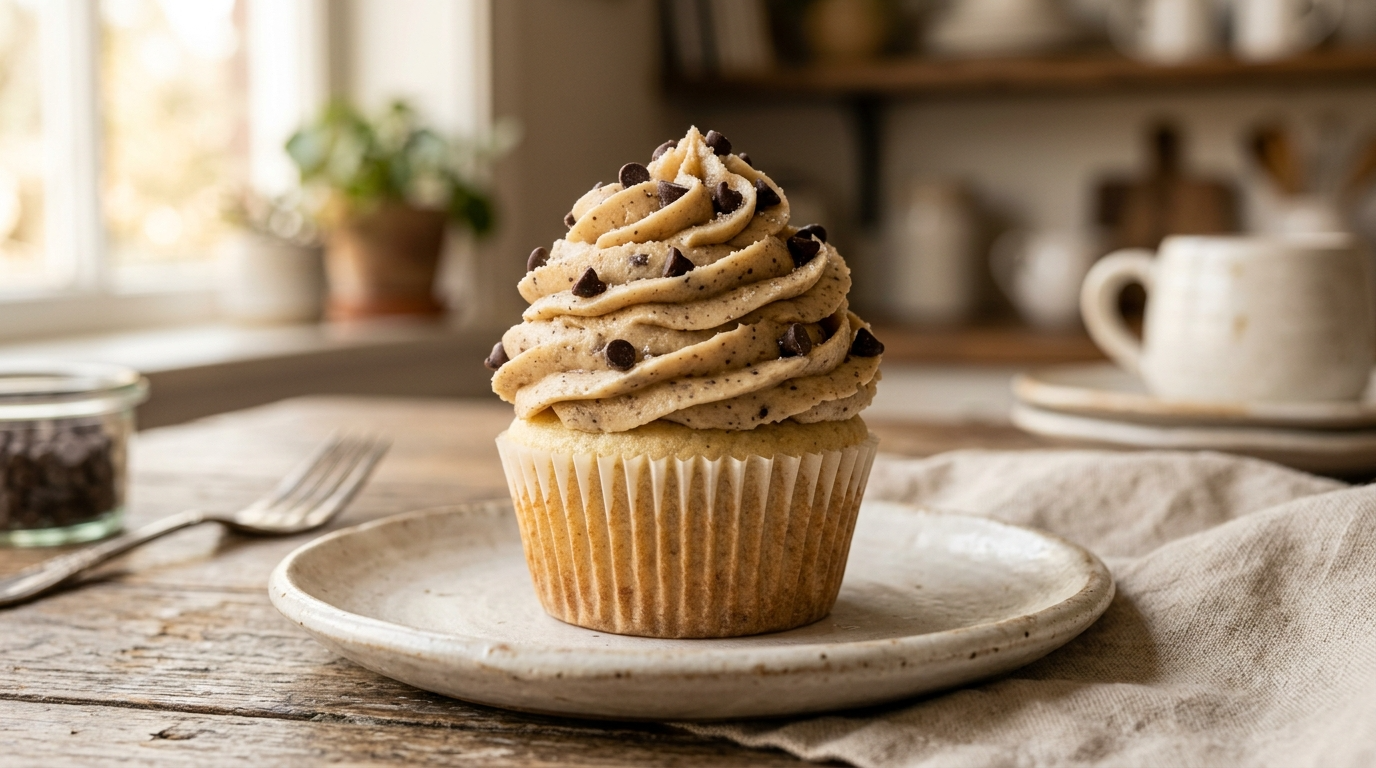
I have a weakness for cookie dough. Give me a spoonful while I’m baking, and suddenly I’m “testing the recipe” for the fifth time. So when I wanted a frosting that tasted like my favorite chocolate chip cookie dough but didn’t use cream cheese, I knew I had to make it work.
My first attempt tasted good, but the texture was far too thick. I tried spreading it over a cake and nearly took half the cake with me. Not exactly the smooth frosting moment I had pictured.
After a few adjustments, I found the sweet spot: soft butter, brown sugar, powdered sugar, vanilla, a little milk, and heat-treated flour. The result tastes wonderfully like cookie dough, spreads easily, and holds its shape without needing cream cheese.
I have made this frosting more times than I can count now, and it has become one of those recipes I keep coming back to whenever I want a dessert to taste extra special.
Why You’ll Love This Recipe

- It tastes like real cookie dough. Brown sugar and vanilla give it that classic bakery-style cookie flavor.
- No cream cheese needed. You only need simple baking ingredients that you can easily keep in your pantry.
- It takes about 15 minutes. Once the flour cools, the frosting comes together quickly.
- It works on cakes, cupcakes, and cookies. I have even used it as a filling between two soft cookies.
- You can make it ahead. Keep it chilled and bring it back to room temperature before spreading.
- Chocolate chips make it extra fun. Mini chocolate chips give every bite that familiar cookie-dough finish.
Ingredients
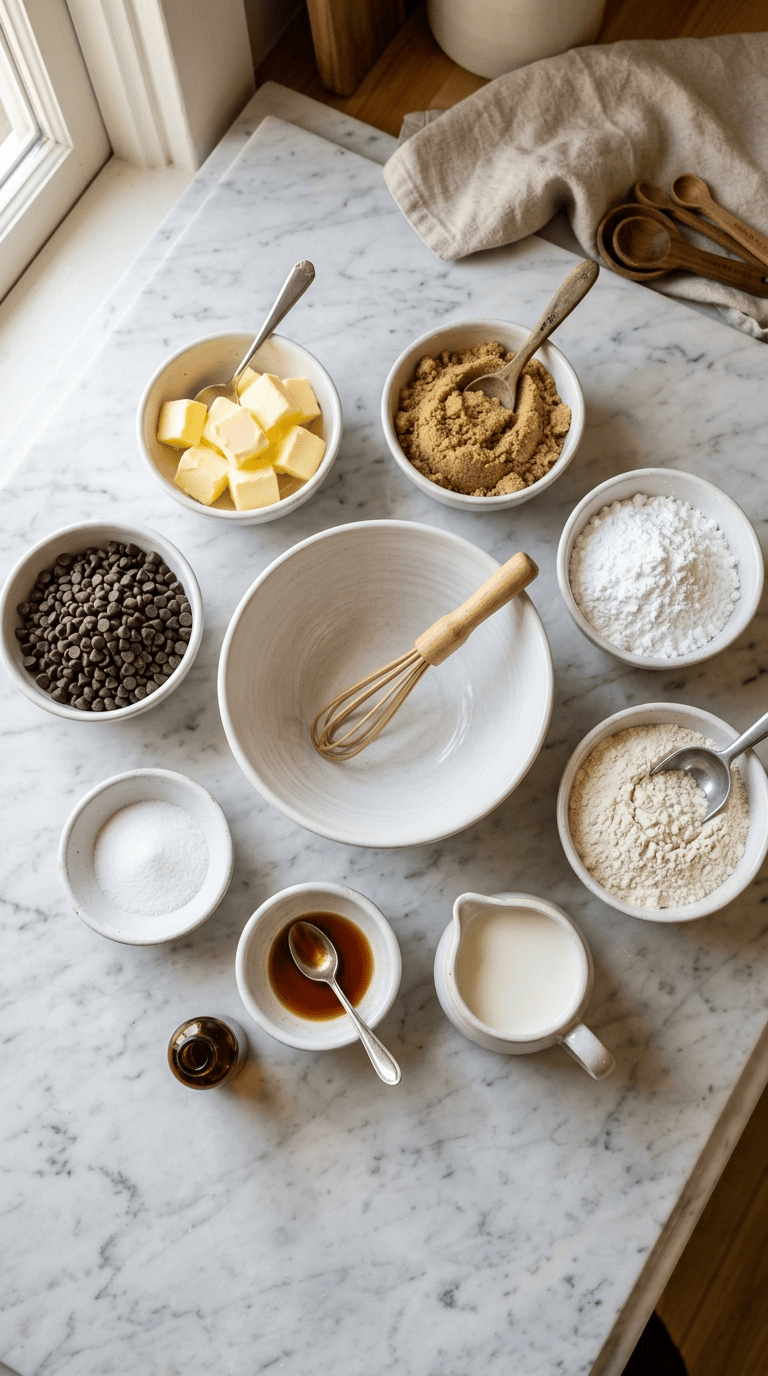
You don’t need a long shopping list for this frosting. Most of the ingredients probably already live in your kitchen.
For the Frosting
- 1 cup unsalted butter, softened — Soft butter creates a smooth, fluffy frosting. Avoid melted butter.
- 1 cup light brown sugar, packed — Brown sugar gives the frosting its signature cookie dough flavor.
- 1 ½ cups powdered sugar — This adds sweetness and helps create a creamy texture.
- 1 cup all-purpose flour, heat-treated — Flour gives the frosting that unmistakable cookie dough taste and body.
- 2 teaspoons pure vanilla extract — Vanilla brings all the flavors together.
- ¼ teaspoon salt — Salt keeps the frosting from tasting overly sweet.
- 3–5 tablespoons milk or heavy cream — Add it gradually until the frosting reaches your preferred consistency.
- ½ cup mini chocolate chips — These add little bursts of chocolate throughout the frosting.
A Quick Note About the Flour
Because this frosting uses flour without baking it in a cake or batch of cookies, I always heat-treat the flour first.
Spread the flour on a baking sheet and heat it in a 350°F oven for about 5–7 minutes. Let it cool completely before adding it to the frosting.
If you prefer, you can heat the flour according to your local food-safety guidance. The important part is that you don’t simply add untreated raw flour.
Ingredient Swaps
You can use salted butter if that’s what you have. Just reduce or skip the added salt.
For a richer frosting, use heavy cream instead of milk. For a lighter texture, regular whole milk works beautifully.
You can also use dark brown sugar for a deeper molasses flavor, although I usually reach for light brown sugar when I want a classic chocolate chip cookie taste.
Step-by-Step Instructions
1. Heat-Treat the Flour
Time: 5–7 minutes, plus cooling
Spread 1 cup of flour evenly over a baking sheet.
Place it in a 350°F oven for about 5–7 minutes. Remove it and let it cool completely.
Don’t rush this step. Warm flour can soften your butter and make the frosting loose.
I usually prepare the flour first and let it cool while I measure everything else.
2. Beat the Butter
Time: 2–3 minutes
Place the softened butter in a large mixing bowl.
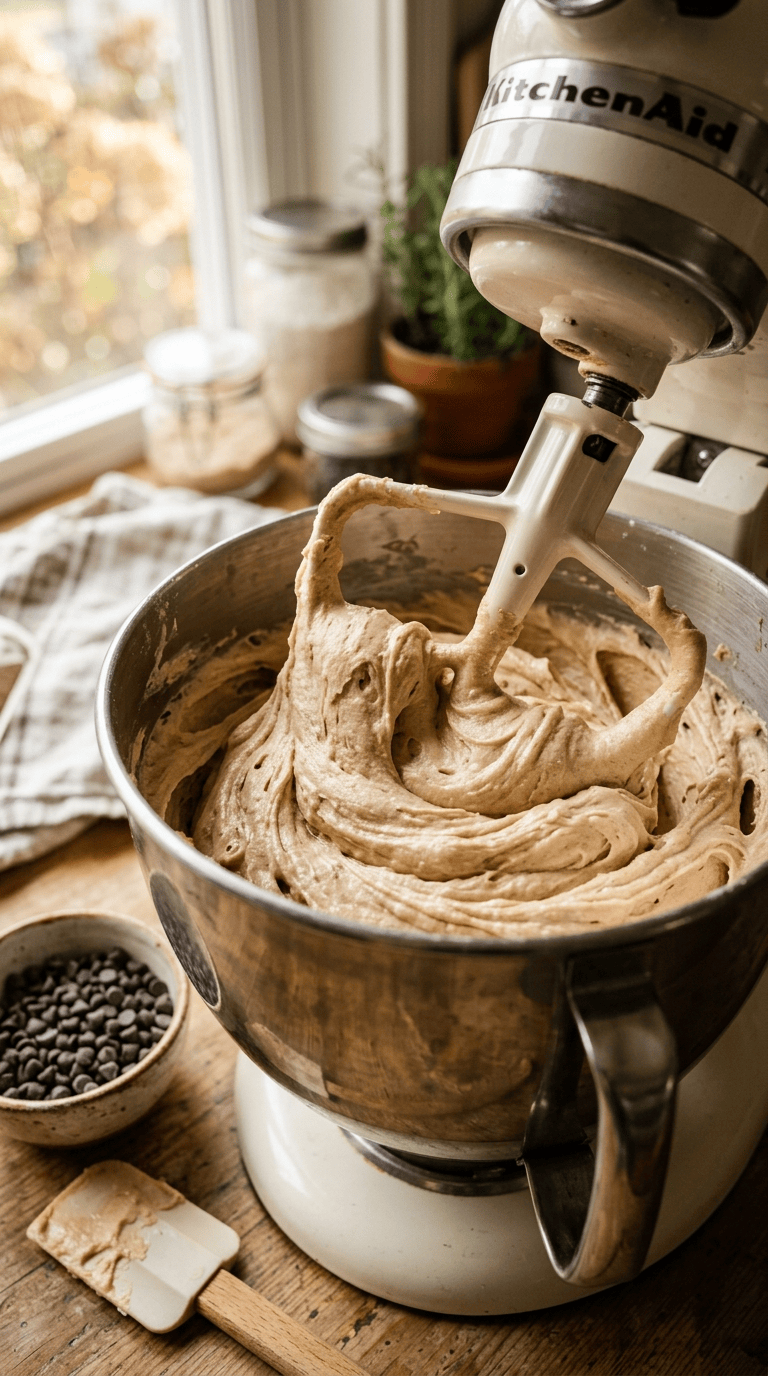
Using a hand mixer or stand mixer fitted with the paddle attachment, beat the butter on medium speed until it looks smooth and creamy.
You want the butter to look fluffy rather than greasy or melted.
If you press your finger into the butter, it should feel soft but still hold its shape.
3. Add the Brown Sugar
Time: 2 minutes
Add the packed brown sugar to the butter.
Beat the mixture for another 2 minutes until it looks creamy and evenly combined.
At this point, it should smell exactly like the beginning of a batch of chocolate chip cookies.
This is also where I usually sneak a tiny taste. You know, for quality control.
4. Add the Powdered Sugar
Time: 1–2 minutes
Add the powdered sugar gradually.
Start the mixer on low speed so you don’t cover your kitchen in a cloud of sugar. Once the sugar disappears into the butter mixture, increase the speed to medium.
Beat until the frosting becomes smooth.
If the mixture looks very thick, don’t worry. The milk will fix that in the next step.
5. Add Flour, Vanilla, and Salt
Time: 1–2 minutes
Add the completely cooled heat-treated flour, vanilla extract, and salt.
Mix on low until everything combines.
Scrape down the sides and bottom of the bowl with a rubber spatula. Flour sometimes hides along the edges, and you don’t want little dry pockets in your frosting.
6. Add the Milk Slowly
Time: 1–2 minutes
Add 3 tablespoons of milk or heavy cream.
Beat the frosting until smooth.
Check the consistency before adding more liquid. If the frosting feels too thick to spread, add another tablespoon.
Continue one tablespoon at a time until it becomes soft, creamy, and easy to spread.
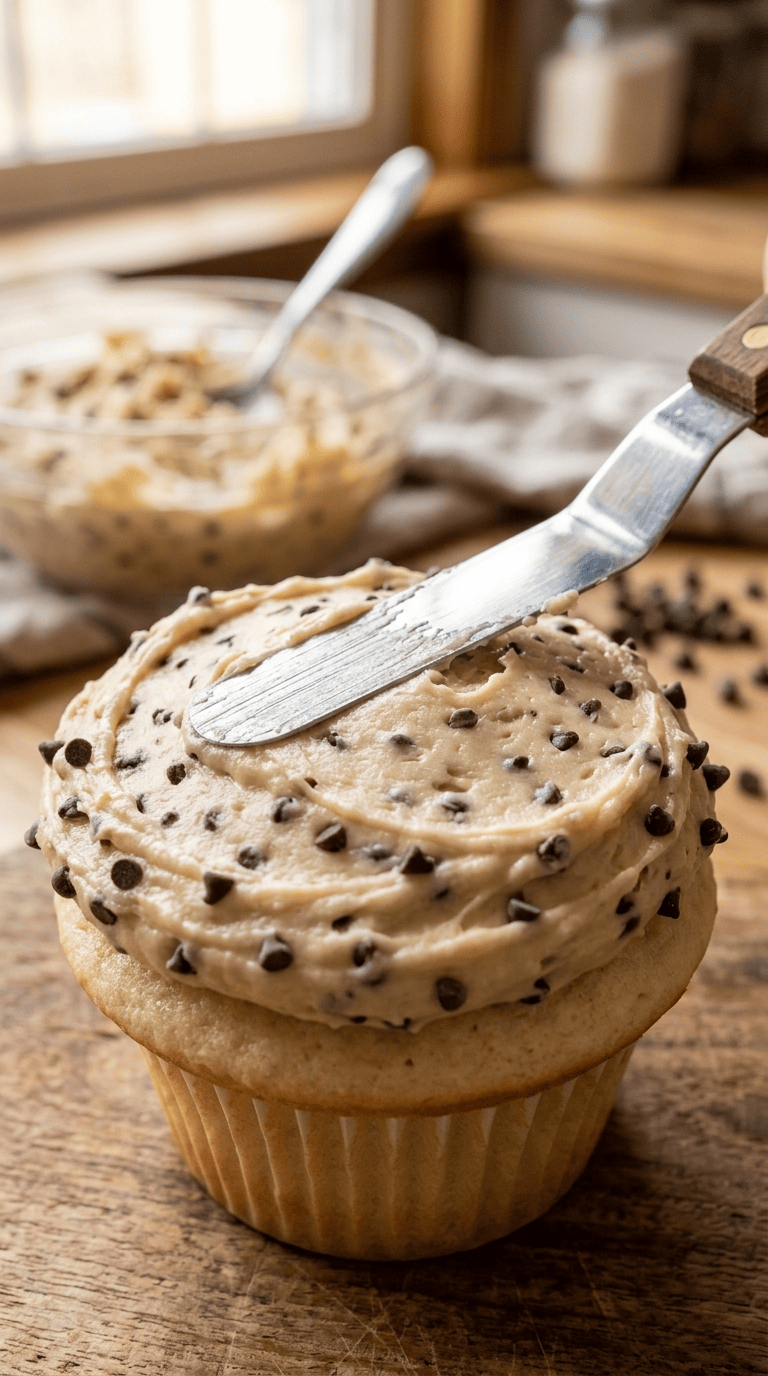
For piping, I usually keep it slightly thicker. For spreading over a cake, I like it a little softer.
7. Fold in the Chocolate Chips
Time: 30 seconds
Turn the mixer off.
Add the mini chocolate chips and fold them in with a spatula.
I prefer mini chips because large chocolate chips can make piping awkward. They also spread more evenly through the frosting.
If you want an ultra-smooth frosting for piping, leave the chocolate chips out and sprinkle them over the finished dessert instead.
8. Give It One Final Mix
Time: 30 seconds
Beat the frosting briefly on low speed.
Stop as soon as everything looks smooth and fluffy.
Don’t keep mixing for several minutes after the frosting reaches the right texture. Overmixing can make it softer than you want.
Your finished frosting should feel creamy and spread easily without running off the cake.
Pro Tips & Tricks
Use Properly Softened Butter
Soft butter makes a huge difference.
Cold butter leaves little lumps, while melted butter can make the frosting greasy and difficult to thicken.
Let the butter sit at room temperature until it feels soft when pressed but still looks solid.
Cool the Flour Completely
This little detail saves a lot of trouble.
If you add warm flour to butter, the butter can soften too much. Then you’ll spend your time trying to rescue a frosting that has suddenly turned loose.
I learned that one the annoying way.
Add Liquid Slowly
You can always add more milk, but you can’t easily remove it.
Start with 3 tablespoons and increase the amount gradually. Your final amount may vary depending on the butter, flour, and powdered sugar.
Don’t Pack the Flour
For the most consistent texture, spoon flour into your measuring cup and level it with a knife.
Scooping directly from the flour bag can pack extra flour into the cup, leaving you with thicker frosting.
Use Mini Chocolate Chips
Mini chocolate chips blend into the frosting much better than regular-size chips.
They also make the frosting easier to spread across cupcakes and cakes.
Chill It If Needed
If your kitchen feels warm and the frosting becomes too soft, place it in the refrigerator for about 15–20 minutes.
Give it a quick stir before using it.
Make It Ahead
You can prepare this frosting a day or two before you need it.
Store it in an airtight container in the refrigerator. Let it sit at room temperature for about 20–30 minutes, then beat it briefly until creamy again.
Variations & Substitutions
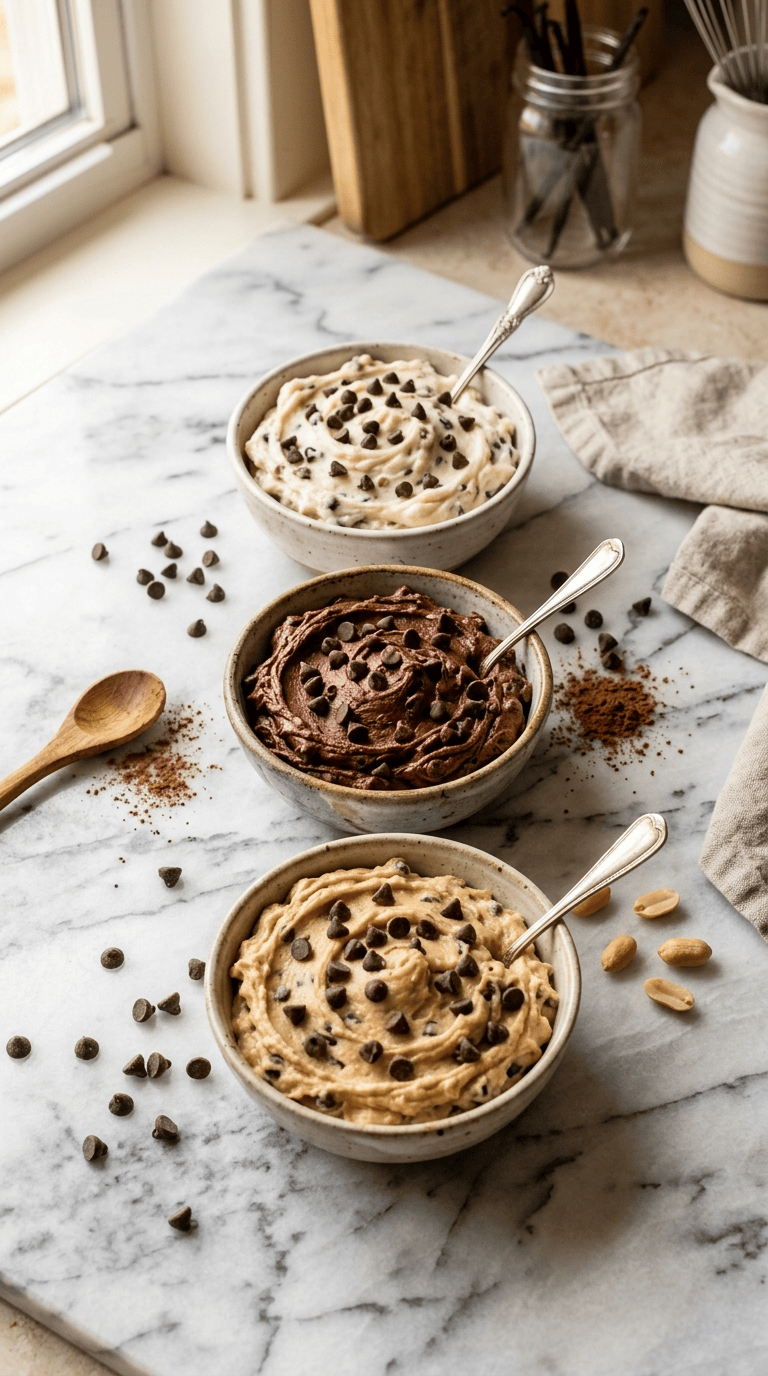
Chocolate Cookie Dough Frosting
For a chocolate version, replace ¼ cup of the flour with ¼ cup unsweetened cocoa powder.
Because cocoa powder can make the frosting slightly thicker, add an extra splash of milk if needed.
Fold in mini chocolate chips for an extra chocolate-heavy frosting.
Peanut Butter Cookie Dough Frosting
Add ½ cup creamy peanut butter along with the butter and brown sugar.
You may need a little extra milk to reach the right consistency.
This version tastes fantastic on chocolate cupcakes, brownies, or a simple vanilla cake.
Gluten-Free Cookie Dough Frosting
Use a certified gluten-free all-purpose flour blend instead of regular flour.
Make sure the flour blend works well for heat-treating and follow the package or food-safety guidance for preparing it before using it in the frosting.
Dairy-Free Version
Use a dairy-free baking butter and your preferred dairy-free milk.
Choose dairy-free chocolate chips if needed.
The texture may vary slightly depending on the butter substitute, so add the milk slowly.
Extra Chocolate Chip Version
If you’re a serious chocolate chip fan, increase the mini chocolate chips to ¾ cup.
I wouldn’t go much higher than that because too many chips can make the frosting difficult to spread.
Serving Suggestions

This frosting makes almost any simple dessert feel like a special occasion.
I especially love it on vanilla cupcakes because the mild cake lets the cookie dough flavor stand out.
Spread it between layers of a chocolate cake for a rich combination that tastes like a giant chocolate chip cookie crossed with a birthday cake.
You can also use it on brownies. Let the brownies cool completely, spread the frosting over the top, and sprinkle a few extra mini chocolate chips over everything.
For a fun party dessert, pipe small swirls onto cupcakes and finish each one with a few chocolate chips.
You can even use the frosting as a filling between soft cookies. Just keep the cookies fairly sturdy so the filling doesn’t squeeze out when you take a bite.
For a casual weekend dessert, I like serving cookie dough cupcakes with cold milk or a cup of coffee. Nothing fancy, just a very good combination.
FAQ’s
Can I make cookie dough frosting without cream cheese?
Absolutely. This recipe uses butter as the creamy base, so you don’t need cream cheese at all. Brown sugar, vanilla, flour, and chocolate chips create the cookie dough flavor.
How should I store cookie dough frosting?
Keep the frosting in an airtight container in the refrigerator.
It should stay good for several days when stored properly. Before using it, let it soften at room temperature and beat it briefly until creamy.
Can I freeze this frosting?
Yes. Place the frosting in a freezer-safe airtight container and freeze it.
When you’re ready to use it, thaw it in the refrigerator and then let it soften at room temperature. Beat it again before spreading or piping.
Why is my frosting too thick?
You probably need a little more liquid.
Add milk or heavy cream one tablespoon at a time and mix well after each addition. Stop once the frosting becomes smooth and spreadable.
Why is my frosting too runny?
Warm butter or too much milk can cause a loose frosting.
Place the bowl in the refrigerator for 15–20 minutes, then beat it again. If it still feels too soft, add a little powdered sugar.
Can I make this frosting ahead of time?
Yes. I actually prefer making it ahead when I’m preparing a birthday cake.
Make the frosting up to a couple of days ahead, refrigerate it in an airtight container, and bring it back toward room temperature before using it.
Can I use regular chocolate chips instead of mini chips?
Yes, but mini chocolate chips work better for frosting.
Regular chips can make spreading and piping harder, especially if you’re working with cupcakes.
Can I use this frosting for piping?
Yes. Keep the frosting slightly thicker by using less milk.
If you’re planning detailed piping, leave out the chocolate chips and sprinkle them over the finished dessert instead.
Final Thoughts
There is something ridiculously comforting about cookie dough flavor. Maybe it’s the brown sugar, maybe it’s the vanilla, or maybe it’s simply the memory of standing in the kitchen with a mixing spoon in your hand.
Whatever the reason, this cookie dough frosting has become one of my favorite ways to turn an ordinary cake or cupcake into something people remember.
The best part is how forgiving it feels. If it’s too thick, add a splash of milk. If it’s too soft, chill it. If you want more chocolate, toss in more mini chips.
That’s the kind of recipe I love keeping around.
So grab your mixer, heat-treat that flour, and make a batch. And if you find yourself eating a spoonful straight from the bowl, well… I won’t tell anyone.
Leave a Reply
You must be logged in to post a comment.