

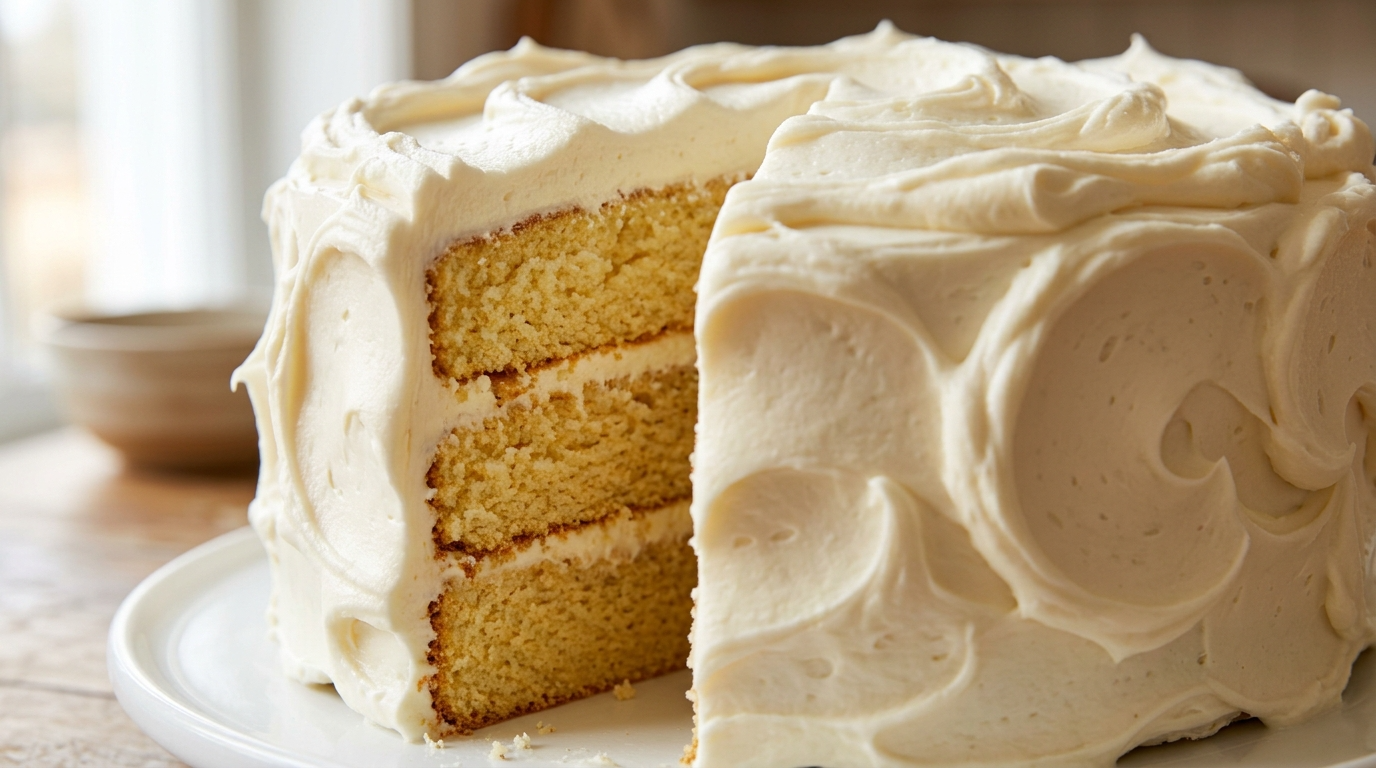
I’ve lost count of how many times I’ve stood in my kitchen with a cake cooling on the counter, only to realize I’m completely out of cream cheese. The first few times, I treated it like a baking emergency. Then I discovered something much better: you really don’t need cream cheese to make a creamy, fluffy, delicious frosting.
This frosting recipe without cream cheese has become one of my favorite basic frosting recipes. It uses simple pantry ingredients, comes together quickly, and spreads beautifully over cakes, cupcakes, cookies, and even brownies.
I’ve made it when I needed a quick birthday cake frosting, when I wanted something sweet for cupcakes, and once when I had already baked the cake before checking the fridge. Lesson learned: check the fridge first.
The best part is that you can easily change the flavor depending on what you’re baking. Keep it classic with vanilla, add cocoa for chocolate frosting, or mix in a little citrus zest when you want something fresh.
Why You’ll Love This Recipe

- No cream cheese needed: You can make it with everyday baking ingredients.
- Quick to prepare: The frosting takes only a few minutes once your butter reaches room temperature.
- Smooth and fluffy: Properly whipped butter gives this frosting a light, creamy texture.
- Easy to customize: Vanilla, chocolate, lemon, almond, and coffee flavors all work beautifully.
- Great for beginners: You don’t need complicated decorating skills to make it look delicious.
I especially love this recipe because it doesn’t demand perfection. If the frosting feels too thick, add a little milk. If it feels too soft, add a little powdered sugar. Baking has plenty of moments where things go slightly sideways, so I appreciate a frosting that lets me fix mistakes without starting over.
Ingredients You’ll Need

For the Frosting
- 1 cup unsalted butter, softened — Use room-temperature butter for the smoothest texture.
- 4 cups powdered sugar — Sift it if it looks lumpy.
- 2 teaspoons pure vanilla extract — Vanilla gives the frosting its classic flavor.
- 3–4 tablespoons whole milk or heavy cream — Add gradually to control the consistency.
- ¼ teaspoon salt — This balances the sweetness.
- 1 tablespoon heavy cream, optional — Use this if you want an extra silky finish.
If you only have salted butter, you can use it. Simply reduce or skip the added salt.
For a richer frosting, I prefer whole milk or heavy cream. Regular milk also works perfectly well, especially if you want a lighter texture.
One thing I strongly recommend: don’t melt the butter. Soft butter and melted butter behave completely differently here. I made that mistake once, and the frosting turned into a glossy, floppy mess that had absolutely no interest in staying on my cupcakes.
Step-by-Step Instructions

1. Bring the Butter to Room Temperature
Take the butter out of the refrigerator about 30–60 minutes before you start.
You want it soft enough that your finger can leave a gentle indentation, but it shouldn’t look greasy or melted.
If your kitchen runs warm, check it earlier. Butter can go from perfectly softened to suspiciously shiny surprisingly fast.
2. Beat the Butter
Place the softened butter in a large mixing bowl or the bowl of a stand mixer.
Using a hand mixer or stand mixer, beat the butter on medium speed for about 2–3 minutes.
Keep mixing until the butter looks lighter in color and fluffy.
This little step makes a big difference. I used to rush it and wonder why my frosting looked heavy. Giving the butter enough time to become airy creates a much nicer finished frosting.
3. Add the Powdered Sugar Gradually
Turn the mixer to low speed.
Add the powdered sugar about ½ cup at a time, mixing after each addition.
Don’t dump all four cups into the bowl at once unless you enjoy cleaning powdered sugar off your counter, mixer, shirt, and possibly the floor.
Once the sugar disappears into the butter, add another portion.
4. Add Vanilla and Salt
Add the vanilla extract and salt.
Mix for about 30 seconds.
At this point, the frosting will probably look quite thick. That’s completely normal.
5. Add the Milk Slowly
With the mixer running on low, add 1 tablespoon of milk or cream at a time.
Mix after each addition.
Stop when the frosting reaches your desired consistency.
For spreading over a cake, I like a soft, creamy frosting that holds its shape but spreads without pulling at the cake.
For piping cupcakes, keep it slightly thicker so the swirls hold their shape.
6. Whip Until Fluffy
Increase the mixer speed to medium-high and beat the frosting for another 2–3 minutes.
The frosting should look noticeably lighter, smooth, and fluffy.
Scrape down the sides of the bowl once or twice while mixing so everything blends evenly.
If you taste it at this stage, you may suddenly understand why I always keep a tiny spoon nearby.
7. Check the Consistency
Grab a spatula and lift a little frosting.
If it holds its shape but spreads easily, you’re ready to frost.
If it feels too stiff, add another teaspoon of milk.
If it feels too loose, add powdered sugar 1–2 tablespoons at a time until it thickens.
Don’t panic if the texture isn’t perfect immediately. Frosting is surprisingly forgiving.
8. Frost Your Cake or Cupcakes
Make sure your cake or cupcakes have cooled completely before adding the frosting.
Spread the frosting with an offset spatula or pipe it using a decorating bag.
For a simple cake, I like making soft swirls with the back of a spoon. It looks homemade in the best possible way, and nobody needs to know you didn’t spend an hour practicing cake decorating.
Pro Tips & Tricks

Use Soft Butter, Not Melted Butter
This is probably the most important tip.
Room-temperature butter gives you structure and helps the frosting become fluffy. Melted butter usually creates a loose frosting that struggles to hold its shape.
If you forget to soften the butter, cut it into small cubes and leave it at room temperature for a while. That speeds things up without turning it into a puddle.
Add Liquid Slowly
You can always add more milk, but you can’t easily remove it.
Start with one tablespoon and gradually increase the amount until the frosting reaches your preferred consistency.
Sift Powdered Sugar When Necessary
Some powdered sugar brands stay fairly smooth, while others contain stubborn little lumps.
If your powdered sugar looks clumpy, sift it before adding it. Your frosting will turn out smoother and easier to pipe.
Don’t Frost a Warm Cake
I know the temptation.
You smell the cake, it looks gorgeous, and you just want to finish it.
Wait.
Even slightly warm cake can soften the frosting and cause it to slide around. Let the cake cool completely first.
Store Leftover Frosting Properly
Keep leftover frosting in an airtight container in the refrigerator for up to about 5 days.
When you want to use it again, let it sit at room temperature for about 20–30 minutes, then beat it briefly until smooth and fluffy again.
You may need a tiny splash of milk if it feels too firm.
Variations & Substitutions

Easy Chocolate Frosting
For a chocolate version, replace about ½ cup of the powdered sugar with ½ cup unsweetened cocoa powder.
Add another tablespoon or two of milk if needed because cocoa powder can make the frosting thicker.
For an extra rich chocolate flavor, add a small pinch of espresso powder. You won’t necessarily taste coffee, but it can make the chocolate flavor pop.
Lemon Frosting
For a bright citrus version, replace part of the milk with 1–2 tablespoons fresh lemon juice.
Add 1 teaspoon finely grated lemon zest for even more flavor.
This version tastes fantastic on vanilla cupcakes, lemon cake, sugar cookies, and simple pound cake.
Almond Vanilla Frosting
Replace half of the vanilla extract with ½ teaspoon almond extract.
Go easy with almond extract because its flavor gets strong very quickly.
I love this variation on white cupcakes and simple birthday cakes.
Dairy-Free Version
Use a plant-based butter designed for baking instead of regular butter.
Choose an unsweetened dairy-free milk such as almond, oat, or soy milk.
Check the labels on your powdered sugar and other ingredients if you need the finished frosting to meet a specific dietary requirement.
Serving Suggestions

This frosting works with much more than a basic layer cake.
Spread it over vanilla cupcakes for an easy birthday treat or pipe it onto chocolate cupcakes for a classic combination.
Use it between two layers of yellow cake, then add a few colorful sprinkles around the edges.
It also works beautifully on sugar cookies. For cookies, make the frosting slightly thinner so you can spread it easily with a small knife or offset spatula.
Want something a little more special? Add this frosting to a carrot cake without cream cheese frosting. The buttery vanilla flavor pairs wonderfully with cinnamon, nutmeg, and shredded carrots.
You can also use it on brownies. A thin layer of vanilla frosting over cooled brownies makes a simple dessert feel much more festive.
For parties, make one batch of vanilla frosting and divide it between several bowls. Tint each portion with food coloring to create different colors without making several separate batches.
FAQ’s
Can I make frosting without cream cheese?
Absolutely. Butter, powdered sugar, vanilla, and a small amount of milk or cream make a simple and delicious frosting without cream cheese.
This version works especially well when you want a traditional sweet buttercream-style frosting.
How long does frosting without cream cheese last?
Store it in an airtight container in the refrigerator for up to about 5 days.
Before using it, let it soften at room temperature and whip it briefly to restore its creamy texture.
Can I make this frosting ahead of time?
Yes.
You can make the frosting a day or two ahead and refrigerate it in an airtight container.
Let it soften before using, then beat it again until smooth. If necessary, add a teaspoon of milk to loosen it.
Can I freeze this frosting?
Yes. Place the frosting in a freezer-safe airtight container and freeze it for up to about 3 months for best quality.
Thaw it in the refrigerator, then allow it to soften at room temperature before whipping it again.
Why is my frosting too sweet?
Buttercream-style frosting naturally tastes sweet because powdered sugar makes up a large portion of the recipe.
A small amount of salt can balance the flavor. You can also add a little vanilla, lemon zest, or unsweetened cocoa powder depending on the flavor you want.
Avoid drastically reducing the powdered sugar, though, because it also gives the frosting structure.
Why is my frosting too runny?
You may have added too much milk or used butter that was too warm.
Try adding powdered sugar 1–2 tablespoons at a time, mixing after each addition.
If your kitchen is very warm, refrigerate the frosting for 10–15 minutes, then whip it again.
Can I pipe this frosting onto cupcakes?
Yes.
For piping, keep the frosting slightly thicker than you would for spreading. A star piping tip works especially well for simple cupcake swirls.
If the frosting feels too soft to hold its shape, add a little powdered sugar and chill it briefly before piping.
Final Thoughts
I honestly think every home baker needs a reliable frosting recipe like this one tucked away somewhere.
It doesn’t require cream cheese, fancy ingredients, or complicated techniques. Just softened butter, powdered sugar, vanilla, and a little patience while you whip everything together.
And once you get comfortable with the basic version, you can make it your own. Add cocoa, lemon, almond extract, sprinkles, food coloring, or whatever happens to be sitting in your baking cupboard.
The first time I made frosting this way, I expected it to be a backup recipe. Now I reach for it on purpose.
So grab that mixer, bake your favorite cake, and try this frosting. And if you end up licking the spatula before the cake is finished, I promise I won’t tell anyone.
Leave a Reply
You must be logged in to post a comment.