

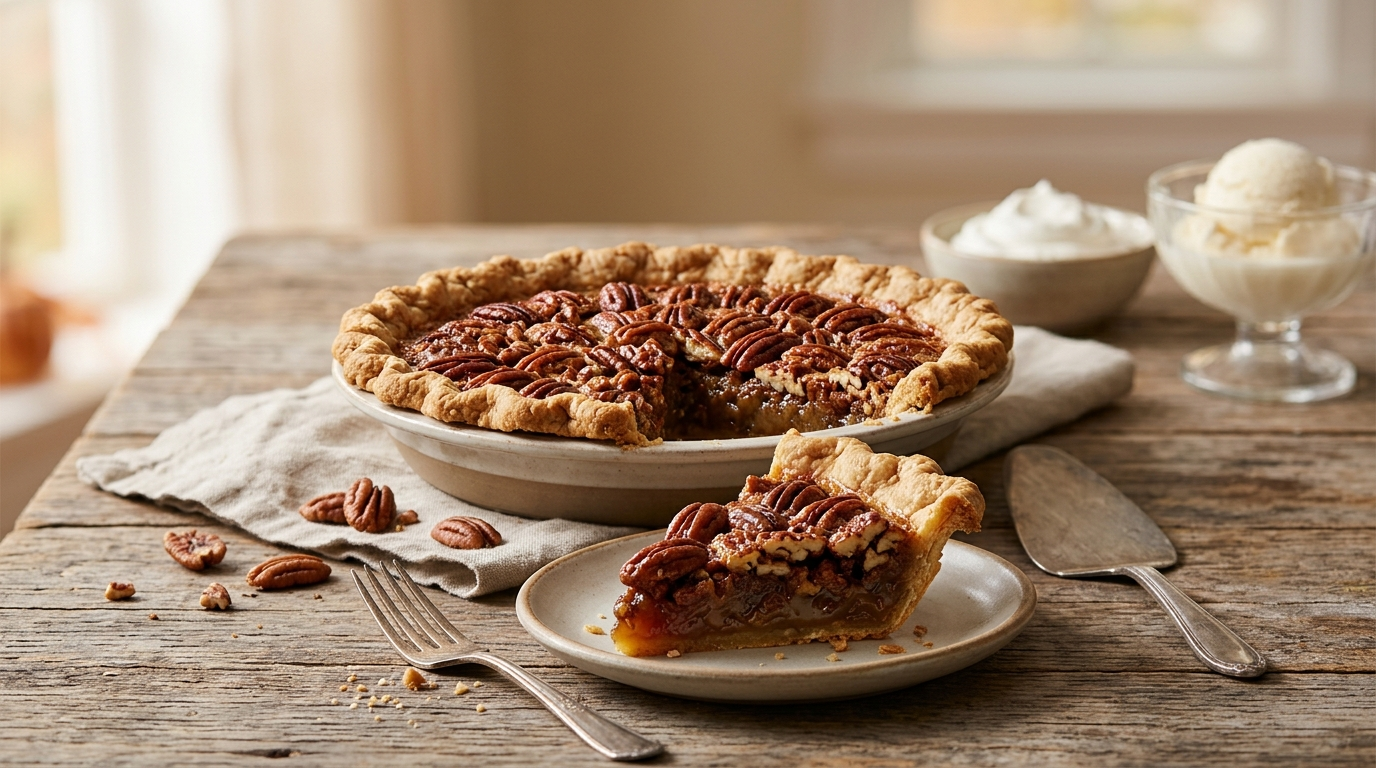
There’s something about a homemade pecan pie that makes everyone wander into the kitchen “just to have a look.” I’ve made this butter pecan pie more times than I can count, and somehow the first slice still feels like a little reward.
My favorite part happens before the pie even reaches the table. The butter melts, the pecans hit the warm pan, and the whole kitchen starts smelling toasted and nutty. It’s one of those moments when you know dessert is going to be good.
I also learned one important lesson the hard way: don’t rush the pecans. The first time I made this pie, I skipped toasting them because I wanted to save a few minutes. The pie still tasted good, but it lacked that deep, buttery flavor I remembered. Once I started toasting the pecans first, I never went back.
This version uses a flaky homemade crust, plenty of toasted pecans, brown sugar, butter, vanilla, and a rich filling that sets beautifully while staying soft in the middle.
And yes, you can make it without fancy equipment. A mixing bowl, rolling pin, saucepan, pie plate, and oven will get you there.
Why You’ll Love This Recipe

- The pecans get toasted first, which brings out a much deeper flavor.
- The crust stays flaky when you handle the dough gently and keep the butter cold.
- You can make parts of it ahead, which makes it handy for holidays and dinner parties.
- It feels special without requiring complicated techniques.
- One pie feeds a crowd, especially when you serve modest slices with whipped cream or vanilla ice cream.
Ingredients
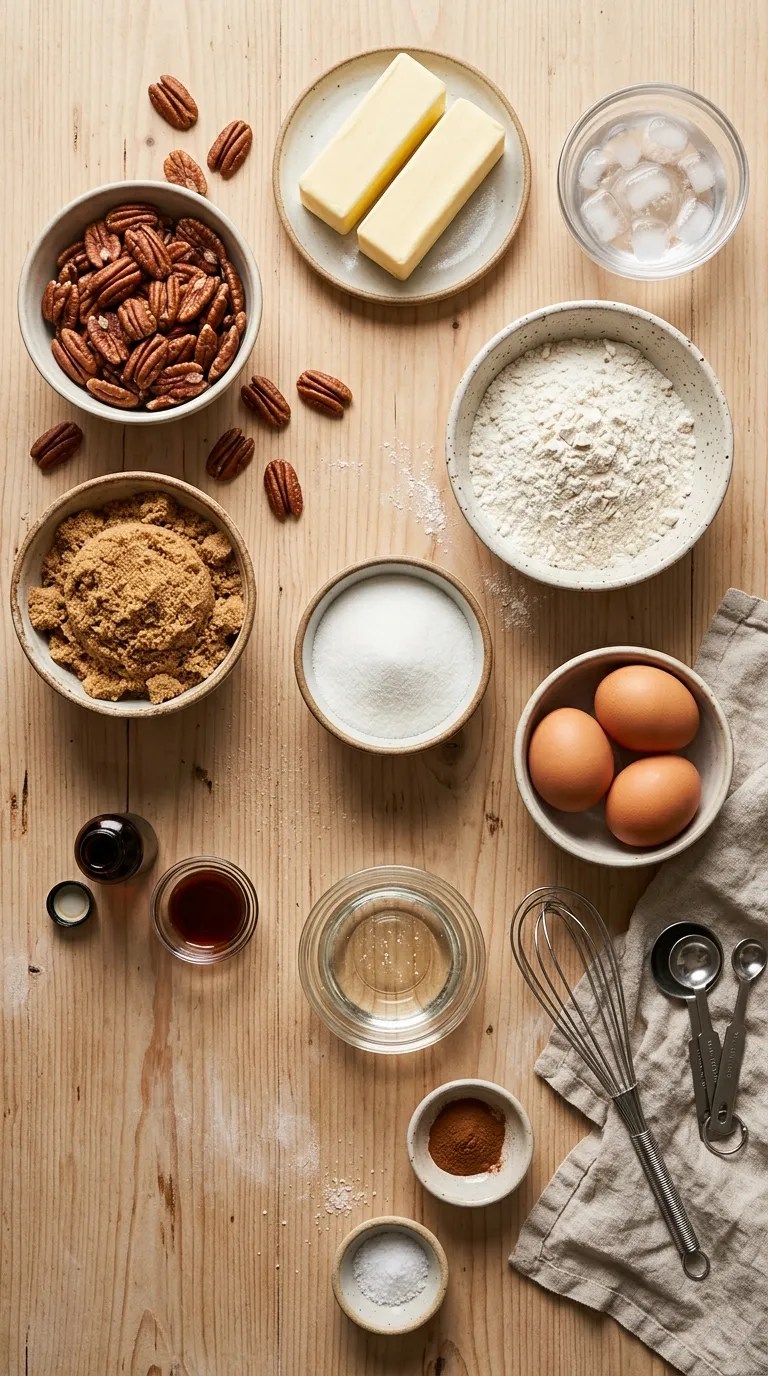
For the Homemade Pie Crust
- 1 ¼ cups (160 g) all-purpose flour
- ½ teaspoon salt
- 1 tablespoon granulated sugar
- ½ cup (113 g) cold unsalted butter, cut into small cubes
- 3–4 tablespoons ice water
You can use a good-quality store-bought pie crust if you’re short on time. I prefer homemade here because the buttery crust pairs especially well with the filling.
For the Butter Pecan Filling
- 2 cups (about 220 g) pecan halves or pieces
- ½ cup (113 g) unsalted butter
- 1 cup (200 g) packed light brown sugar
- ½ cup (100 g) granulated sugar
- ¾ cup (180 ml) light corn syrup
- 3 large eggs, room temperature
- 2 teaspoons pure vanilla extract
- ½ teaspoon salt
- ¼ teaspoon ground cinnamon
- 2 tablespoons all-purpose flour
For a slightly darker, richer flavor, you can replace some or all of the light brown sugar with dark brown sugar.
If you don’t have corn syrup, you can use pure maple syrup, although the filling will taste somewhat different and may have a softer texture.
Optional for Serving
- Whipped cream
- Vanilla ice cream
- A small sprinkle of flaky sea salt
Step-by-Step Instructions
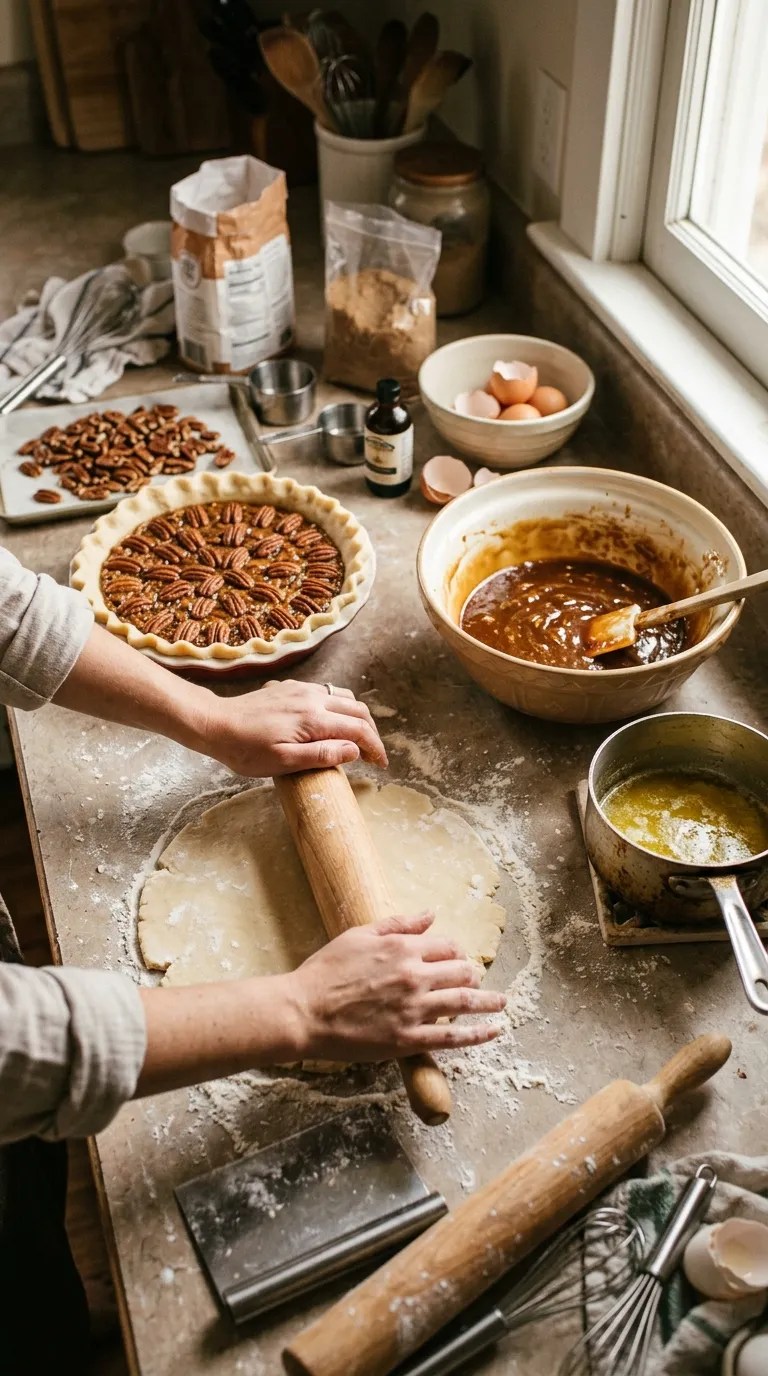
1. Make the Pie Dough — About 15 Minutes
Start with the crust because it needs time to chill.
Whisk the flour, salt, and sugar together in a medium mixing bowl. Add the cold butter and work it into the flour with a pastry cutter or your fingertips.
Stop when you have a mixture with some pea-sized pieces of butter still visible. Don’t try to make everything perfectly uniform. Those little butter pieces help create flaky layers.
Drizzle in 3 tablespoons of ice water and gently stir with a fork. The dough should start coming together when you squeeze it.
If it still looks dry and crumbly, add another tablespoon of water.
Gather the dough into a disk without kneading it. Wrap it and refrigerate it for at least 30 minutes.
A useful test: the dough should feel cool and slightly firm, not sticky or greasy.
2. Toast the Pecans — About 7 Minutes
While the dough chills, toast the pecans.
Heat a dry skillet over medium-low heat. Add the pecans and cook for about 5–7 minutes, stirring frequently.
You’re looking for a warm, nutty aroma and lightly browned edges.
Be careful here. Pecans can go from beautifully toasted to burnt surprisingly quickly.
Once they smell fragrant, transfer them to a plate and let them cool.
If you prefer, you can toast them on a baking sheet at 350°F (175°C) for about 7–9 minutes.
3. Roll Out the Crust — About 10 Minutes
Lightly flour your work surface and rolling pin.
Roll the chilled dough into a circle roughly 12 inches across, turning it occasionally so it doesn’t stick.
Don’t worry if the circle looks homemade rather than perfectly round. The important thing is to make it large enough to fit a standard 9-inch pie plate with some overhang.
Carefully transfer the dough to the pie plate.
Gently press it into the bottom and sides without stretching it. If you stretch the dough into place, it can shrink while baking.
Trim the edges, leaving about a ½-inch overhang. Tuck the overhang underneath itself and crimp the edges with your fingers or a fork.
Place the shaped crust in the refrigerator while you prepare the filling.
4. Prepare the Butter Mixture — About 5 Minutes
Melt the butter in a medium saucepan over medium-low heat.
Once melted, continue cooking it for another minute or two until it smells slightly nutty and the milk solids begin turning golden.
Watch it closely. You want browned butter, not burnt butter.
Remove the saucepan from the heat and let the butter cool for several minutes.
This small step adds a lovely toasted flavor to the finished pie.
5. Mix the Filling — About 5 Minutes
In a large bowl, whisk together the brown sugar, granulated sugar, corn syrup, eggs, vanilla, salt, cinnamon, and flour.
Slowly whisk in the warm butter.
Make sure the butter isn’t piping hot when you add it. If it’s extremely hot, it can partially cook the eggs.
Fold in about 1 ¾ cups of the toasted pecans, reserving the remaining ¼ cup for the top.
The filling should look glossy and pour easily.
6. Fill the Pie
Take the chilled crust from the refrigerator.
Pour the pecan filling into the crust and spread the pecans around so they distribute evenly.
Scatter the remaining pecans over the top.
If you notice any pecans sticking up dramatically, gently press them down into the filling. You want the exposed pieces to toast rather than burn.
7. Bake — About 50–60 Minutes
Preheat your oven to 375°F (190°C).
Place the pie on a baking sheet. The baking sheet catches any bubbling filling and makes moving the hot pie much easier.
Bake at 375°F for 15 minutes.
Then reduce the oven temperature to 350°F (175°C) and continue baking for approximately 35–45 minutes.
The exact time can vary depending on your oven and pie plate.
Start checking around the 45-minute mark.
The edges should look set, while the center should still have a gentle wobble when you carefully nudge the pie. It shouldn’t look liquid or slosh around.
If the crust edges become too brown before the filling finishes, cover the edges loosely with aluminum foil or use a pie shield.
8. Let It Cool Completely — At Least 2 Hours
This might be the hardest step because the kitchen will smell incredible.
Let the pie cool on a wire rack for at least 2 hours before slicing.
The filling continues setting as it cools. If you cut into it while it’s still very warm, the center may seem loose even if you baked it correctly.
For the cleanest slices, let it cool completely before cutting.
Use a sharp knife and wipe the blade between slices if you want those neat bakery-style cuts.
Pro Tips & Tricks
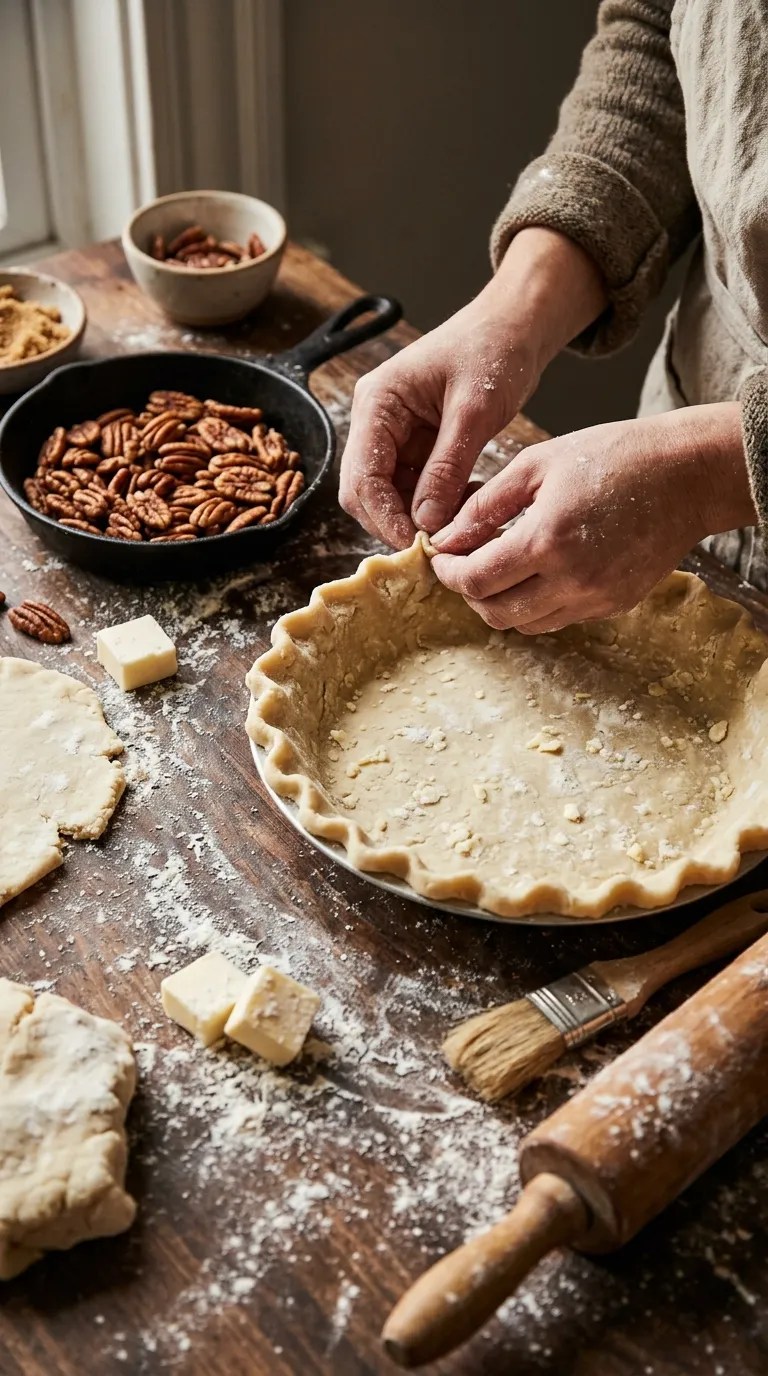
Keep the Butter Cold for the Crust
Cold butter gives you the best chance of getting a flaky crust.
If your kitchen is warm and the dough starts feeling soft or greasy, put it back in the refrigerator for 10–15 minutes before continuing.
Don’t Skip Toasting the Pecans
This is probably my favorite trick in the whole recipe.
Toasting gives the pecans a more pronounced roasted flavor and keeps the pie from tasting flat or overly sweet.
Just keep the heat moderate and stir them often.
Don’t Overmix the Dough
Pie dough doesn’t need the same treatment as bread dough.
Once it holds together, stop working it. Overworking the dough can make the crust tougher.
Watch the Center, Not Just the Clock
Ovens vary.
A pie might need a few extra minutes in one oven and finish sooner in another. Look for a set outer ring and a center that jiggles gently rather than looking completely liquid.
Let the Pie Cool Before Refrigerating
Give the pie time to cool at room temperature first.
Once cooled, cover it and refrigerate it if you want to keep it longer. Properly stored, it should keep well for several days.
Make It Ahead
You can make the pie crust a day ahead and keep the wrapped dough refrigerated.
You can also bake the entire pie the day before serving. In fact, I often prefer this approach for a holiday meal because the pie has plenty of time to cool and set.
Variations & Substitutions
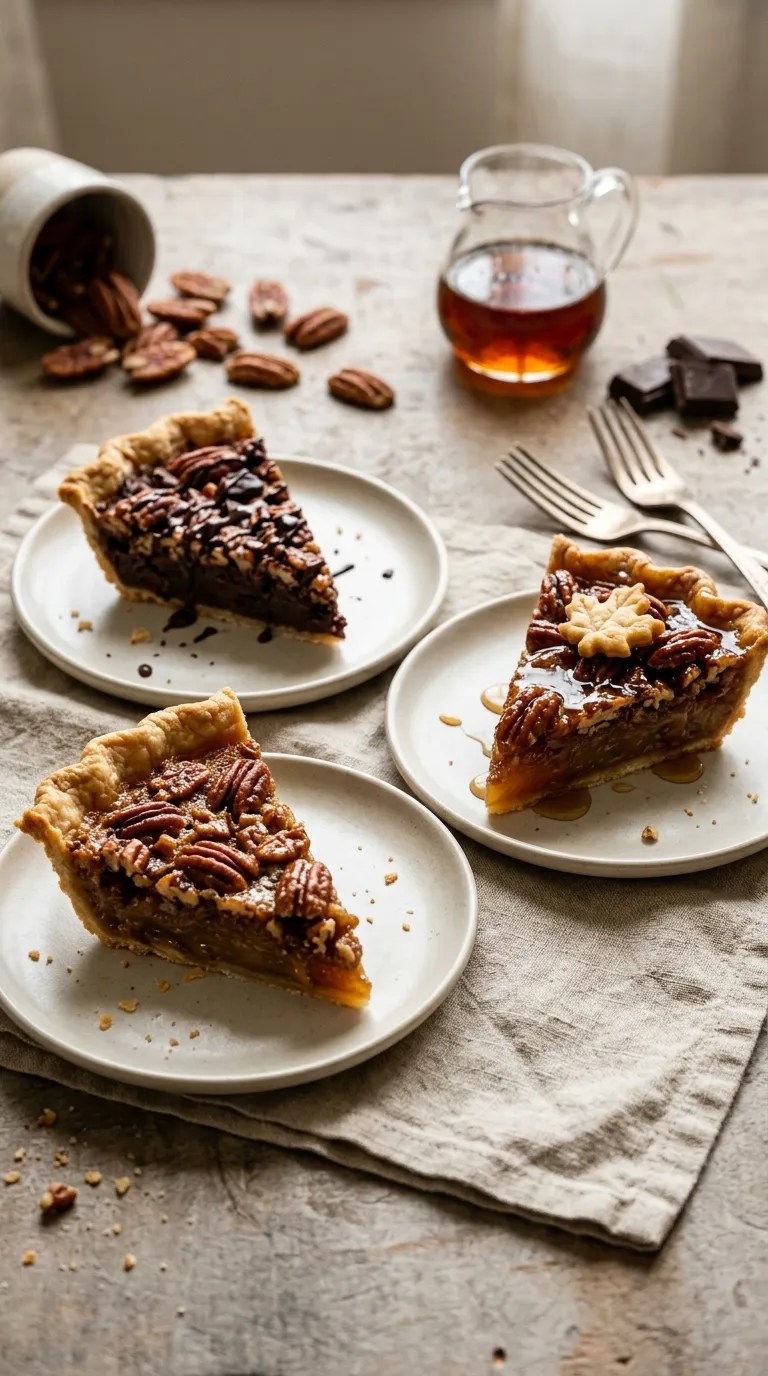
Maple Butter Pecan Pie
For a slightly more maple-forward version, replace about half of the corn syrup with pure maple syrup.
The maple flavor works beautifully with toasted pecans and brown sugar.
Keep in mind that changing the liquid ingredients can slightly change the texture, so let the pie cool completely before judging the final set.
Chocolate Butter Pecan Pie
Add ½ cup of semisweet chocolate chips to the bottom of the prepared crust before pouring in the filling.
The chocolate melts into little pockets throughout the pie and gives the classic pecan filling a richer dessert-shop feel.
You can also add a tablespoon or two of finely chopped chocolate instead of chocolate chips.
Gluten-Free Version
For a gluten-free pie, use a reliable gluten-free all-purpose flour blend designed for baking and substitute it for the regular flour in the crust.
For the filling, use a certified gluten-free flour blend if needed.
Because gluten-free dough behaves differently, follow the instructions on your flour blend for the best texture.
Serving Suggestions

Butter pecan pie tastes fantastic slightly warm, at room temperature, or chilled.
My favorite way to serve it involves a small slice with a generous spoonful of lightly sweetened whipped cream. The cool cream balances the rich filling without overwhelming the pecan flavor.
For a warmer dessert, gently reheat individual slices and serve them with vanilla ice cream. The contrast between warm pie and cold ice cream makes a simple homemade dessert feel extra special.
A little flaky sea salt on top can also work surprisingly well. Just use a light hand because the filling already contains salt.
This pie fits naturally on a Thanksgiving or Christmas dessert table, but I wouldn’t save it only for holidays. It makes a wonderful Sunday dinner dessert, potluck contribution, or cozy weekend baking project.
If you’re bringing it somewhere, bake it in a sturdy ceramic or metal pie plate and let it cool completely before transporting it.
Related Recipes:
- How to Make Pumpkin Cupcakes With Cinnamon Cream Cheese Frosting
- Easy Pumpkin Cheesecake Recipe for Thanksgiving
- Creamy Pumpkin Cheesecake Without Sour Cream
- How to Make Pumpkin Cheesecake Without Cream Cheese
- Homemade Pecan Pie Bars for Thanksgiving
FAQ’s
How should I store butter pecan pie?
Once the pie has cooled completely, cover it and refrigerate it. It should keep well for several days when properly stored.
Let individual slices sit at room temperature for a little while before serving if you prefer a softer texture.
Can I make butter pecan pie ahead of time?
Absolutely.
You can prepare the crust a day ahead, or bake the entire pie one day before serving. The filling actually benefits from having time to cool and set.
For a holiday meal, making the pie the day before can save you valuable oven and kitchen time.
Can I freeze butter pecan pie?
Yes. Let the baked pie cool completely, then wrap it well to protect it from freezer air.
For the best texture, thaw it slowly in the refrigerator. You can then bring it toward room temperature before serving.
The crust may not taste quite as freshly baked after freezing, but the pie can still be very good.
Why did my pecan pie turn out runny?
The most common reason is that the pie needed more baking time or you sliced it before it cooled.
Look for a gently set center rather than relying only on the clock.
If the center still looks very liquid when you move the pie, give it more time in the oven.
Why did my pie crust shrink?
You may have stretched the dough while fitting it into the pie plate, or the dough may not have had enough time to relax and chill.
Next time, handle the dough gently and refrigerate the shaped crust before filling and baking.
Can I use pecan pieces instead of pecan halves?
Definitely.
Pecan pieces make the pie easier to slice and distribute nicely throughout the filling. Pecan halves create a prettier, more traditional-looking top.
I usually use a mixture of both because you get the best of both worlds.
Final Thought
The first time you make a homemade butter pecan pie, you might fuss over the crust or wonder whether the center has baked enough. That’s normal. Pie gets easier once you learn what the dough and filling should actually look and feel like.
The biggest things I’ve learned are simple: keep the crust cold, toast the pecans, don’t overbake the filling, and give the finished pie plenty of time to cool.
Once you cut that first slice and see the glossy pecan filling sitting inside the flaky crust, all that waiting suddenly makes sense.
So put the kettle on, clear a little space on the counter, and give this one a try. And if your kitchen ends up smelling so good that everyone starts asking when dessert is ready, well—that’s part of the recipe too.
Leave a Reply
You must be logged in to post a comment.