

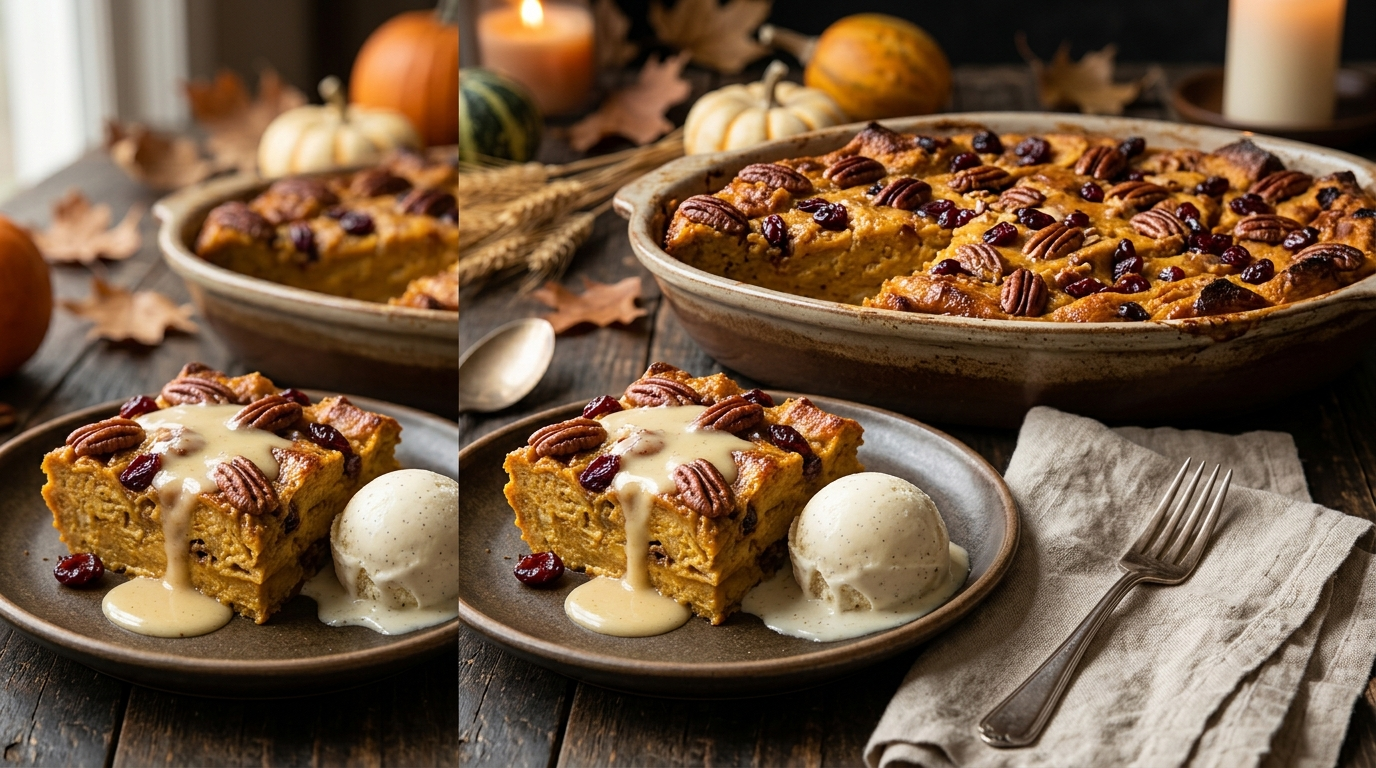
Absolutely — here’s a fresh, home-cook-style version with a warm Thanksgiving feel, practical troubleshooting, and plenty of useful detail.
There’s something about pulling a warm pumpkin bread pudding from the oven on Thanksgiving that makes the whole kitchen feel extra inviting. The smell of cinnamon and nutmeg drifts through the house, the top turns beautifully golden, and everyone suddenly finds a reason to wander into the kitchen.
I started making pumpkin bread pudding because I wanted a Thanksgiving dessert that felt special without requiring the precision of a layer cake. After a little experimenting, I found that slightly stale bread actually works better than fresh bread, and letting the custard soak in for a few minutes makes a huge difference.
One year, I rushed the soaking step because dinner was running late. The pudding still tasted good, but some pieces stayed dry in the middle. I never skipped that step again.
This version combines soft bread, pumpkin puree, warm spices, brown sugar, and a rich vanilla custard. It comes out soft and spoonable in the center with crisp, golden edges. Add a little whipped cream or vanilla ice cream, and you have the kind of Thanksgiving dessert that disappears quickly.
Why You’ll Love This Recipe

- It’s forgiving. You don’t need perfectly neat bread cubes or fancy decorating skills.
- It’s perfect for Thanksgiving. Pumpkin and warm spices fit right in with the rest of the holiday table.
- It makes good use of day-old bread. That slightly dry loaf becomes wonderfully tender after soaking up the custard.
- You can prepare it ahead. Assemble it earlier in the day, refrigerate it, and bake it when you’re ready.
- It feeds a crowd. One baking dish gives you generous servings without making several desserts.
Ingredients
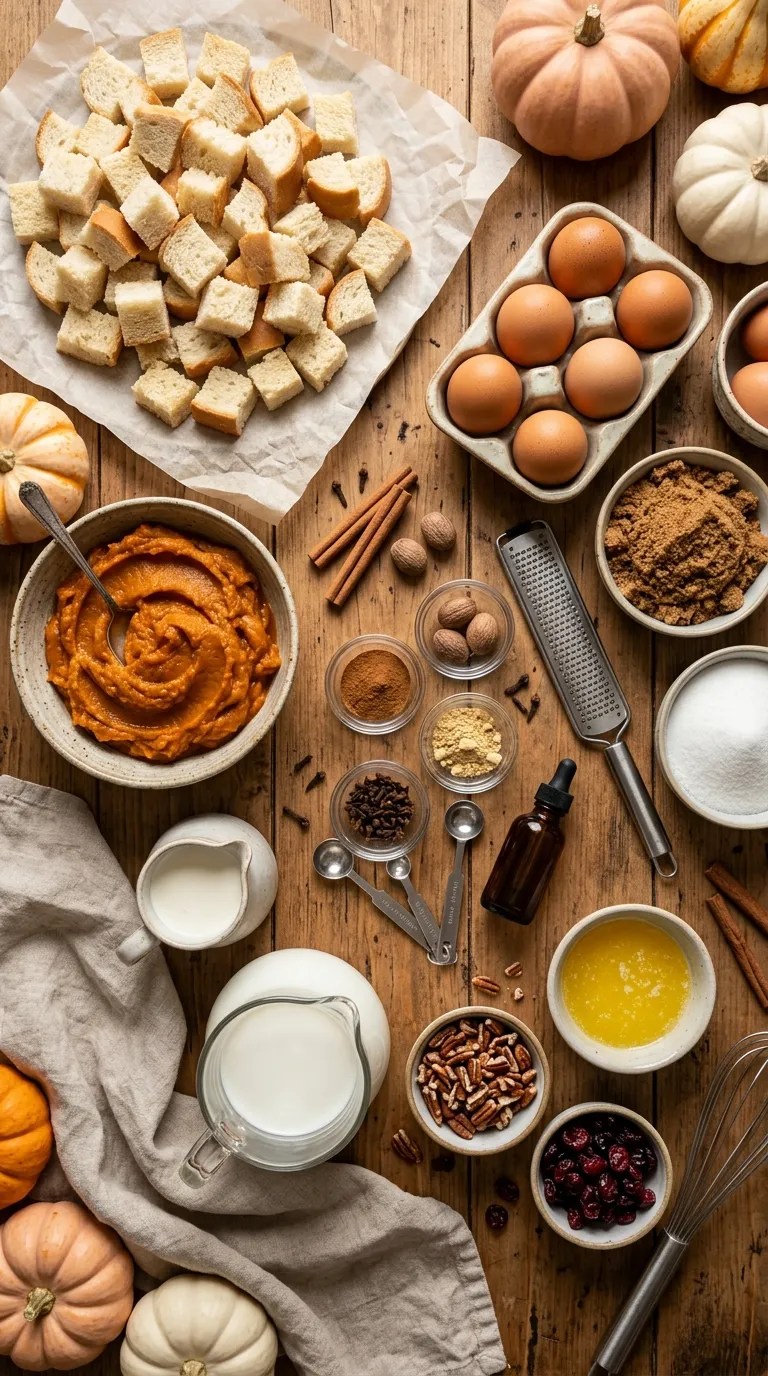
For the Pumpkin Bread Pudding
- 8 cups cubed day-old French bread, brioche, or challah
- 1 can (15 ounces) pumpkin puree
- 3 large eggs
- 1 ½ cups whole milk
- ½ cup heavy cream
- ¾ cup packed light brown sugar
- ¼ cup granulated sugar
- 2 teaspoons pure vanilla extract
- 2 teaspoons ground cinnamon
- 1 teaspoon ground nutmeg
- ½ teaspoon ground ginger
- ¼ teaspoon ground cloves
- ½ teaspoon salt
- 4 tablespoons unsalted butter, melted
- ½ cup chopped pecans, optional
- ⅓ cup raisins or dried cranberries, optional
Make sure you use pumpkin puree rather than pumpkin pie filling. Pie filling already contains sugar and spices, so swapping it in would change the recipe considerably.
For the bread, brioche gives the pudding a particularly rich texture, while French bread creates a slightly sturdier result. Challah works beautifully too.
For the Simple Vanilla Sauce
- ½ cup heavy cream
- ¼ cup packed brown sugar
- 2 tablespoons unsalted butter
- 1 teaspoon vanilla extract
- Pinch of salt
If you’d rather keep things simple, skip the sauce and serve the pudding with whipped cream or a scoop of vanilla ice cream.
Step-by-Step Instructions
1. Dry the Bread — 10 to 15 Minutes
Start by cutting the bread into roughly 1-inch cubes.
If your bread is already a day or two old, you can use it as-is. If it feels very soft and fresh, spread the cubes over a baking sheet and place them in a 300°F oven for about 10 to 15 minutes.
You’re not trying to toast them until brown. You simply want the outside to feel a little dry.
Let the bread cool before assembling the pudding.
2. Prepare the Baking Dish — 2 Minutes
Lightly butter a 9-by-13-inch baking dish.
I usually use a glass or ceramic casserole dish, but a metal baking pan works too. Just keep an eye on the pudding toward the end because metal pans can brown the edges a little faster.
Set the prepared dish aside.
3. Make the Pumpkin Custard — 5 Minutes
In a large mixing bowl, whisk together the pumpkin puree, eggs, whole milk, heavy cream, brown sugar, granulated sugar, vanilla, cinnamon, nutmeg, ginger, cloves, and salt.
Whisk until everything looks smooth and evenly combined.
Pour in the melted butter and whisk again.
The custard should look creamy and smell strongly of pumpkin pie spices. If you taste a tiny spoonful at this stage, you should notice the cinnamon and nutmeg without either one overpowering the pumpkin.
4. Add the Bread — 5 Minutes
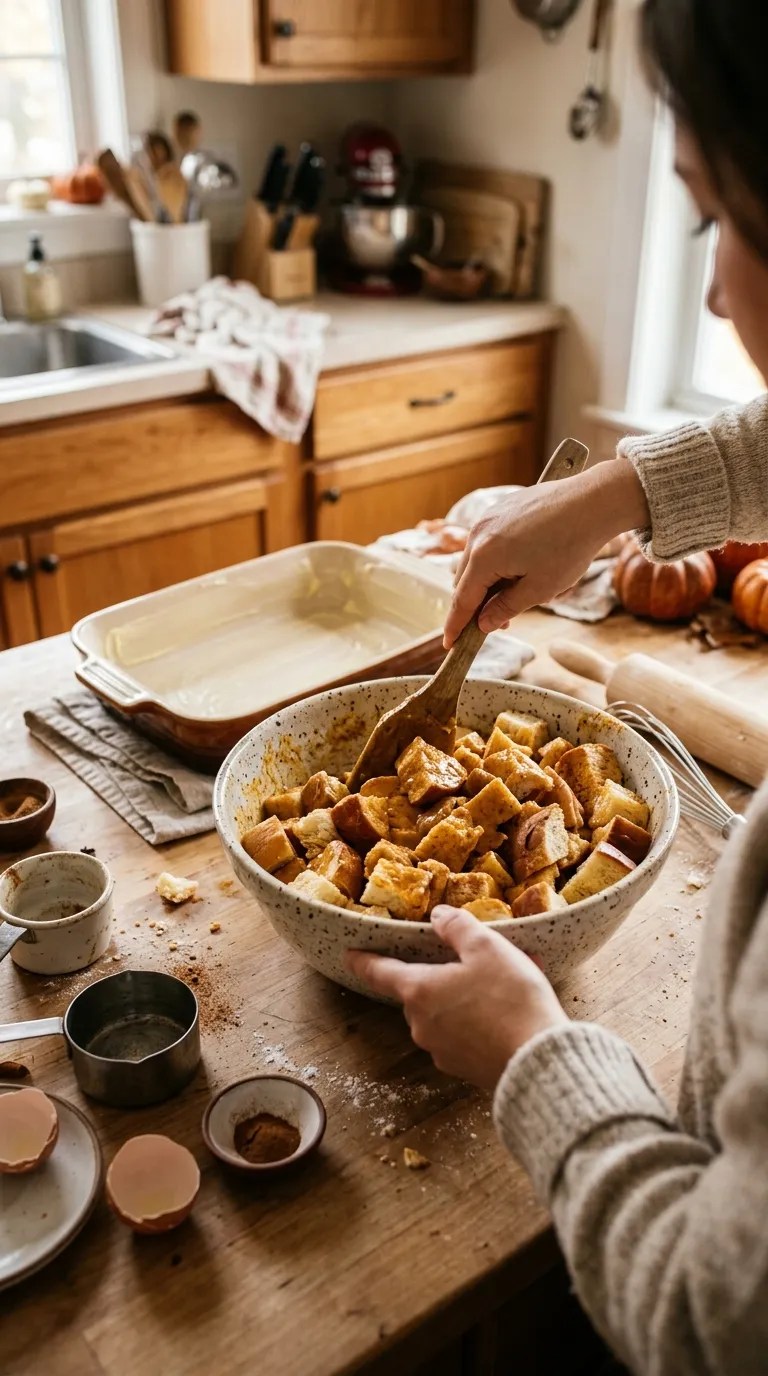
Place the bread cubes into the bowl with the pumpkin custard.
Gently fold everything together with a large spatula or wooden spoon.
Make sure you turn the bread from the bottom of the bowl so the custard reaches as many pieces as possible.
If you’re adding pecans, raisins, or dried cranberries, fold them in now.
5. Let Everything Soak — 20 to 30 Minutes
This step deserves your attention.
Transfer the mixture to your prepared baking dish and spread it into an even layer. Let it sit for 20 to 30 minutes before baking.
Press down gently on the bread once or twice during the soaking time.
You want the cubes to absorb the custard without turning into a completely uniform mush. The bread should feel soft and moist, while some pieces still hold their shape.
This is one of the little details that helped me get much more consistent results.
6. Bake the Bread Pudding — 45 to 55 Minutes
Preheat your oven to 350°F if you haven’t already.
Bake the bread pudding uncovered for about 45 to 55 minutes.
Start checking around the 45-minute mark. The top should look golden brown, and the center should look set but still have a slight jiggle when you gently move the pan.
Don’t wait until the entire pudding looks completely firm in the oven. It continues to set as it cools.
If the top starts browning too quickly, loosely cover the dish with aluminum foil for the remaining baking time.
7. Cool Briefly — 15 Minutes
Remove the pudding from the oven and let it rest for about 15 minutes.
I know it’s tempting to scoop into it immediately, especially when the kitchen smells incredible, but giving it those few minutes helps the custard settle.
The center should become soft and creamy rather than runny.
8. Make the Vanilla Sauce — 5 Minutes
While the pudding rests, place the heavy cream, brown sugar, butter, and salt in a small saucepan over medium-low heat.
Stir until the butter melts and the sugar dissolves.
Let the mixture gently simmer for about 2 to 3 minutes, stirring often. Don’t let it boil aggressively.
Remove the pan from the heat and stir in the vanilla.
The sauce will thicken slightly as it cools.
9. Serve Warm
Spoon the pumpkin bread pudding into bowls while it’s still warm.
Drizzle each serving with vanilla sauce, or add a dollop of whipped cream.
For Thanksgiving, I especially like adding a small scoop of vanilla ice cream. The contrast between the warm pudding and cold ice cream is hard to beat.
Pro Tips & Tricks
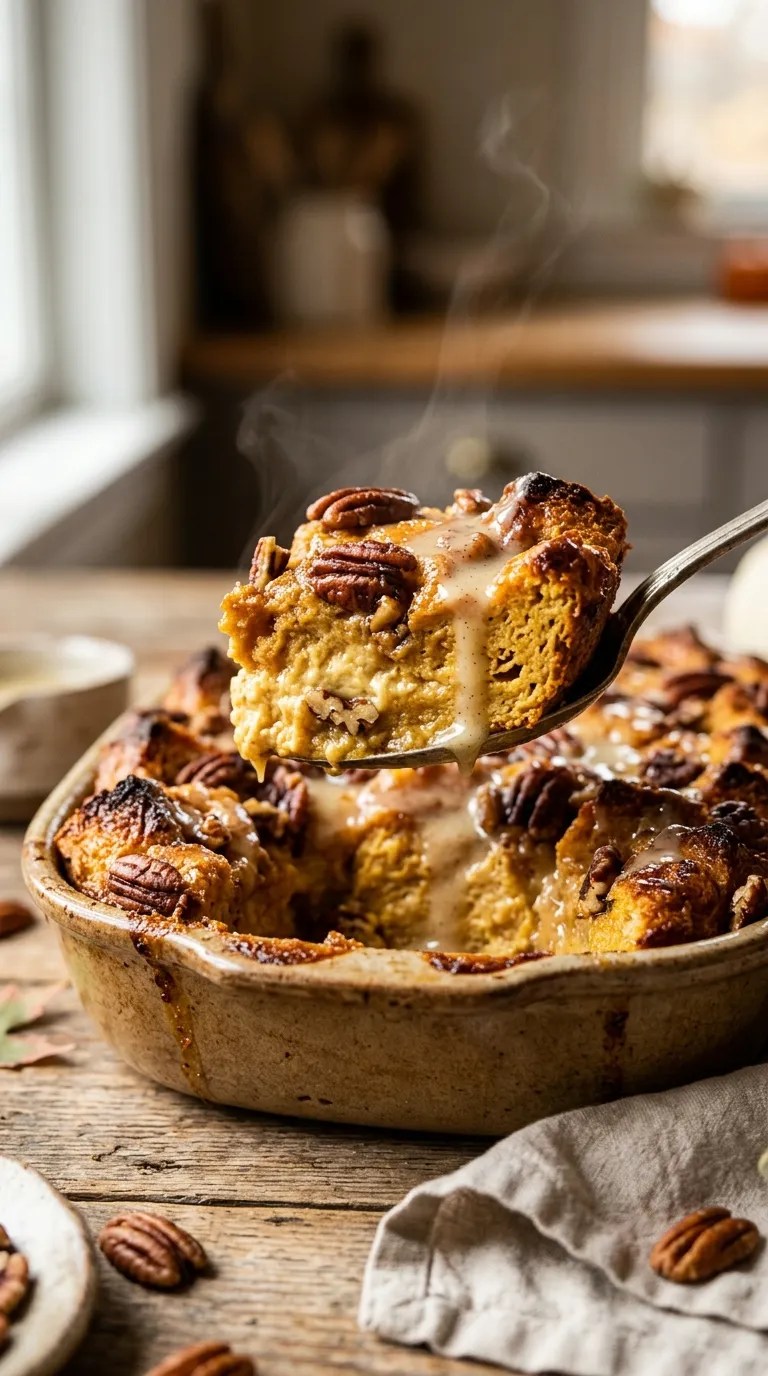
Use Slightly Stale Bread
Fresh bread can absorb the custard unevenly and sometimes produces a softer, heavier pudding.
Day-old bread has already lost some moisture, so it can soak up that pumpkin custard while keeping enough structure to give you those lovely soft-and-crispy contrasts.
Don’t Skip the Soaking Time
Give the bread at least 20 minutes to absorb the custard.
If you rush straight from mixing to baking, the outside pieces can become tender while the centers remain noticeably dry.
For the best texture, occasionally press the bread down gently with a spatula while it rests.
Don’t Overbake It
This might be the biggest mistake to avoid.
The pudding should look set around the edges with a gentle wobble in the middle. If you bake it until the entire center feels completely firm, you’ll likely end up with a drier texture.
Remember that carryover cooking continues after you remove it from the oven.
Give the Pecans a Quick Toast
If you’re using pecans, toast them in a dry skillet over medium-low heat for about 3 to 5 minutes, stirring frequently.
You’ll know they’re ready when they smell nutty and fragrant.
Let them cool before adding them to the pudding.
Store Leftovers Properly
Cover leftover bread pudding tightly and refrigerate it within a couple of hours of serving.
It should keep well in the refrigerator for about 3 to 4 days.
Reheat individual portions in the microwave in short intervals, or warm a larger portion covered with foil in a 300°F oven until heated through.
Make It Ahead
You can assemble the pudding several hours before Thanksgiving dinner.
Cover the unbaked dish and refrigerate it. Before baking, let it sit at room temperature for a short time while the oven preheats, then bake until the center is properly set.
If the dish goes into the oven very cold, it may need additional baking time.
Variations & Substitutions
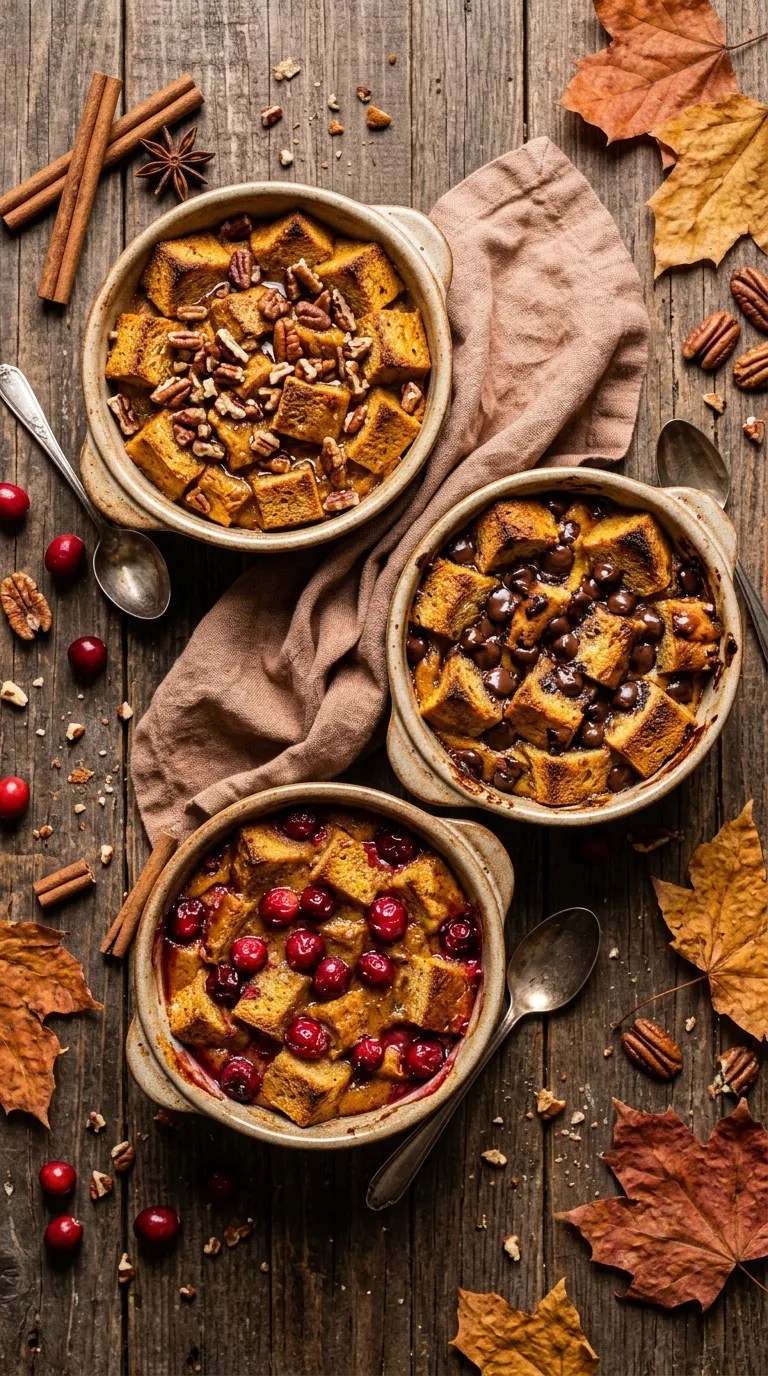
Make It With Brioche
For an especially rich version, use brioche instead of French bread.
Brioche has a buttery texture that pairs wonderfully with pumpkin custard. Because it is softer and richer, keep an eye on the soaking process and avoid letting it sit for dramatically longer than the recipe recommends.
Add Chocolate
For a slightly more indulgent variation, fold in about ½ cup of semisweet chocolate chips.
Chocolate works particularly well with pumpkin and cinnamon, especially if you leave out the raisins.
I like using dark chocolate chips when I want a less-sweet result.
Make a Nut-Free Version
Simply leave out the pecans.
You won’t need to replace them with anything, although dried cranberries can add a nice chewy texture and a little tartness.
If you’re serving the pudding to someone with a food allergy, check the labels on your other ingredients as well and avoid cross-contact during preparation.
Use a Different Dried Fruit
Raisins aren’t your only option.
Dried cranberries, chopped dried apricots, or golden raisins can all work. Dried cranberries are my favorite for Thanksgiving because their tart flavor cuts through the rich custard.
Adjust the Spice Blend
If you’re not a fan of cloves, leave them out and add a little extra cinnamon instead.
You can also add a small amount of cardamom for a more aromatic twist. Start with ¼ teaspoon so it doesn’t take over the other flavors.
Serving Suggestions

Pumpkin bread pudding fits naturally into a Thanksgiving dessert spread, especially when you want something warm and comforting rather than another chilled dessert.
Serve it after the main meal with coffee, tea, or a glass of cold milk.
For a holiday dinner, I like setting out a bowl of lightly sweetened whipped cream and a small pitcher of warm vanilla sauce so everyone can dress up their own serving.
You can also serve it alongside apple pie, pecan pie, or another classic Thanksgiving dessert. The bread pudding gives people another texture and flavor to choose from without feeling completely out of place on a traditional dessert table.
For a smaller gathering, this pudding can easily take center stage as the only dessert.
And if you’re serving it for breakfast the next morning, I won’t judge. Warm a slice and add a little yogurt or fruit on the side for a cozy start to the day.
Related Recipes:
- Creamy Pumpkin Cheesecake Without Sour Cream
- Homemade Pecan Pie Bars for Thanksgiving
- How to Make Pumpkin Cheesecake Without Cream Cheese
- Pumpkin Crisp Bars
- No-Bake Pumpkin Cheesecake Ball
FAQ’s
Can I use fresh bread for pumpkin bread pudding?
Yes, but day-old bread usually gives you a better texture.
If your bread is fresh, dry the cubes in a 300°F oven for 10 to 15 minutes before mixing them with the custard. You want the bread slightly dry rather than crunchy.
Can I prepare pumpkin bread pudding the night before?
Yes. Assemble the pudding, cover it tightly, and refrigerate it overnight.
Because the bread has extra time to absorb the custard, the texture may become particularly tender. Before baking, take the dish out while the oven heats and expect that a chilled pudding may need a little extra time in the oven.
Can I freeze pumpkin bread pudding?
Yes, although the texture can soften somewhat after freezing and thawing.
For best results, cool the pudding completely, wrap it tightly, and freeze it in portions or as a whole dish. Thaw it in the refrigerator and reheat it gently in the oven.
The vanilla sauce is better made fresh rather than frozen with the pudding.
Why is my bread pudding soggy in the middle?
A slightly soft center is normal, but a very wet center usually means the pudding needed more baking time.
Oven temperatures can vary, so use the appearance as your guide. The edges should be set and the center should have a gentle jiggle rather than looking liquid.
Also check that you measured the milk and cream accurately.
Why did my bread pudding turn out dry?
Overbaking is the most common culprit.
Another possibility is using very dry bread without enough custard or not allowing the bread to soak properly.
Next time, check the pudding earlier and remove it once the center has just set.
Can I make this without heavy cream?
Absolutely.
Replace the ½ cup of heavy cream with another ½ cup of whole milk. The pudding will be a little lighter and less rich, but it will still work well.
I prefer the combination of milk and cream for Thanksgiving because it gives the custard a particularly creamy texture.
Final Thought
I love recipes that make a holiday meal feel special without making the cook work twice as hard, and this pumpkin bread pudding fits that perfectly.
It doesn’t require perfect slices, complicated decorating, or a dozen bowls on the counter. You mix the custard, give the bread some time to soak, and let the oven do most of the work.
The best part might be the way it makes the kitchen smell while it bakes. By the time that cinnamon-scented pumpkin aroma starts drifting through the house, someone will probably ask when dessert is ready.
If you make this for Thanksgiving, don’t worry about making every serving look identical. Spoon it into warm bowls, add plenty of vanilla sauce or whipped cream, and enjoy it while it’s cozy and warm.
That’s the kind of dessert I want after Thanksgiving dinner: homemade, comforting, and just a little bit messy around the edges.
Leave a Reply
You must be logged in to post a comment.